“I WILL MAKE A MAN OUT OF HIM” – PART 3

As the months progressed I was slowly but surely learning to work with and handle livestock. The Clarks were exceptional stock men. They were confident and talented and it was hard for me to work to their standards and learn those skills. One of Dick’s favourite sayings to me was “You’ll never make a stock man”. One day we were putting the Charolais bulls through the cattle crush where they were to be wormed by dosing gun. My job was to entice the cattle in to the crush by opening the front yoke and showing the cattle some daylight to persuade them to step forward. At just the right moment I had to swing the handle to catch the animals head in the yoke so that it was held fast. All was going well until, one animal pulled back at the very second I was swinging the handle. I missed its head and it ran backwards. Dick was at the back of the crush and hadn’t got the back gate shut. The animal smashed against the back door, knocking Dick off balance.

I got severely castigated and told yet again “you’ll never make a stock man”. By this time I was slowly growing immune and learning to carry on without taking it to heart. A while later our roles had reversed and I was now at the back of the crush. A young bull was being held and just at the point of release Dick walked right in front of the Crush. The bull was startled and ran backwards. I was reaching through the back gate to give the bull a smack to send it forward. The bull was too quick for me and it trapped my arm against the back door. I yelped in pain and gave him a daggers look.

Dick realised what had happened and looked a bit sheepish for a least a couple of seconds. As I rubbed my bruised arm I thought about retorting with a comment about his stocksmanship, but I just dare not do it!

One morning in early May we landed in for breakfast and Dick announced that in view of my continued improvement, he had taken a decision to raise my weekly wage to £30. To me it felt like a fortune but more importantly I was making progress and it had been recognised. Every Friday lunchtime I was allowed to drive in to Cockermouth to bank my cheque. One Friday I nipped down to the card shop on Main Street to buy a birthday card. I had been sorting through old silage bags all morning, which were very dirty and very smelly with the remnants of last year’s silage liquor. I didn’t realise how smelly boiler suit was until I was in the card shop and a lady exclaimed in a loud voice. “Oh my god you are revolting”. Several people nodded and agreed. So much so that I was refused service and asked to leave!

Back to the silage bags and I had worked through a huge pile of them discarding the badly ripped ones and keeping others that may be used for lining newer bags. Finally I was down to the last bag and as I lifted it up I uncovered a huge rat’s nest. There were hundreds of them running in all directions squealing. Some ran up my boiler suit. I admit it, I screamed and ran around stamping like a demented banshee. By the time I had calmed down and the rats had escaped there were quite a few lying dead on the floor.

On a warm Saturday morning Dick instructed me that I was to use the knapsack sprayer and work around the field closest to the farm, spraying any nettles, docks or thistles in the fields and along the boundaries. I was instructed how to mix the weed killer and then I was dispatched. I worked away until noon. I was up in the back field above the farm house. The field was about 10 acres in size and I had about 100 metres to go to complete a full sweep of the boundary. I realised it was lunch time and remembered a story that my old grandfather had told me. He had spent some time in farm service in the late 1920’s. The farm hands were told that they had to be back to the farm at lunchtime promptly. One day he was finishing off a job and thought he had better stick in to the end to show willing. When he got back to the farm half an hour late, the food was gone and all he could get was a salt and pepper sandwich.

With this in mind I dropped the knapsack sprayer and jogged back to the farm. Sitting down to lunch Dick asked me where I was up to. I told him I was about 100 metres from completing the ten acre field. “whaaaat? You’ve come home for dinner without completing the last bit. Get your bloody self back out there now. With that my plate was removed and I went back out. Half an hour later I was back at the table.

“How far have you done this morning?” well I started over there and went in to there up and round there” I pointed. “Is that all?” said Dick. “You’ve done nowt. Bloody dawdling I would say”.

I thought this was quite unfair as I knew I had gone full blast and my arm operating the sprayer had being going up and down faster than a fiddlers elbow. I also knew better than to argue so I just kept on eating. Three weeks later as the weeds died off, Dick finally realised just how much I had done and commented,

“You see that’s one of your problems Adam, You never explain yourself properly”!

Memory tells me that 1984 was a hot, dry summer. Dick tasked me to make a field of hay. I had started in the spring by rolling the field dragging a heavy land roller behind an old 1972 David Brown 990 Selamatic tractor. It had no cab and certainly no roll bar. Nor did it have power steering or a heater. In fact I rolled field after field with this rig, come rain, hail, sunshine and even snow. Up and down the fields I went bumping along on an improvised piece of foam which lined the metal tractor seat.

Then the hay field was fertilised and shut off from all livestock. Over summer the grass grew until the point where the timothy, a long seeded species of grass beloved by all livestock in winter, had headed up nicely and the field was ready to mow.

Dick had also taught me to mow grass with a 2 drum mower and I had now got fairly confident with this bit of kit pulled along behind a David Brown 1375 which did have a cab and a radio! I didn’t really enjoy decapitating the odd rabbit or two, but you don’t see them until it is too late. So now it was going to be my job to make hay.

The grass was duly mown lying in long straight lines on a gently sloping field. Over the next few days I was to begin turning the hay, to allow the green grass to slowly dry out, warm and ripen in the hot sunshine. Each day I attached the haybob to the 990 and set off down to the hayfield. Every morning the long lines of hay were scattered out, and each evening the hay was put back in to tight, neat rows. As the hay dried out, it became crisp and fluffy. The smell was gorgeous. There is no other smell like fresh hay in the meadow especially at dawn and dusk.

After 5 glorious days bumping up and down the field with my shirt off, I had developed a marvellous tan and the hay was ready to bale. In came the old McCormick baler operated by local contractor Harold Braithwaite. My next job was to stack the hay bales in a certain manner in groups of 18 bales, called a stook. These could then be picked up by a bale transporter, a flimsy looking but highly effective piece of equipment that picked up the whole stook which was then driven the short distance back to the farm.

The stook was dropped next to the hay barn, a traditional stone barn perhaps 200 years old with a wooden floored hay loft above. The bales were placed on to a petrol- engined elevator which lifted the bales one by one from the ground up to and through a large hay window and in to the hay loft. The person at the top then positioned and packed the bales tightly in to the barn where they would stay until needed during winter. This is called “mewing” in Cumbria.

In the barn it was very hot and very dusty, I was quite happy to let the other lads mew the hay especially as they were very particular about how they did it. So I lifted the bales on to the elevator at the bottom. Conditions in the hot sunshine were not unpleasant and I had plenty of time to shift all the bales before Dick got back with the next load on the tractor. By tea- time, the job was done. Hot and thirsty we were all in good humour as we went to tea. I was so proud when Dick declared that it was a very good crop of hay.

Having been tasked with the job of making hay I spent some time researching the procedure in my college text books which gave me a technical angle on the job I had done. Imagine my delight at the end of my first year at college when one of the compulsory questions in the practical agriculture exam was to describe and discuss the procedure to make a field of meadow hay. I was able to describe in detail the job I did at Mosser Mains. I passed the exam with flying colours!
“I WILL MAKE A MAN OUT OF HIM” – Part 2

My education at Mosser Mains included working in the milking parlour. I rather enjoyed my weekends on duty as it often gave me the chance to put cluster units on the cows. One of Alan’s old favourites was a big old cow called Twinkle. She had a huge udder from which she could produce over 40 litres of milk day after day, year after year. She was always the first cow waiting to enter the parlour. Cows are matriarchal creatures and old Twink ruled the roost. Many years later I reminded Alan about the old cow. He heaved a huge sigh and told me, “Aye that was a sad day when she went down the road”.  

Cows are working animals but farmers form bonds and attachments to them. When a cow ends her working life either by not being able to have another calf, or if her udder fails, then she has to be sold inevitably in to the meat chain. Whilst it is just part of the cycle of farming it can be nevertheless sad for farmers to say goodbye. Many times in the auction I have had farmers leave an old cow on market day, not wanting to watch her being sold through the ring to a meat buyer.

Often at weekends I would try and set the parlour up for milking at either end of the day, so that Alan or Benson would be able to start milking straight away. Then after completing my own jobs I would rush back to the parlour to help. I absolutely loved the creamy, smell of the dairy and  the rhythmical beat of the pulsator which helped to draw the milk out of the cows teats, through the individual cups and in to the milk pipeline.

The milk would then be filtered three times before ending up in the milk tank which would chill the milk down before collection each morning by a milk tanker.

One Sunday afternoon I arrived early and set up the parlour for milking. This included fitting all three filters in the system which had been rigorously cleansed after the morning milking. Half way through my jobs I had one of those awful, spine chilling moments when I realised that I had missed one of the filters. I ran back to the dairy to see the filter lying in a sink. Quickly I installed it in its place without anyone seeing. All I could do was hope for the best.

The next morning the tanker arrived and I was dismayed to see the driver taking a test sample. Two days later Dick got a letter through the post to say that the Total Bacterial Count in the milk was far too high and if it happened again he would be in big trouble.

I had to come clean. Dick was so mad he couldn’t speak. Eventually I was subjected to half an hour of abuse about how bloody useless I was. Dick came out with the best “put down” I have ever had. “I pay you £25 a week and its £30 too much”. Almost in tears I went back to my jobs. A while later Alan came to me and said, “Don’t worry about it Lad”. Last Sunday Dad set off to milk and realised half way through he hadn’t put the plug in the milk tank. It was running down the yard”. That still didn’t make me feel any better.

That night I went home and told my mother I didn’t think I could stand it anymore. She told me not to go back if I felt that way. Next morning I couldn’t lie in bed and fail. So I got back out there and started again. This I did every morning until the end of my placement.

One Saturday afternoon in April I found myself working alone. So I decided that I would tidy up the yard and sweep down all of the concrete. I always had a radio on as did the Clark lads when they were working. It was Grand National Day. A horse called Hello Dandy won and I remember hearing that it was a Cumbrian Horse trained at Greystoke near Penrith. Sixteen years later I found myself living in Greystoke watching the racehorses running round the all-weather track a couple of fields in front of my house.

By early summer I had lost over two stones in weight and was lean and mean. The warm weather had arrived and the grass was growing. One morning Dick and I set off in the Land Rover to inspect a field full of young stirks. A couple of them had a touch of New Forest Disease which is basically an eye infection rather like conjunctivitis. The only treatment was to inject an antibiotic ointment in to the affected eyes through a plastic syringe. Dick told me to park the Land Rover against the fence in the corner of the field. We would then herd the cattle, about 30 of them in to the space between the vehicle and the fence behind. I was to grab the infected animal by the head so that Dick could then put the ointment in to the eye. These little stirks were about 6 months old, so not very big, but even at that age, they were very strong.

I was young and enthusiastic and believed I could tackle anything. So I waded in and managed to grab one. Pulling its head up I grabbed the animals muzzle and held on. The rest of the cattle scattered but Dick was across in a flash and expertly administered the ointment. Then we spent 20 minutes gathering the cattle back to the corner. By now they were wise to our tricks. Several times they broke past us. Finally after some time we cornered them again. I made a lunge for the untreated animal and just managed to get my hand around its neck. It took off like a bat out of hell down the field.

I was wearing a cheap pair of wellies with very little tread on the bottom. I’ve already told you that Dick liked me to run. So I found myself skiing on my wellies alongside the stirk, holding on to its neck as it galloped down the field. Eventually I managed to get a hand in to its muzzle and pulling up with all my might I managed to lift its head right up and pull it to a stop. Dick came huffing and puffing down the field. For the only time in my time at the farm I swore at Dick. “Bloody hurry up and get the bugger injected” I shouted. He did and after letting the stirk re-join its mates, we went back to the Land Rover. As we drove home in silence I could tell Dick wanted to say something. Eventually he spoke.

“You know something Adam? Sometimes I see you trying very hard and I think that I should give you some praise. But somehow, you always manage to go and bugger it up”! That was as close as I ever got in my whole time with Dick to getting some praise.

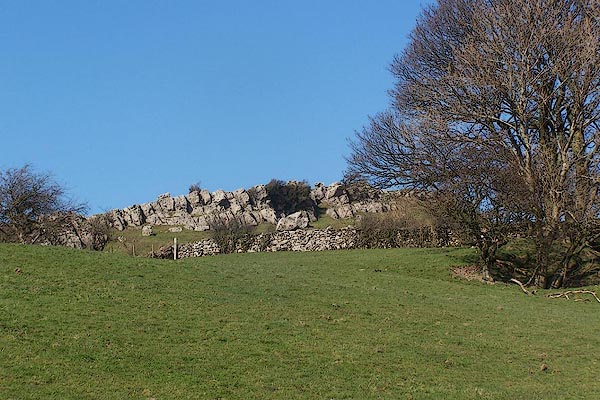
One bright, sunny afternoon Dick and I went to his land in the village of Pardshaw Hall, a mile away from Mosser. On this very land in 1650, from the famous Pardshaw Craggs, George Fox ,the founder of the Quaker movement preached the word to thousands of onlookers. Now Dick was going to preach the word to me on how to “brae” posts in to a new fence!

The old post and wire fence had been removed and in its place, Dick and I were going to hammer in brand new fence posts. Dick told me that I was to learn the proper way to bang them in. He carefully positioned the post and instructed me to hold it firmly. Then he spat on both hands and took the Mell Hammer in wide arc above his head bringing it firmly down on the top of the post. He repeated the movement a number of times, each one expertly hitting the post flush on the top. His swing was as attuned as a professional golfer!

After several more blows Dick handed the Mell to me. From a height of about six inches I began to tap away on the top of the post. It didn’t take long before Dick shouted up. “Were you not watching? Get that bloody hammer back over your head and hit it properly. So I did just as told. My first blow hit the post perfectly and it sank 3 inches in to the ground. The second wobbled a bit on the top, and the third ran Dick’s fingers right down the post.

He went purple and I expected him to blow. But all he said through gritted teeth was “You…….” Then he placed his hands back on the post. The message was clear. He wasn’t giving in and neither was I. Soon the post was solid in the ground and we moved on to the next. By the end of the afternoon I was exhausted but there were several posts in place, all straight and true and I had mastered the required technique. Another lesson was learned that day, you don’t give in. You just keep trying until you get it right.

FOOD FOR THE MASSES – MAINTAINING STANDARDS AND WHY WE SHOULD SUPPORT ALL BRITISH FARMERS.

Over the last 30 years I’ve worked in the farming communities of Cumbria and to a lesser extent the Yorkshire Dales and the Lancashire Pennines too. In that time several million sheep and maybe a hundred thousand or more cattle have for a tiny part of their lifetime been in my care within an auction mart. I’ve worked with high turnover, low margin feeders, operating highly intensive fattening systems and also very extensive, low production, high nature- value farmers. No one can persuade me there is a right way or wrong way. The best and most successful farming systems are conducive to the type of farm, the area, topography, soils and climate. It is horses for courses. A one- size fits all policy of land management could never work despite what some “experts” believe.

In the auction mart, I owed both the farmer and his animals a duty of care. For the farmer it is important that the animal has safe passage to the buyer’s farm or indeed the abattoir for slaughter. For the animal we try to ensure that whilst in the confines of the auction it is as stress- free as possible, comfortably penned and where necessary fed and watered if the on- going journey is delayed. The duty of care is always impressed on auction staff. Most auction staff now have an NVQ qualification in livestock droving.

Animal welfare continues to be a major contributing factor in the design and operation of auction marts. Quite rightly the performance of the market and its systems are regulated and policed by DEFRA and Trading Standards. Sometimes marts are visited by other groups such as RSPCA and Farm Assurance inspectors. There are also occasional visits from other less desirable organisations, whose mission is to disrupt the market and by subterfuge or even plain lies, seek to pervert the truth about the welfare of animals in our care.

Most markets will always welcome the general public in to the auction environment as long as they too are respectful and keep out of harm’s way. A Health and Safety inspection once recommended a total of 22 different warning signs to be placed in one of my markets between the unloading docks and the sale ring! By their very nature, markets must be efficient, smooth and professional work places. Knowledge and experience of working with livestock (and People!) is essential.

Markets are very much favoured by the farmer. They are seen to be independent sales centres, helping to add value (on most occasions) by bringing a range of buyers to the ring. In other words, a buyer for everything regardless of quality or size. The market also guarantees payment to the farmer. In an age where some meat companies can go in to receivership on Friday and their directors back in business by Monday, this is a very useful safety net for the farming community. There is also a very strong social element to the market in an industry where rural isolation can play a part. I know some farmers in these parts who only leave the farm and socialise with others on auction day!

On Prime stock days, cattle and sheep are brought to market and sold to a ring full of buyers representing a range of wholesale and retail meat buyers. These range from the high- ranking supermarket chains to catering butchers and local high- street butchers. Buyers from the ethnic communities are vitally important, particularly in the sheep meat sector. This market continues to grow year upon year.

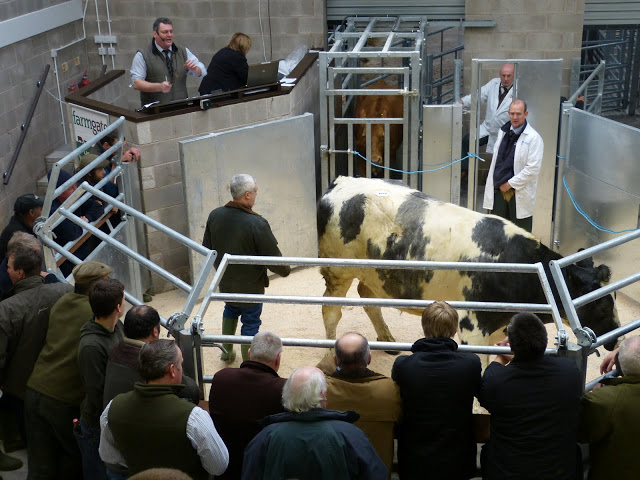
Our job as an auctioneer is to ensure that any animal must leave the market in at least the same condition as when it arrived. It must not be bruised or otherwise injured. It must not be stressed, as this can affect the meat quality and the way in which the carcase cools and sets. Also it must not have lost condition or meat quality during that time. Buyers will only visit the market if they are confident that animal welfare is high on the auctioneer’s agenda and that what he buys, he will get delivered to the point of slaughter. In this respect there is a trust and a bond.

There is also a trust and a bond between the farmer and the auctioneer. Most farmers genuinely care about the animals they rear and want them to live the best lives they can. This maybe particularly so for farmers with favourite dairy cows, beef cows and even some breeding ewes. The message is hard to get across to the general public and one which needs to be done far better in future. Even among the more commercial and intensive farming operations, where there may be less of a bond between farmer and animal, there is a desire to ensure that the animals are healthy, in the best of condition and able to be sold for optimum value. In order to achieve this, animal welfare has to be a top priority.

The regulation in the auction mart industry as described above is even more intense and just as robust on livestock farms. Every bovine and ovine animal in the UK has an individual ear tag number specific to it. This must be recorded by the farmer or he may be financially penalised at a later date. Everywhere those animals go during their lifetime, their ear tag goes with them. As a result we have the best traceability system in the world. Without any shadow of doubt, our livestock production and welfare rules are of the most stringent with few countries able to bear comparison. This has been embraced by UK farming to a great extent despite past farmer grumblings about farm assurance being only for the supermarkets benefit.

As an industry we are passed that now. We are genuinely proud of the high standards we have achieved and are maintaining. That is why supermarkets, government and the general public should recognise that our standards, food provenance and traceability comes at a price, an on-cost to the producer which is not redeemable at the point of sale nor re- reimbursed by the supermarket. There is no added value to the farmer for giving assurances to the general public. It could be said that only supermarkets benefit when they choose to promote “assurance”, hence the grumbling.

Worse still is the fact that supermarkets are very happy to promote “farm assurance” with brands like “Red Tractor” but only at a time when it suits them. For when farm gate prices rise and there are several reasons why this can happen, the supermarkets like to have a Plan B. This takes the form of imported frozen meat such as New Zealand lamb which is pre- purchased several months before it is to be sold to the British consumer, shipped half way around the world and kept in frozen storage until the supermarket decides to off- load.

Time and again in recent years this has occurred at the time of peak lamb production in the UK, often in the autumn and winter months when public demand is highest. The frozen goods are then given premium shelf space, advertising and of course clever “two for one” offers designed to make the consumer think they are getting a real bargain. At this point our un- rivalled standards of welfare, traceability and provenance go out of the supermarket window. This is the biggest heresy of supermarkets who hide behind their public facing statements that British lamb is “out of season”. It is a lie and a slap in the face for the UK producer. It is disrespectful to both the farmer and the consumer as is the often deliberately confusing and misleading labelling system on meat products. There are many examples of this. Some of the larger supermarkets play on the consumer’s lack of knowledge and information. Time and again they market price over quality and provenance.

If we are to maintain our standards, support viable and sustainable farm businesses then these issues have to be dealt with and things must change. It is clear that governments are not prepared to act in any meaningful way. The Supermarket ombudsman has proved to be pretty toothless up to now.

We are at a crossroads leading up to Brexit. The farming industry perhaps like other industries too, is in a state of limbo. Few farmers may be prepared to invest in future development. Without the safe but some would argue penal umbrella of the EU common agriculture policy, we neither know what or where our markets will be. Like for like support measures are only guaranteed until 2022. We do not know what support measures (if any) will be in place thereafter for farmers, especially those that have in the past helped to keep food prices relatively low and stable (another supermarket win!) Also we don’t know what trade deals government may agree to increase the volume of imported food from around the world, where we know production standards, animal welfare and ethics are simply not up to scratch. Food production and farming may be the throw-away bargaining chip to sustain other industries through trade deals.

If future, farming policies are to succeed, government, supermarkets and other industry players need to step up to the plate. There is no shame in encouraging the message to “Buy British”. There will be no shame in explaining to the public why farming needs to be financially supported. Viable and sustainable farming business’s will ensure investment, best practice, encouraging a culture of more production from less inputs and in doing so, protect and conserve the environment. I have concentrated on my area of knowledge however I am well aware that across the country we have a wide portfolio of highly productive farms growing arable crops, field scale vegetables and fruit all of which I fear are under- valued and under- utilised by the good people of Britain.

There may be multiple benefits to be had in creating such a farming policy. As the population of Britain and indeed the rest of the world continues to rise, the pressure on food production and by association our landscapes and environment will continue to grow. We can make plans to tackle this head- on and be ready to do so but only by starting now. Ten years hence will be too late!

By that time, we may well be regressing to post- Second World War food policies, rationing, poaching and black marketeering to combat food shortages, and the pressure on clean water supplies. In that respect, and I have said this repeatedly since 2001, once again the farmer will become the “housewife’s” best friend. Forgive the term “housewife” in the modern age, but you get the gist. My concern leads me to question, at what price to our landscapes and environment?

The public will need our farmers and their food. Let’s make sensible plans and provisions to stock the larder now. It will provide far better value for money than crisis management, which is where one day we will end up, as the country starts to go hungry.

Finally there is a sadly misguided and ill- informed belief among many politicians that if the supply of imported goods fails and prices rise that British farmers can just “turn the tap on”. I have actually heard that phrase used. The connotations of such a policy are frightening. Trashing the land to feed a starving population would be such a backward step, akin to the American mid- west in the early twentieth century. I believe such stupidity adds even more weight to the argument to invest and support balanced sustainable farming and food production with looking after the land, improving soils and maintaining the environment. Take the fetters off farming, release the handbrake now and we have every chance in being able to sustain the British Isles and our people for generations to come.

Lazonby Auction – A Young Auctioneer learning his trade.

Lazonby is a small village built upon the steep western slope above the River Eden, only a few miles east of Penrith. Most of the older houses are constructed of red sandstone hewn from local quarries generations before. The Carlisle – Settle railway runs through the village and just below the station sits Lazonby Auction Mart. The mart has stood there for over 100 years and in that time has seen little change.

Over much of its life time Lazonby Mart has for 9 months of the year been nothing more than a small weekly market, beloved by local farmers along the River Eden and on the East Fellside of the Pennines. For a brief time in the 1990’s the weekly mart flourished in the Spring months with up to 3,000 prime hoggs per week rattling through the ring. The spring months were very cold and very dark. On a freezing Wednesday morning, the prime sheep buyers would alternate between touching the backs of the sheep to assess their condition and quality, to warming their hands against the giant glowing  pad of gas heater. As the auctioneer at those sales I was standing in a tiny auctioneer’s rostrum, with room for one person only. There was no heater for me and as the sale progressed my finger ends despite the fingerless gloves became ever colder as did my toes. Even despite this, everyone loved Lazonby with pen after pen of quality hoggs flying off the old manual weighbridge and in to the ring. My colleague David “Syd” Westgarth, would be working out the weights of the sheep on a calculator and writing the information on a frozen blackboard for the buyers to see.

In the ring there the sheep buyers were drawn from all of the Northern counties including Arthur Pooley from Chorley and Bob Sumner from St Michaels on Wyre. Local buyers were Jared Faulder and Keith Ewbank and there were other visitors occasionally. The banter was good natured and trade always competitive. This weekly market worked well. After the sale we would retire to the Joiners Arms for lunch, there being little appetite to rush back to company headquarters at Penrith.

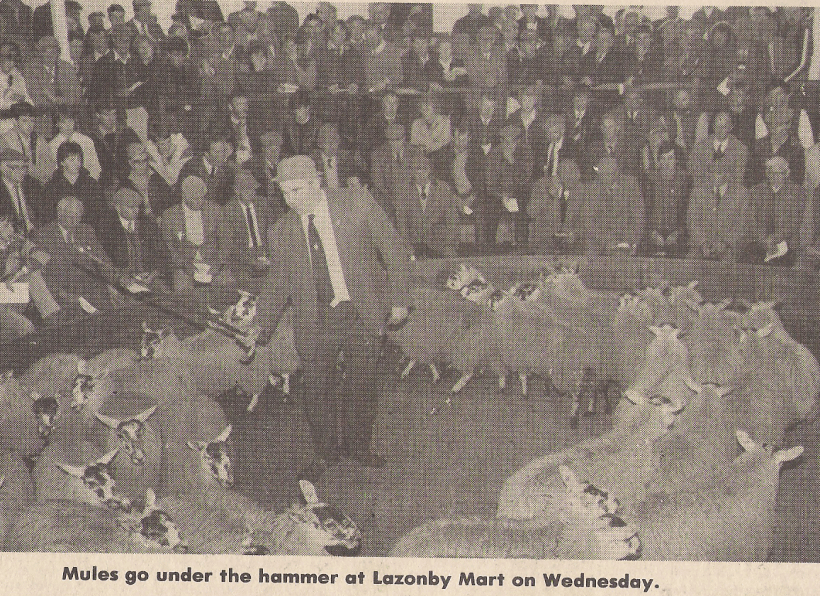
The little weekly prime market was not what Lazonby was famous for. Ask any farmer in Cumbria and probably most farmers around the country what Lazonby Mart sells and the answer would be immediate, Mule Ewe Lambs. Known as Gimmer Lambs in this part of the world. The Mule is the by- product of the Blue Faced Leicester Ram and the Swaledale Ewe. This breeding produces a strong, hardy and prolific ewe lamb much loved by lowland shepherds the country over.

There are many markets across the north of England selling the Mule gimmer lamb. Lazonby was known as “The Foremost”. Why? Well for a start it was the biggest market of its type attracting buyers the length and breadth of the Country. Secondly the quality of the sheep was in those days, second to none. The Swaledale flocks of the high Pennines produced lambs that thrived wonderfully on richer lowland pastures. The Mule sheep and Lazonby market grew several fold under the tenure of auctioneer Norman Little. For years he promoted the sheep, canvassed the producers and earned the respect of farmers as far north as the Roman Wall, across Alston Fell and throughout the Lake District.

At its peak Lazonby could comfortably handle and sell over 30,000 gimmer lambs in a single day and still be ready for business the next day to sell up to 10,000 more castrated Mule Tup Lambs or Wether’s as they are known locally. The sales campaign would start in the summer when the Lazonby team would travel the high roads and by- roads visiting mule producers on the farm, canvassing their support and hoping for their custom during the autumn sales.

The huge list of Lazonby lamb buyers would be transferred to envelopes and catalogues and sales circulars sent out in good time, telling the buyers to make a note in their diaries of the all- important sale dates. Many buyers were regulars, arriving year after year, often purchasing the same sheep from the same producers if they had thrived and done well the previous year. The sensible farmers offered some good luck penny and this was often remembered by the buyers at future sales. Farmers who scurried away after receiving their cheque from the office, without paying their respects and some good luck to the buyers would often be marked down on the catalogue and ignored the next time.

Well-seasoned auctioneers knew which buyers bought which sheep and would deliberately look or “not look” at those buyers depending on how the trade was going. “Old customer” was a phrase auctioneers loved to trot out at the fall of the hammer, meaning these lambs can be bought with confidence.

On the farms the selling process began weeks before market day, with some producers feeding a little concentrate or cake to the lambs to bring them forward after weaning. “Learned to trough” is a phrase that some buyers wanted to hear so that they did not have to spend time teaching lambs the process of eating feed from a trough at their new homes. Also these lambs will follow a farmer shaking a plastic bag to the ends of the earth if they think there is cake to be had.

Closer to auction day the lambs were wormed, injected, scratched for oarf, which is an immunisation process against the oarf disease. Then a series of dipping’s in the sheep dip trough with a final soaking in pearl dip would produce a lovely dark hue to the lamb wool. Add to that a good face- washing and fleece trimming that any professional crimper would be proud of, then the lambs would right and ready for sale. So much work and so much time spent by the shepherds for one minute in the sale ring for the auctioneer to work his magic and draw the best price possible out of the crowd. A whole seasons work from tupping time the previous autumn for less than 60 seconds in the sale ring to achieve a year’s wages from those sheep. No wonder some farmers get nervous and stressed on these days. Maybe the auctioneers do too, although the farmers would never know it!

It is mid- October. Finally sale day has arrived. A myriad of trailers and huge wagon transporters are unloading constantly at the unloading docks. Local people know and accept that the tiny back roads to Lazonby will be a constant procession of trailers and wagons, for most of the day. These days are the “harvest of the fells”, the most wonderful time of the year to most local farmers.

The sheep are taken from the docks to pens with all haste. There is a constant noise of whistles and shouts as the lambs are ushered down the alleys. Some farmers are lucky and had been balloted or drawn in the concreted top pens close to the sale ring. Others are further down the field in grass pens. The unluckiest haven’t made the first penning and can only arrive later in the day for a second penning of lambs. On the very busiest days, there is even a third penning with these lambs unable to arrive before 6pm with daylight fading fast.

Farmers aided by drovers pen- up their lambs. Often the farmers are carrying huge sacks of sawdust. Too much washing and preening has gone on to allow the lambs to get dirty. They now stand on a thick crust of dry wood shavings. Nervously the farmers scan the sky for sign of rain. Rain turns the golden fleeces in to a bedraggled tangled mess, not what anyone wants to see. Farmers with pens for the prize show diligently work away with soapy cloths to give the mottled faces of the mule gimmer lamb a final wash.

Closer to sale time, buyers begin to arrive. There are warm welcomes from the auctioneers and the farmers. Many buyers have become friends over the years. They are in time to see the judging completed. A championship has been awarded and the winning farmer is photographed with the sheep, the judges and the trophy. The trick is to look reservedly happy without beaming. These farmers are modest and the real joy of success will be shared later either at home or in the pub, depending on prices of course.

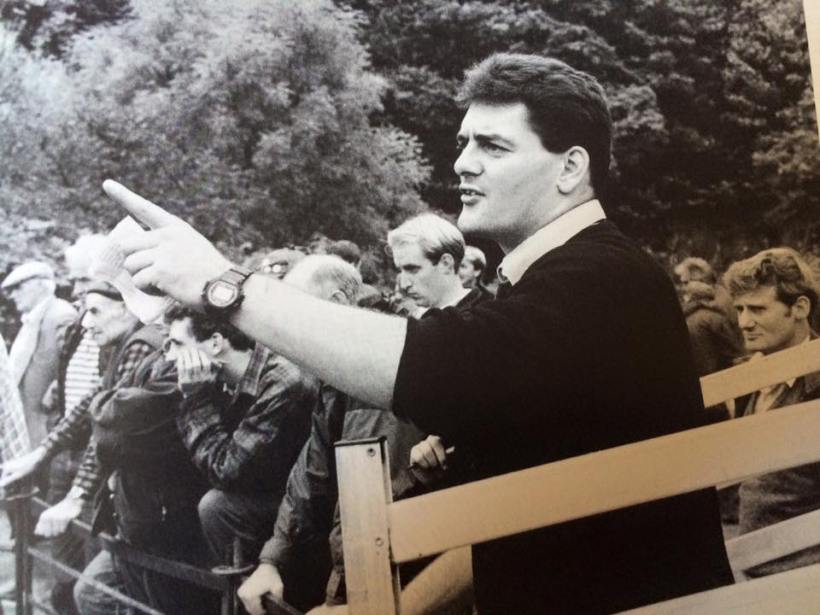
9.30am and the sale is about to commence. Norman Little is the man in charge. He is the manager of the market and has spent years building up the trade, the breed and the market. He is in his element. A tannoy message calls the buyers to the ring and quickly the narrow wooden benches around the sale ring fill up as people take a pew and settle down for the sale. Beside Norman sits Gordon Teasdale a man who left school to work at the auction and has come through the ranks. After Norman’s day, “Tizzer” will start the sales. His photographic memory ensures that he never forgets a buyers face and can recall names at will. Norman and Gordon are experienced auctioneers at the top of the game. I am lucky to be an apprentice in this arena.

The first lambs enter the ring followed immediately by the farmer and his family all armed with sticks or crooks. Norman is immediately in to his stride. His style is beautifully lilting. He knows the sheep, their value and the buyers. He knows who will buy what and within a few minutes how far they are prepared to “travel”. Norman rarely has to take more than five or six bids to get to the price. He has the complete confidence of the both buyer and seller.

In less than thirty seconds, the hammer is down. “Let them run” shouts Norman. The ring drover and young auctioneers who police the huge oak doors in to the ring are trained to get the sheep out of the ring just as the last bid is being taken. At the same time the next lot of sheep is entering the ring. The trick is to let the new sheep just catch sight of the old sheep leaving the ring. If they do see them they charge in to the ring with ease. Get this process right and the sale runs swiftly and smoothly. Get it wrong and there is a mix up and a telling off from the auctioneer.

Behind the wooden doors and all the way back to the pens there is a team of drovers each working their station to get the lambs up to the ring. They rarely change their position except for a swift break and a bite to eat. They will spend many hours just doing the same job, pen after pen. Behind the doors the final drover is often a brilliant counter of sheep. I’ve known some men be able to count the sheep in fives as they work through a large pen of sheep. This is hand/ eye coordination at its very best. Most of work in two’s as we count. The sheep are counted in and counted out at Lazonby. Pride is taken in the job right across the chain.

From the ring the sheep are taken to the buyer’s pens by another team of drovers working as fast as they can. Some large buyers have four deck sheep transporters waiting at the docks to be loaded. At the largest sales it has been known for a wagon to be loaded with over 400 lambs and be driven down to Salisbury Plain, arriving before the auction staff have left the market at the end of the sale day. Other sheep are driven on past the field pens and in to the huge paddocks at the far end of the market. The paddocks can hold hundreds of sheep. This process is vital ensure the smooth running of the sale without any great delays. The whole droving team is working flat out to achieve this, all day and in to the night.

As every lot of sheep is back- penned, a message detailing the buyers pen and the pen number is relayed by walkie- talkie back to a trainee auctioneer in the office who compiles a list in order to make it easy for buyers to find their sheep after they have finished buying, The young auctioneer is desperate to get out of the office and back in to the buzz of the market.

All day long the auctioneers maintain their rhythm, stopping only to clear those buyers who have chosen to stand in the way of the sheep exit gate. Eventually the young auctioneer gets his turn to sell and for a couple of hours he is in a whirlwind of endless lots of sheep, trying to value them before he starts to sell them ,remember buyers names as they bid and generally not make a cock- up on his shout. Very often a senior auctioneer sits close by with a steadying word or an odd new buyer’s name.

It is late afternoon and darkness has fallen. The ring lights are on, and way down on the field pens the temporary light twinkle brightly as they dance in the evening breeze. A chill is settling in the auction ring, but the seats are still full and the lambs keep coming. The same phrases keep coming over the tannoy, “high- gone lambs”, look at the colour”, “here’s some power”. Meanwhile the drovers are working away at the same pace, never breaking stride. At the bottom of the yard the café is doing trade. Up the stairs on the loft, farmer and buyers are sharing the long tables, eating pie and peas or a selection of cold meats. The young auctioneer hopes there will be something left for him at the end of the day. He has no wife to go home to and no supper waiting. That will come rather later in life.

It’s almost 10pm. The sale has been running for 12 ½ hours non- stop. In the Joiners Arms some of the farmers who were sold in the first half an hour, have been in the pub since them. Two of them are now downing their 30th pint.

In the sale ring, all of a sudden the shout comes from behind the oak doors “last chance tonight”. In a flash the last pen of sheep for sale has entered the ring and been sold. The auctioneer, the fourth of the day, thanks everyone for their attendance and bidding. In seconds the ring seats have emptied and an eerily cold and still calm pervades the air along with the rank smell of sheep dip and soiled sawdust. A drover quickly begins to sweep the steps. He once found a tenner under the seats after a sale and has been looking out for another after every sale since.

There is a large queue of buyers in the auction office. The clerks are exhausted, white faced with the mental strain of a 12 hour shift, counting money, writing bills and taking cheques. As soon as the last buyer is accounted for they will be away.

The two youngest auctioneers scroll through the lot sheets writing the sale report and selecting the highest prices and best flock averages. Immediately after they head for the café for foo,d a warm up and plenty of banter with the lasses.

Norman Little sends a message that the auctioneers are needed to check buyer’s pens and count sheep. In the distance throughout the sheep pens there are flash lights moving backwards and forwards as buyers look for their lots. Some are even dosing their lambs before they leave. Gradually the hive of activity quietens down. Some of the full- time drovers will work through most of the night, counting, moving, loading, counting, moving loading.

Now the office is closed down and the ring- lights are turned off. Even with the big doors closed, a cold draft whistles through the gap. The ring has become cold and lonely, where just an hour or two before it was buzzing with people and lambs and the rapid fire lilt of the auctioneers. Now the sale is done and lambs will be on their way to new homes to live the rest of their lives.

The young auctioneer is dead tired but makes it to the pub for last orders. It is still heaving with a swell of farmers, still in auction gear. The mood is joyous. Trade and prices have been good all day. It is a fantastic atmosphere. Lazonby the “Foremost” mule market has done its job once again. Everyone heads for home tired, rosy cheeked and happy. Meanwhile the handful of dedicated droving staff are still there trudging through the mud of the field pens, finding lambs for anxious hauliers who want to get on the road and drive through the night.

In the morning, it will all start again, with 8,000 wether lambs to sell, because this is the back- end, the harvest of the fells and no one working at Lazonby Auction blinks an eye. This our job and our life. It’s what we know and what we love. It is also why some of us will it miss very much as we progress our careers and move on. There is always a feeling that it would be good to go back and with the knowledge gained in later years, do it all again.

Now the times have changed. There is less sheep on the hills and less buyers to purchase them. Lazonby still goes strong and always will but we never again see the days when 30,000 lambs go through the ring. Boy did we enjoy it!

KESWICK HERDWICK TUP FAIR

It is the autumn of 1995. I am 30 years of age and the new manager of Mitchell’s Auction Co Ltd. Mitchell’s operates the livestock mart in the town centre of Cockermouth, the market town bedecked by Wordworth’s daffodils each spring, and full of Lake District sheep in the autumn, brought to the market for sale from every valley in the county. The market company is one of the oldest auctions in the country having been created in 1873. As a boy at Fairfield junior school I could hear the auctioneers in full flow and so wanted to run across the car park to the auction. Now I am here managing the place!

There is one important sale that does not take place at Cockermouth Auction although it is always conducted by Mitchell’s. It is the famous Keswick Herdwick Tup Fair. For decades this event has taken place in the park lands above the Twa Dogs pub heading out of Keswick towards Penrith. With great care and precision, Herdwick breeders set up temporary pens in which to hold the annual crop of Herdwick rams, or tups as they are known in Cumbria. Not long after first- light, a procession of vehicles and trailers arrive at the field and the tups are expedited to the grass pens in preparation for the prize judging and eventual sale.

The manager of Cockermouth auction always conducts this sale. It is a long- standing tradition. This year for the first time, the sale is in my hands. I have been nervous for days leading up to the fair. I am new to the job, I don’t really know Herdwick sheep and I only know a few of the local vendors and potential buyers. It is a big responsibility but none of the Herdwick breeders seem to bat an eyelid. They all seem happy to have me selling at their main annual event of the year. Either that or they are good at hiding it!

I arrive early to show willing. It is typical tup fair weather, wet and windy. The clouds are lying low on the southern slopes of Skiddaw, towering above Keswick. Even the top of Latrigg is hidden from view. In front of me I observe a sea of green waterproofs, plastic leggings and wellies. There is an autumnal nip in the air and the leaves are falling from the trees and swirling in the breeze. The Lake District Herdwick farmers are impervious to the rain and cold wind. Winter hasn’t started for them.

Generally speaking the weather is always the same for the Tup Fair. The green landscape is broken only by the magnificent sight of the Herdwick Tups in the pens. There in front of me are 250 of the finest Herdwick males penned together side by side. It is a beautiful view. The older tups now in full bone and full bloom are pumped up like African lions. Striking in their familiar rudded – up (red) fleeces, another long- standing Herdwick tradition. They are testosterone filled pocket battle- ships ready to fight each other or ready to serve ewes, whichever opportunity happens first. The smell of the sheep, the wet wool and the rudd is all- pervading. It is the smell of autumn sheep sales.

It is getting towards tupping time when in just a few weeks’ time, the Herdwick ewes will be brought down from the high Lakeland fells and introduced to their new male friends. This is the only sale of registered Herdwick rams in the year. Each tup has been inspected by a panel of Herdwick Sheep Breeders Association members and has been judged to be physically correct and fit for sale.

Before me stands the cream of the crop, the pride and joy of each and every Herdwick Farmer who is selling. Many of the sheep will have been shown at various Lakeland agricultural shows throughout the year culminating late in the season at Eskdale and Wasdale. The Tup twinters often attract most interest. These are three year old sheep that are about to live through their second winter (twinters). They have not had the chance to serve any sheep being too young the previous autumn. As such they are untried and unproven. Some have massive potential and have been observed by potential buyers at various shows. Some have only been brought out to show at the very end of the season once the opposition has been assessed.

It is good fun watching potential buyers trying to get a good look at the sheep without appearing too interested. It doesn’t do for some buyers to broadcast that they like a certain tup. This can attract other potential buyers who respect the opinions of others and might even out- bid them at sale time. Herdwick tup buying can be a furtive business. Many times in later years I take a bid from a surreptitious hand flapping over the top of the wall, the owner of the hand trying hard not to be seen other bidders. More often than not everyone knows whose hand it is anyway. It is even more fun to knock the tup down to the hand and give the correct name out without even seeing the person. The thumbs up over the top of the wall was the sign that I had got it right!

But this is Keswick and today there are no walls. There isn’t even a rostrum. I have to stand on the ramp of a sheep trailer looking out over the sheep pens, with many bidders standing even further away behind the pens, and many farmers standing either side of the trailer. There is no microphone and I am expected to shout for about 5 hours which is how long it takes to sell 250 Herdwick Tups, one by one.

The judging has taken place, the prizes awarded and it is sale time. The rain is incessant and I stand on the trailer ramp with a shepherd’s crook which I use as a gavel, banging it down on the ramp to signify that a sale has been made. My other hand is trying to hold on to an umbrella, but it is a forlorn hope. There is water dripping in to my eyes and I am having to shout above the wind and rain to a large group of several hundred farmers all around me.

I have one asset by my side. Stan Edmondson from Seathwaite Farm is going to help me. He is a director of the auction company. He is also both a Herdwick legend and a Lake District legend. Anyone who has walked through the farm yard at Seathwaite heading for Scafell or Great Gable will have been greeted by Stan. His cheery wave and standard shout of “Aye- aye” will have been heard by thousands of Lake District visitors over the decades. He has a life- long experience of breeding and working with Herdwick sheep. He takes and interest in the people who visit his valley. “Where’ve you been and what have you seen?” is a phrase oft heard from Stan as people walk past.

Prior to the sale Stan tells me that he is going to stand with me and “keep me right”. This means he will point out sheep that he thinks may make a good price and to tell me the names of all the buyers who I don’t recognise. Stan knows every person on the field and probably their fathers and grandfathers before them. The problem is that Stan isn’t that good with names. Throughout the sale I am offered a number of suggestions as the hammer comes down. “Oh that’s what his nyam, thoo knaas, Johnny’s Grandson, thoo knaas him” and so on!

Stan is nearly 80 years old. His days as a world champion fell runner are long behind him, but he knows Herdwicks through and through. Despite being crippled with arthritis, he stands for 5 hours bent over his trusty shepherd crook, his eyes alive to the sheep in the ring, and the people bidding for them.

One by one The Herdwick tups are brought in to a little ring area in front of the auctioneer’s trailer. They charge about between me and the sheep pens. The vendors wave their arms frantically to try and make the tup show to attention. Occasionally they grab hold of the sheep to ensure it stands in the correct way, or to stop it jumping out of the ring. It’s a constant whirlwind of motion that I have to ignore as I urgently scan the crowd for bids.

I start the sale and manage to get quite a few sold but it is without doubt the hardest I have ever had to work. Herdwick Sheep Breeders are slow bidders. You cannot rush them. You cannot jump them up with big bids. You have to let each lot take its course. The grim reality is that no one actually knows how much a Herdwick tup is worth. Certain bloodlines are prized and there is only a limited gene pool within the breed. Tried and tested aged tups can reach a decent price. Young twinter tups of good potential can make a few thousand pounds. It depends on the breeding and of course the conformation.

Auctioneers pride themselves on stocksmanship and knowing the true value of the stock they sell.  A Herdwick auctioneer must accept that neither he nor many of the Herdwick shepherds have much of clue as to what the sheep are worth. Nobody minds how low you start, so you just keep taking the bids until they cease. At that point the stick is banged down on the ramp, the hammer has fallen and the sale is made.

In time as I gain experience, I learn to do the exact opposite of many top quality pedigree auctioneers that I have watched and admired. For in other breed circles the auctioneer judges the animal and the people bidding for them. If circumstances allow, they go big from the start, taking large bids in the knowledge that certain buyers will go with them and maybe even new records will be created. When I sell Herdwick tups, I take smaller bids as the lot progresses. This way I can often eek out an extra 500 guineas beyond where I might be were I taking much bigger bids. It takes longer but in time record prices will be broken using just this method.

I’ve been selling or rather shouting for over 4 hours without a break. In that time I have only sold 200 tups, but that is normal. Old Stan has been doing his best with the names. It is also a tradition in Lakeland to sometimes give the name of the farm rather than the farmer. So I am knocking sheep down to Nook Farm, Brotherilkeld, Troutbeck Park, Fell Foot and many more famous Lakeland farms. Often I have no idea who actually farms there. In time, I will grow to know each and every one of them. Even better, the course of my work as a Lakeland auctioneer will take me to so many of these farms on a regular basis. Time and again I am made welcome, and made to feel like I am part of the Herdwick world. So often I travel over the famous mountain passes of Lakeland on my way home from visiting Lake District farms. Always I feel I am blessed to do this for a job, and get paid for it.

Stan is also good at pointing out the sheep he likes. “This might mek a bit”. He is generally right, but not always! Eventually we are down to a handful tups left to sell.  A little Herdwick tup lamb comes in to the ring. Tup lambs are rarely sold, being given the chance to grow in to their second winter and sold as a twinter. This little lamb is only a few months old and is striking in that is jet black all over. Herdwick lambs are born very dark or even black. Their fleeces lighten with age. This little ball of fluff really is jet black.

It has been bred by another legendary breeder, Joe Folder now residing near Cockermouth. Stan lights up. “Ah now I like this” he says. “Set it off at 400 guineas”.

“What?” I am incredulous. It is a tiny little ball of fluff. “Set it off at 400 guineas” he repeats. Rather non- plussed I set the bidding off at 400 guineas. After one minute of scanning the crowd and constantly repeating “400 guineas, I’ve 400 bid, any more this time”. I turn to Stan and quietly apologise. “Sorry old lad, no one is bidding”

“Nay” he says “ah thowt it would mek all of that”. So I drop down to 50 guineas and immediately there is interest. 5 minutes later the bids have been coming in thick and fast. Finally with a last shout “all done? Last chance, hammers up, goes this time”…. The Herdwick tup lamb is sold for 400 guineas. Stan is triumphant. He thumps his shepherds crook on the trailer door “there thoo is” he beams “I telt tha”.

Joe Folder, smiles and winks at me. It is a sign of approval and we become friends from that day forward. The buyer of the lamb is non- other than Jean Wilson, a lady feted within the Herdwick world and far beyond. Jean Wilson is synonymous with Herdwick Sheep. Her rock by her side is her husband Derek. Years later Derek tells me that “Jean was bred to breed Herdwicks”. It is in her blood. She will travel the world to promote Herdwicks and her wise council is sought by many a young breeder starting their Herdwick career.

Like so many of the old school breeders, her knowledge of the Herdwick sheep and her skills are all encompassing. Meet Jean at any show or sale, and she will know the history and breeding of not only all of her own sheep but probably most of the other farmers sheep too.

Years later I was required to inspect and value many of Jeans best sheep and also the sheep of many other Herdwick Breeders in the foot and mouth epidemic of 20011. This was without doubt the hardest, most upsetting, soul- destroying job I was ever asked to undertake. For in 2001 these sheep were wintered away from home on the fertile soils of the Solway plain on the northern shores of Cumbria. Jean and so many other farmers could never visit those sheep or see them again for foot and mouth disease was raging in north Cumbria and the government  deemed that the sheep, healthy or not, could never return home and worse still, had to die.

The sorrow in having to speak to Jean after the deed was done will stay with me forever. Even then through the tears and upset, she was able to tell me which sheep I had inspected, their breeding, their bloodlines and their value to her which far outweighed the monetary valuation I had placed upon them. Later that night I cried my own tears behind closed doors. Tears for Jean and all the other breeders and for the sheep themselves most of which were not diseased, but slaughtered in perfect health. What joy to see Jean and so many other Herdwick breeders rise again although it has taken a long time and the pain of those times will never be forgotten.

Recently while speaking at a farmer’s dinner I told the tale of the little jet black tup lamb. I had forgotten that Jean had bought it and was telling the story simply to mention Stan’s instruction to “set it off at 400” and how I eventually got to the price.

As I started to tell the tale. Derek Wilson who was in the audience with Jean, stood up and stopped me. “Do you remember who bought that lamb” asked Derek?

“Err no” I replied.

“It was Jean and when she got home with that laal black thing I bollocked her for bringing it back”

Jean immediately stood up. Leaning backwards with her eyes almost closed as Jean does, she came right back at Derek “ah but you’ll hev til admit” she said to her husband, “eventually he did make a fair decent tup”. Derek had to agree and of course Jeans idea of a decent tup is normally a pretty good recommendation! 22 years had gone by since Jean purchased the little jet black lamb but she remembered the sale as much as I did. “There was just summat aboot him I rather liked” she would tell me later.

So my first ever Herdwick Tup Fair in Keswick is over. I have survived. It even stopped raining and I was able to remove my waterproof jacket. The business is concluded, tups loaded into trailers or just left in the pens, and everyone retires to the Twa Dogs Inn. I sit with Geoff Edmondson from Langdale and we have a pint of Jennings Beer. Geoff sits back in a relaxed position with his rudded waterproof leggings shoved down over his wellies to protect the pub décor. He takes a sup then folds his hands across his chest. “Well Adam Lad, do you think you were getting the hang of it”. “I didn’t think I did too badly for a first go Geoff”. He laughs. “Don’t worry about it. I’ve been among Herdwicks all my life and I’m still learning the bloody job… like”

Soon the traditional singing has brought the bar to life. Glen Wilkinson from Tilberthwaite whose flocks run across the Coniston fells, has his thumbs shoved firmly down in the pocket of his jeans. His head is cocked to one side, cheeks ruddy from the warm glow of the fire. Eyes closed in concentration he breaks into a bass baritone version of “Black Velvet Band”. We all sing the chorus in raucous fashion. Then David Bland from West Head stands up. His sheep run high up along the Helvellyn range. He takes a deep breath and then word perfectly sings “Old Shep”, in a version as good as the King himself. Some of the younger farmers cajole Syd Hardisty from How Hall on the shores of Ennerdale. “Come on Syd, give us Jobby Teasdale’s Warlick!” Syd stands up and his own unique rambling style, half sings and half recites his famous party piece.

I am relaxing in the warm glow as day turns to dark and thinking to myself, “This is great but if I’m doing this sale again next year, I’d like to have it in Cockermouth auction”!

The following year after some hard work on my part I have persuaded the Herdwick Sheep Breeders Association to allow Keswick Tup Fair to be held in Cockermouth Auction for the first time ever. The older breeders who have been to Keswick come rain or shine for decades are unhappy. Tradition is tradition. Some of the younger breeders and one or two influential Herdwick Council members have backed me and are prepared to give it a go. That is another story!