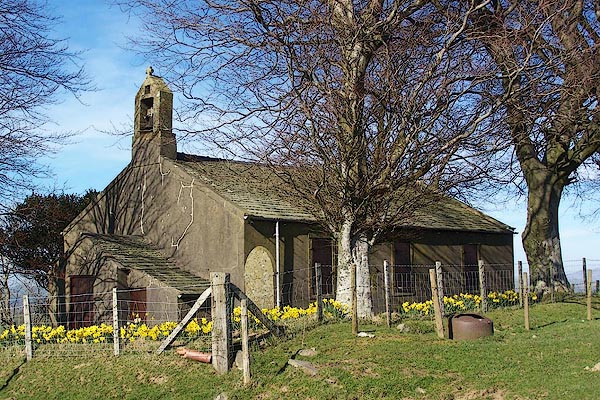
“Let them be going Adam-Lad”

I write a monthly blog for the Cumbria Farmer magazine. I try to keep it light hearted, but sometimes you have to have a rant! Here is my piece from September 2024:-

I was a trainee auctioneer at Lazonby in the late 80’s when sheep numbers across the land were at maximum. This was of course driven by government policy with headage payments encouraging farmers to keep as many breeding sheep as they could. This fact is either not known or conveniently forgotten by those wanting to see a continued diminution in sheep numbers in the hills in order to drive a different agenda.

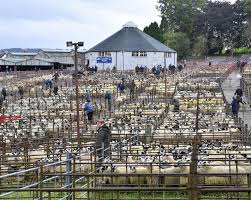
There was a huge furore in 1987 when the brand-new Penrith Mart at which I started almost as it opened in July, was not actually big enough to hold a sale in early September of 17,000 Mule Gimmer Shearlings or Thaves to our southern friends. The decision was taken to move the sale to the long-established Lazonby Mart, also run by the same auction company and located a few miles to the North West of Penrith. Lazonby was known nationally as one of the foremost sheep markets in the land with buyers flocking there from Cornwall to Caithness.

That day auctioneer Gordon Teasdale rattled through the sale, rarely travelling more than £5 to £10 on any lot and finished by early afternoon. The sheep were often going the ring through in multiples of 100 and being bought by farmers and large estates from across the UK. The headage payment was of course a major influence.

As a trainee, I was manning the gates either in or out of the ring, often to the cry of “He takes the lot, 300 to you Sir, let them be going Adam-Lad”. They were often gone before the hammer had even fallen! A constant and perpetual motion of sheep, moving from sellers pen, to sale ring, to buyers pen, and then onwards to a new farm and a new flock.

Today the sheep industry is far removed from what it was. The sheep breeds are pretty much the same. Some would debate whether they have improved or not as there are always “trends” and beauty is in the eye of the beholder. The traditional and precious skills of upland flock management and the local knowledge on common, fell and moor are still there, but many hill farmers fear the future right now. They are under attack.

Headage payments are long gone, replaced by evolving and far from complete environmental payment schemes. Now in some areas of Cumbria and Northumberland, shepherds protest that that have been left with too few sheep with which to manage the upland environment and make a living, the payments offered being too meagre.

Natural England, a non-governmental organisation with seemingly governmental power has very fixed ideas on how many sheep should live on the hill wishing in some areas to introduce a blanket sheep stocking rate. In some harsher parts of Cumbria, this will be right. On many commons it will be way wrong. That is what I hear from many shepherds and conflict continues to brew. Even more conflict occurs when whole flocks are removed from the fell, never to return.

Many farmers do not want to be paid- off to remove sheep forever. The damage it is doing to remaining but reduced hefted flocks is all but crippling in some areas of Lakeland. Most want to find the right balance between farming and nature. This is new untested science, but that balance could be found between willing partners. Instead, in some cases farmers have been pressured with almost no choice and no debate, to remove the sheep from the hill.

Thousands of sheep buyers will visit Cumbria this Autumn as they have for decades, putting millions of pounds into the local economy. Behind every farmer you can count another 40 or so businesses that support the farmer to a greater or lesser extent. With the loss of the sheep and shepherds, the majority being displaced tenants, also goes the rural community and the bedrock of the rural economy. We’re in danger of losing it all as trees and environmental schemes replace livestock, and formerly tenanted farmhouses become Air B&B’s or second homes.

“I’ll crack on and do it meself”.

My old farming Grandfather began his working life as a young boy running errands for the slaughterhouse located close to his family home. As a teenager he progressed onto the line, and at 15 years of age was well capable of butchering animals for local farmers and butchers.

You must remember this was an austere decade following World War 1, leading up to Wall Street crash and a great global depression. No one had it easy save perhaps the odd local Lord or those owning the iron ore mines deep below the surface of the Furness Peninsula.

On leaving school Grandfather went into farm service and quickly learned that as soon as the lunchtime bell rang, he should take his place beside the other farm workers employed on the local estate. Having tried to show dedication and commitment on his first full day of employment by finishing the task in hand, he arrived late to the lunch table to discover that all that was to be had was a salt and pepper sandwich. Everything else had gone. “And go steady on the salt young Jackson.”

Moving home to work in an expanding family coal merchanting business meant that many years down the line, he was able to achieve a dream, buying a small farm to rear beef and sheep, thus reversing an unfortunate family circumstance in the early 1800’s when our farming forefathers were driven off the land and into the iron ore mines.

Grandfather savoured his home-produced meat at the table, and nothing more so than the fattiest lamb hotpot, which in his opinion, gathered more flavour with each warming of the pot. The young grandson’s protestation that he really did not like “the fat-bits,” was met with utter scorn. Let us not even talk about salt on our porridge.

One summer when I was young teenager working on a neighbour’s farm in my home village near Cockermouth, a prime lamb caught its head in a gate and sadly broke its neck. My old grandfather was on his holidays with us. Now long retired and barely able to walk but for the aid of two stout walking sticks, he just happened to shuffle down to the farm to see what we were busy with. Spying the deceased lamb Grandfather shouted to our neighbour,

“That lamb needs hung up and bled.” Not getting much of a reaction, Grandfather decided to pursue the conversation. “I’ll crack on and do it meself.” The thought of losing several potential meals would be unbearable to a man brought up in the 1920’s.

Farmer John was to admit to me later that this was never a favourite task, but one which most farmers have had to do from time to time. However, he could not allow a 70-year-old retired and almost disabled farmer to take on the job and it was abundantly clear that he was not going to be allowed to put it off until later!

In the 1960’s grandfather bought the defunct slaughterhouse building and converted into a house for himself. Those old boys and their wives were made of stern stuff. A different era perhaps but resilience is in-bred and is what will ensure the success of future farming generations, although we may never see the return of what Grandfather called a “proper fat lamb.” Thank goodness!

Young Farmers-Much to offer, given the chance!

My thoughts after a difficult debate with young farmers about their future.

Last night i was the guest speaker at a Young Farmers Club in Cumbria, a role that i very much enjoy having been one myself many years ago. The young people were a mix of seniors already of working age, many of them directly employed on the farm or in farm- related jobs. There were also several juniors who are learning the art of healthy, respectful competition, and a mix of farming and life skills. Many of them will gain confidence to judge stock, speak at meetings and perhaps engage openly with our buying public in future. All of this, as it did for me, comes from Young Farmers Clubs.

For the last part of the meeting, as i have done a few times recently, i turned my chair around and asked them how they were doing? What they were feeling at present? What future do they envisage?

The debate that ensued was outstanding. The level of knowledge and understanding at the current political situation in the agriculture industry would have taken your breath away. If only people in government or policy makers had been there to listen. They can “engage” all they want with the rest of us at stakeholder meetings, but the discussion in the room was worth so much more than all of that.

One young man asked me what i really thought the future would be for Cumbria’s upland farmers like him. What could family farms like theirs do knowing full well that ELM cannot and will never replace BPS and that ELM with what they know at present, does not appear to work for them – Wow! Answer that in a room full of young people all desperate to farm and have a future on the land.

A young lady talked about their family farm with commons grazing. The commons group had decided not to accept a new Commons stewardship agreement. Several farms would be vastly increasing the number of the sheep on the fell as the only viable way forward because the new agreement being offered was so poor. She seemed genuinely disappointed and downhearted by this. Not perhaps what might have been expected knowing the conflict on the hills of Cumbria.

Another young lady privately expressed concerns to me that at the end of her parents tenancy she would be desperate to agree a new tenancy with the landlord for herself. Her great fear is that her landlord might not even give her the chance, perhaps taking the land back in hand to plant trees or chase other environmental money. This is becoming more and more prevalent in Cumbria. Or maybe they would just go for the highest rent offered, this despite the fact that two generations of the family had farmed the land to the best of their ability and will leave the farm in a far better environmental state than they found it. She asked me if there was anything more that she could do.

So many more young people expressed fears and concern. There was not a lot of joy in the room. Indeed there was a level of stress apparent that should not be there for young people at the start of, or prior to commencing their working lives. Perhaps the level of debate around farming family kitchen tables is increasing. Perhaps our young people are listening, sensing or even engaging in difficult conversations about the future of farming, patricularly in the hills.

I believe that this is a micro-cosm of where we are in farming and rural land use today. Whilst government officials continue to publicly extoll the virtues of ELM and its progress, the reality on the ground is far from the company- line.

I tried to give them some hope. “Stick in” i said. “We’re in for a rough few years but we will come out of the other side”. Some will not…. “Things may be different, but your buying public will need you much more in future”. I hope my words were not hollow.

Against the background squelch of anti- farming rhetoric chasing around social and other media, i offered an accolade and a pat on the back. “The work you do in producing food, rearing livestock many of which will go on to be the backbone of flocks and herds across the country, and managing the landscapes that bring 20 million people to Cumbria is so important. You and your families help make our beautiful County what it is”.

I then told them that they were vitally important to the future of Cumbria as is the case in the Yorkshire Dales and Northumberland as well. Their job description will say “farmer and environmentalist”. That’s no bad thing, in fact what a huge responsibility and one which needs time, confidence and trust to learn and embrace. Far longer than the transition period of ELM.

I only hope that their role is adequately rewarded and respected over the next few years, before food production becomes a real thing again, as it surely will. If that is the case, something needs to change, and quickly. I’m afraid i don’t buy in to the government rhetoric that we’re on course and on track in farming and other rural land use. Here’s hoping, but i won’t hold my breath!

The National Federation of Young Farmers Clubs has a simple tagline, “Fun, learning achievement”. It also says that membership is for anyone who appreciates the countryside and rural life. What is clear is that their current members will have a tremendous amount to offer in future. Let us hope, especially in productive yet beautiful places like Cumbria, the Yorkshire Dales and Northumberland, that they get a fair chance. Right now, many are clearly very concerned. I wish we could do more for them.

Community is more powerful than beaurocracy

After a break from blogging, i’ve decided to strike up once again. I can only hope that my musings are of interest to someone….. somewhere!

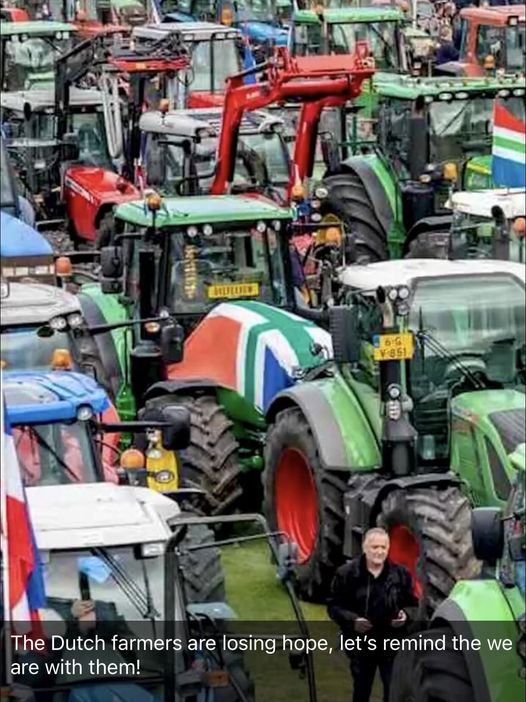
A wise fellow told me recently “Community is more powerful than beaurocracy”. After watching events unfold today in the Netherlands, i am drawn to conclude that the man was right!

https://www.bbc.co.uk/news/world-europe-64967513?fbclid=IwAR1Iu6kJ4J4OvNeexNLD6GrrpTA17OjUeGozO5djIQ0c1nzMnkltXY8RZhM

What is happening to some Dutch farmers in the name of the environment is truly shocking. The government is “offering” to buy- out thousands of farms in order to slash the use of nitrogen fertiliser and cease agricultural emmissions in the country. The livelihoods of farmers and the future of food production appears to be justifiable collateral damage as they are hung out to dry by the politicians.

If farmers don’t accept, they are being threatened with what the attached press report says is an “Expropriation Scheme”. The sensible conservation organisations are even saying “Hang on a minute! This is not entirely the farmers fault”.

There are parallels with UK farmers over the last century in that they have all been systematically supported and encouraged to produce food at all costs for several generations. The Women’s Land Army during World Wars, rationing coupons, and intervention buying are all but forgotten.

No one remembers that farmers were asked by successive governments to keep more livestock, rip out hedges, drain wetlands and farm every inch of the land that could be ploughed in order to feed a starving hungry people. Today farmers are being held accountable for those policies and blamed as the root of the evil. UK food security isn’t really on the political table.

Now the Dutch people are standing up for their farmers and rural communities. They don’t want this! They have voted in solidarity for the new Farmer- Citizen Party which last night won the country’s provisional elections. Who does want this sort of rural land- use policy? Well actually a small but very powerful group of people in the UK might. Some with vested interests, would love to see this re- enacted across Rural England. There’s money in it, in fact large amounts. Whilst there are many who see a genuine need to change the way we manage the land, and in many ways they are not wrong, there are others sniffing an opportunity.

Even now across the UK there are landed estates, some private, some corporate, getting rid of tenants as soon as they can, either to sell land to enable large- scale greenwashing investment, or to plant their own land for their own gain. All of this is generously funded by Government through new planting and environmental schemes. There’s more profit in this than can ever be made out of letting land to tenants, and there’s a perfect facade to hide behind – “we’re saving the planet”! But what of the farmers and local communities?

The average length of tenancy across the UK is now a pitiful three years. Three years does not give a tenant farmer time to settle, raise a family in the local community, invest in the land and business and build a life. It’s a far cry from the old days of the protected multi- generational tenancies that allowed sons and daughter to take over from their parents and their parents before them. Now the loss of every tenant replaced by trees, drives another nail into the heart of a community. It also prevents talented young people from committing to the industry in a tried and tested way, by taking on a tenancy.

These are disturbing times for rural folk in the UK, and especially those connected with farming and food production. Farmers are not blameless and there is an absolute duty on them to leave the natural environment in a far better shape than they found it. It is not unreasonable to think that the scenes in the Netherlands may one day be played out in the UK as thousands of acres of productive food- producing land is re- appropriated and re- purposed in the name of the nature and climate change.

The equitable solution is for government to work up a set of rural land- use policies that balance farming with nature, where both thrive, and develop in harmony. Farming has to change for sure, but with it should come opportunity, stability and trust. Right now we’ve a long way to go. Meanwhile we watch developments across the water with interest. More than 20 million people from all over the world visit Cumbria each year loving the landscapes, the Cumbrian people, the sheep on the hills and cattle grazing in the valleys. I wonder how many would join a UK Farmer- Citizen movement if they realised that the county they love to visit may be under similiar threat. Time may tell……

“THERE’S A BRAVE NEW WORLD OUT THERE”

In January 1981, the House of Lords debated The Sheep Variable Premium Order. This was a deficiencies payment designed to protect and support UK prime sheep producers by giving a guarantee price for lambs sold at the right grade.

Lord Peart of Workington said, “I take the view that this is a good bargain… It will give tremendous help to the farming community, who deserve it… some of our townspeople forget that the production of food on the hills and uplands is really a very hard job”. Earl Ferrers was in complete agreement replying, “life on the hills is a very difficult life, particularly for sheep farmers”.

The Bill passed and for many years farmers could rely on a weekly “make- up” payment. On a rising market, this was a winner. In practice at grassroots level, the young auctioneer at Lazonby, diligently chalked up the guaranteed top up payments on a blackboard, each Thursday morning so that vendors could work out the bottom line.

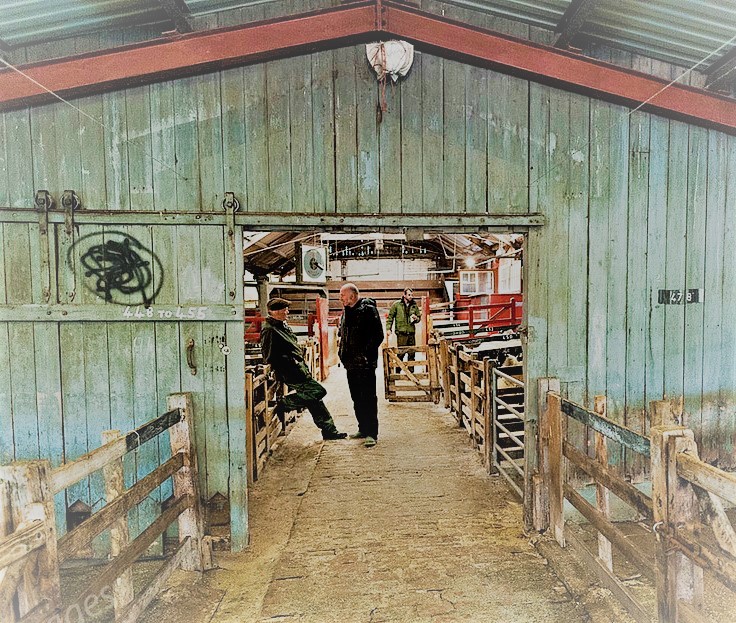
If he was lucky the young auctioneer got a turn in the rostrum, which was actually a tiny little wooden hut adjacent to the main office. A narrow ledge separated the auctioneer from the sale ring. it was just wide enough on which to balance the auctioneer’s book, recording vendor, number, weight, price and buyer, any of which might be referred to in case of dispute.

Decades of gavel abuse had left the surface of the ledge battered and worn. If the young auctioneer was not so lucky to sell, then the morning was spent weighing sheep on the old dialled scale, then writing the weights on a chalkboard for the boss, Norman Little, to read out to buyers.

Woe- betide the young auctioneer should he not get the blackboard washed off and turned around by the time the next lot of sheep had left the weighbridge and moved in to the ring. After selling their sheep, vendors could be seen staring at the variable premium rates, working out what the sheep would come to with the make- up payment added. Sometimes a scowl, sometimes a nod, rarely a smile, for that would never do!

Mid- winter would see frozen breath and frozen fingers, but the sale could not stop. A huge gas heater stood at the side of the ring, to enable the buyers to warm their cold wet fingers in between, touching the lambs backs. The heat did not percolate to either the auctioneer or the weigher! Lazonby Auction could be a bitterly cold place in mid- winter!

At the back of the weighbridge, worked the Meat and Livestock Commission grader. Their job was to assess the condition of the lambs individually, to ensure that they were of the right quality and level of finish, not too fat and not too thin. Graded lambs received a yellow mark meaning entitled to premium payment. Reject lambs were marked differently and were not entitled to the extra payment.

The system was further complicated by the fact that the grader also had to assess the final kill out percentage of the lamb, in other words, the amount of meat as a ratio of the total carcase weight. For the purposes of premium payment the grader would instruct the person weighing sheep to deduct an amount from the full lamb weight. Best quality lambs might only have half a kilo deducted, or less on rare occasions. Plainer quality lambs although eligible for premium, might have 2kg or even more removed. This obviously affected the bottom line for the farmer

A good grader would work well with the sheep weigher and series of finger signals would indicate the amount of weight to knock off. Farmers would try all ways to influence the grader if they disagreed with the grade or the weight deduction. Graders would never ever change their mind! Some farmers shouted, others pleaded,

“Nay nay, Jacko, hev another touch, tha’s missed it”. Or;                                                  “Haway Cloggy man, yer’ve been far ower harsh wid us”

Generally the graders were known and respected by farmers but some like old Roy Cannon from Cockermouth rather enjoyed the banter with farmers who argued with him: –

“Two off these Adam Lad”                                                                                                            “Hell Roy, you’re bloody joking! my lambs aren’t that bad”                                                        “Adam, make that two and half kilo’s off”

The young auctioneer at the start of his career had a little card at his side on the rostrum, with Penrith Auction prices  written down for different breeds and weights – as a guide. Lazonby and Penrith were run by the same company; Penrith Farmers & Kidds, but there was always competition! Norman Little would always insist that Lazonby prices should at least match and probably better Penrith prices on the monday. In those days, long before mobile phones, prices rarely moved much throughout the week, never mind the day.

Just about every one of those Lazonby buyers are now retired or have passed away, to be replaced by others for that is the circle of life, and the circle of auctions. 

Now less than 40 years on from that House of Lords debate, few politicians talk of farmers in the same revered tones. Life for hill farmers has not got any easier in many respects. It can still be lonely and perhaps even more stressful than all those years ago. For many farmers, a trip to market was the only chance to get away from the farm. Nowadays few farmers have time to stop, chat, network and relax.

Also, In real terms the lambs are cheaper, the cost of production far higher and the profit, often far less. Although 98% of households still eat red meat, and 99% purchase dairy products, we’ve lost our connect with the public and dare I say with government.

In future our industry is going to change. Public goods may be the order of the day, but we must still fight to promote the value of food production. There will be challenges but also opportunities. There won’t be any “makeup” schemes, but there will be public money to spend on the farm. The trick will be to maximise payments whilst retaining the viability and profitability of the farm business. I am pleased to say that the Farmer Network is well placed to support its members during the transition.

I am also convinced that over the years the demand for home grown food will rise, as will the public’s desire for a greener world, cleaner air, water and more wildlife. On the back of that, farmers will be able to invest more in healthier soils, greenhouse gas mitigation, innovative production methods and more.

Much as the young auctioneer (now rather older!) looks back on those Lazonby sale days with fondness, we’ve moved on. At least there are still many young auctioneers now learning the ropes in the modern era and deserving support. They may still have a strong role to play in the future.

We can’t change the rules, but we can make them work for us. One day soon, our customers will wake up and realise, just how important farmers are both to food production and to the environment. There is a brave new world out there to be had. We just have to embrace it and dare i say fight our corner. Lord Peart was right. Supporting the farming community in future, will still be “a good bargain”.

The Landscapes of Lakeland – what value?

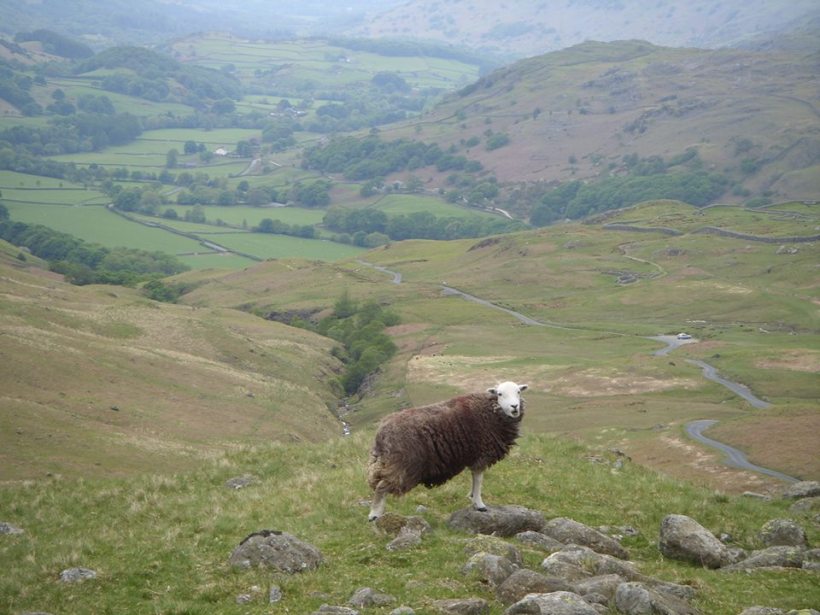
I took this photo one afternoon from the summit of Hardknott Pass in Cumbria. In my role as a livestock auctioneer and land agent, I had spent the day visiting farms in Eskdale and other western valleys of the Lake District and i was on my way over the top, heading for Wrynose and then Kirkstone before driving home along Ullswater towards Penrith. It was a great day and i was feeling fortunate to live and work within the farming communities across Cumbria. What a commute home!

I spied her whilst i was driving. A lovely young Herdwick sheep, the indigenous breed of the Lake District. She stood there with her two front legs on a small rock and she was just watching the world go by. I could not help myself. I stopped my car and doubled bac to her. She saw me and carried on watching me intently. She seemed to be saying, “this is my world” and we stared at each other for a long time before she turned tail and ambled off down hill, in an instant lost from view. She was not frightened of me. She was at ease in her surroundings. I have sold many thousands of Herdwick sheep in my lifetime. it’s part of our culture and our heritage in these remote valleys and high, challenging fellscapes.

These sheep are heafed to the fells. They are bred to live here, attached to hills, acclimatised to them and very much part of them, as are the people that shepherd the flocks.

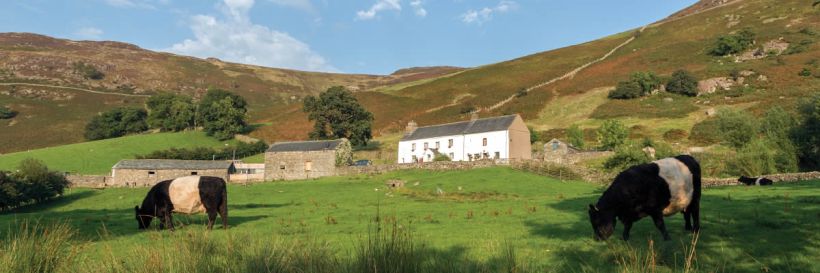
These green hills attract 40m visitors a year who love the landscapes as they are. Trees could not grow here but grass does. The sheep produce wool and meat and the soils store carbon. But the sheep are worth far more than that. They are a linchpin to communities, vital for so much more than just meat and wool.

Last night, to see them on a Channel 4 tv programme, plucked from a model landscape with such ease, betrays an ignorance and shows a lack of understanding and knowledge or worse still, regard for rural life, and the public benefits that sheep on the hills, cattle in the valleys and people working the land actually deliver.

That is not to say that managed landscape cannot be improved. We can make our soils better, we can improve the natural environment, create more habitats and plant many more trees in the right place but these sheep and our rural communities and what they deliver, cannot be over- valued and i hope, will never be destroyed.

BEST DOG I EVER HAD!

Sometimes it is hard to get the general public to understand the relationships that farmers have with their animals.

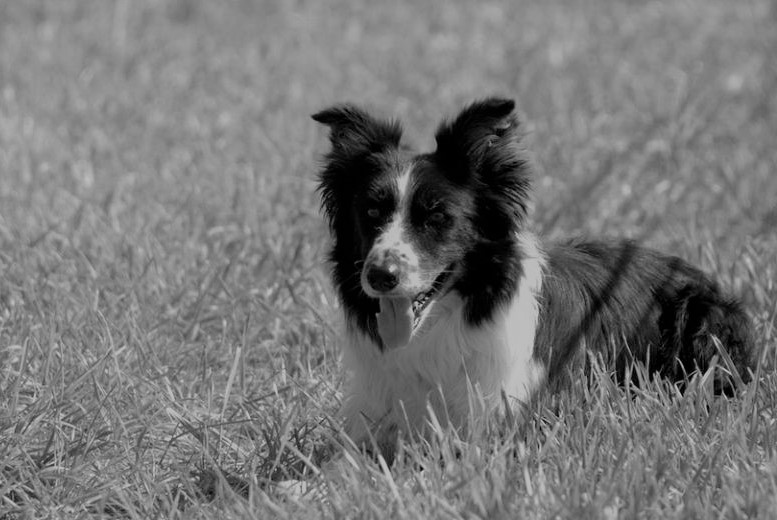
I was 8 years old. It was mid-summer and I was doing what I loved best, working with Grandad amongst his sheep.  We went to gather his furthest field, next to a main road.  Accompanying us was Grandad’s pride and joy, his sheep dog Laddie.

On command away went Laddie tearing down the field on a wide outrun.  The sheep were ewes with strong lambs at foot, ready for weaning.  As Laddie gathered them, a lamb broke away running full tilt into the hedge at the bottom of the field.  In an instant Laddie was through the hedge and on to the road to turn the lamb back.  A car was approaching at speed and the inevitable happened.

I didn’t see Laddie get hit by the car but remember vividly the screech of brakes and the bump.  I also remember Grandad’s words, “oh no, me dog’s dead”.  Then he was shouting at me to stop where I was, but I was over the field gate in a flash, running down the road to where Laddie lay.  Grandad came scuttling along as fast as his old bowed legs would carry him.

“He’s alright Grandad, look his tails still wagging”!  It was nothing but the last vestiges of nervous energy leaving his body.  Grandad had to explain that he really was dead.  Then he told me to run back home and tell grandmother what had happened.  Away I went half running, half walking as I choked back tears.  Later that day we drove down the road where poor Laddie had been killed.  All I could see was a pile of sand.

Sometimes it is hard to get the general public to understand the relationships that farmers have with their animals.  The perception is often that farm businesses are like factory units.  Joe Public doesn’t get that despite the fact that farm animals are working animals, very often there are relationships and bonds.  I came across some stark examples of this in the dark days of 2001 when foot and mouth disease tore farmers from their flocks and herds. From the pulsating throb of a vibrant dairy parlour to empty silence in a few hours. A field full of sheep one minute, to an empty field of nothing but grass. For many farmers this was so hard, as bad or even worse than a family bereavement.

Many times in my career as an auctioneer I have unloaded trailers as farmers bring cast cows to market.  If I’d had a £1 for every time a farmer has said “this is a sad day”, I could probably do a better job of keeping the Mrs in the manner to which she is accustomed!

Programmes like “This Farming Life” do sometimes show the bond between the farmer and his stock as well as the skill and total commitment of so many in our farming community.  Frankly we could do far more of this to educate the public.  The government may not recognise food production as a public benefit, but through the media and meeting the public face to face, this is a message we absolutely must get across in future.

Grandad bought a new sheep dog, but it was never the same.  Laddie was irreplaceable.  Long in to his dotage, grandad would sit in his chair by the fire.  There would be a little gulping cough and a sigh, followed by, “Best dog I ever had”……

THE LAKE DISTRICT – OUR LAND, OUR LIVES, OUR HERITAGE.

He talked of his spirit being lifted every time he visited the Lake District. This he said would be the same for the many who come to our county to appreciate the landscape and the views. The landscape, he said, was created by communities, a living breathing landscape where sheep roamed the fells. To him this agro- pastoral system was important, vital and must be protected.


Much of my family history is entwined with Cumbria and the Lake District. We can get back to the early 18th Century through a number of lines. Along the East Fellside of Cumbria and in the industrial villages of West Cumbria we’ve worked the ground above, as farmers and labourers, and we’ve worked the ground below as miners of iron ore and coal. One thing hasn’t changed too much in all that time. My forefathers, had they lifted their eyes, would have seen the same craggy fells, rolling Pennines, the green valleys and the deep lakes. For this land is our land. It’s where we belong. There are many more people just like me, with same ancestry.

Today I attended the opening of the Lake District UNESCO World Heritage Site on the shores of Derwentwater, at Keswick, one of Cumbria’s most popular tourist destinations. I had no idea what to expect other than a few scant details on an e- mailed invitation from the Lake District National Park Authority. What we did know was that His Royal Highness Prince Charles was to officially open the World Heritage Site accompanied by Michael Gove, Minister for the Department of Food, Environment and Rural Affairs. This is the department that governs farming without actually mentioning it in the title. That is a pretty good clue as to how farming has been viewed and treated over the last couple of decades. Our food producers have been unloved, unappreciated and frankly down- beaten. The public perception has been one of greedy, subsidised farmers doing little for it and driving round in large expensive 4 x 4’s. Reality is far from perception. Food health scares, disease crises, years of dreadful farm gate prices and poor support from supermarkets and over- zealous, ill- informed government agencies have left their mark. Things must change. Perhaps that’s why so many farmers supported Brexit. A huge leap of faith for them, or a belief that things must be better for them?

In Keswick I bumped in to several farmers as we arrived together and went for coffee prior to the ceremony. I caught up with Joe and Hazel Relph who farmed at Yew Tree, Borrowdale before retirement. It was common knowledge that the Prince of Wales regularly used to stay at Yew Tree farm on his annual Lake District break although they would never talk about it. Will Cockbain was with us too. I’ve sold hundreds of sheep over the years for the Cockbain family at Cockermouth Auction and admired Will’s common sense approach to the politics of farming as he has fought on behalf of Lake District farmers at a high level. Then a great catch up with Brian and Jayne Knowles who farm the Southern reaches of the Shap Fells and are leading lights in the Rough Fell sheep breeding world.

Soon it was time to go outside. We walked on to Crow Park to await the special guests’ arrival. In bright spring sunshine I took a few deep breaths and savoured the view. Catbells seemed almost in our pockets. Beyond lay the Newlands fells and then the Grasmoor range. To my left the massive round of Skiddaw, once a huge volcanic plug three times the height it is now, and the namesake of my old school house. Friends all. Some of my forefathers knew these hills as I do today, walked them and mined them. This is part of my heritage.

Six months ago I stood in Crow Park with a group of volunteer farmers and their sheep as we met the general public, showed them the animals and explained what farming in Cumbria means and what it delivers. There were visitors from all over the world. Just talking to them for a few minutes, opened up a new horizon for them. Many were simply clueless about the landscape and its guardians. Several promised to look at farming in a whole new light. We went home tired yet quietly satisfied, wishing we could do more.

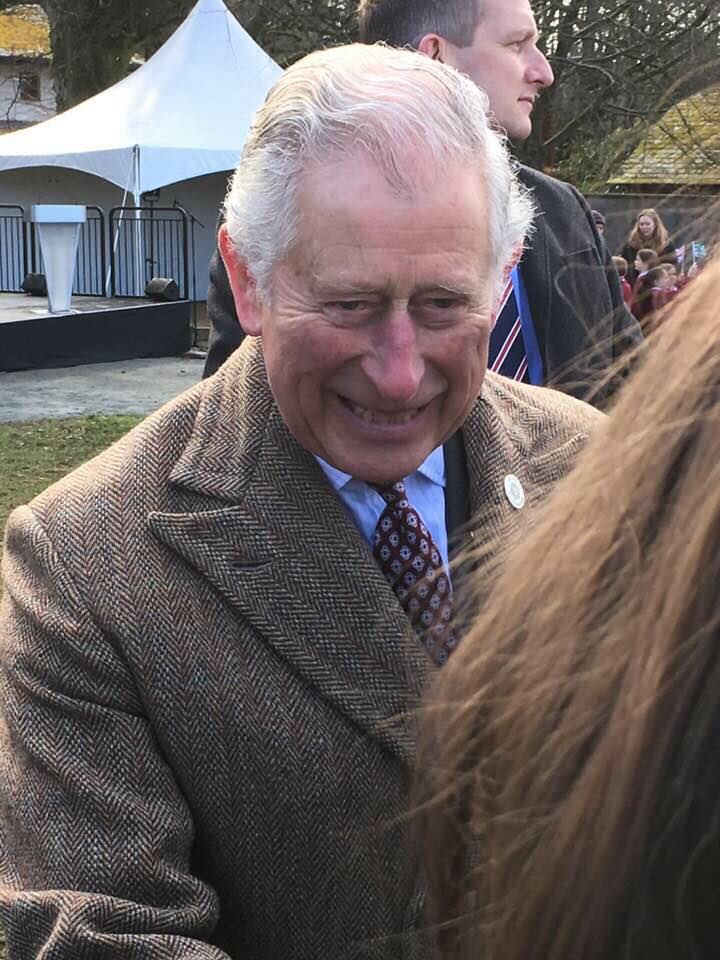
His Royal Highness Prince Charles
His Royal Highness, Prince Charles, opening the Lake District UNESCO World Heritage Site. March 2018. Photo’s courtesy of Ashnessfarm.co.uk

Back here once again, the sun continued to rise above the Helvellyn range, with a little warmth on the face against a cool spring day. What else could you expect in Cumbria in late March? Soon in a blaze of flashing lights, the royal cavalcade arrived. Hundreds of school children screamed and waved Union Jack flags as his Royal Highness took his seat. There were songs and dance performances from local children all of which was entirely fitting. Soon it was time for the unveiling of the New World Heritage Site. Prince Charles took to the microphone. His speech was frankly music to the ears of many rural Cumbrian people. He talked of his spirit being lifted every time he visited the Lake District. This he said would be the same for the many who come to our county to appreciate the landscape and the views. The landscape, he said, was created by communities, a living breathing landscape where sheep roamed the fells. To him this agro- pastoral system was important, vital and must be protected. It was a message of support for farmers, their businesses and their very real contribution to communities and this land – our land.

I found myself murmuring “here here” on more than one occasion, impressed by a man who clearly knows and understands the pressures rural communities in Cumbria face. These pressures are economic, social and environmental. The Princes words flew in the face of the ardent some would say misguided environmentalists who seek to rid the land of livestock, turn farmers in to park keepers and and in doing so, see the demise of local people living in established and real communities. His words drew rapturous applause from many local people.

All the while I stood next to or rather just in front of Anne Cornthwaite who farms at Ashness Farm just above the famous pack horse bridge a few miles south of Keswick on the road to Watendleth. Years previously, Joe Relph’s father Charlie farmed here. As a young auctioneer I actually sold implements in the field at Ashness at Charlie’s retirement sale. Later as manager of Cockermouth Auction, I always tried to help and support young farmers at the start of their careers. Anne’s son Henry used to bring sheep to the market. He was only a young lad, recently left school and now responsible for the marketing of their sheep. I wanted to give him confidence, so that he enjoyed his trip to the auction and would go home happy to his mum. “Ring me on a Tuesday” I used to say “and I’ll tell you what the trade will be like tomorrow”. This I continued to do until it was time for me to move to fresh pastures. As I said earlier, these are real people in real communities. We all have our part to play.

I asked Anne what she thought of Prince Charles speech. She said “rather uplifting for upland farmers like us”. She went on to say that she just hoped Mr Gove was listening and taking it all in. Many farmers were thinking the same thing. For he has a singularly important role to play in the future of rural landscapes going forward.

Soon we will be released from the common agricultural policy that has shaped our farming industry and regulated our land use over the last forty years or more. Now Mr Gove must decide what package should replace it. Farmers and environmentalists are vying for government support. The government has said it will support payments for public goods without explaining what public goods actually are. Those of an environmental bent will say this is about improving the natural environment, habitats, wildlife and clean water. This must come first. They rarely mention food production, or human communities. Farmers, particularly keen younger farmers are proud stockmen for whom the sheep and cattle often come first.

My personal belief is that the truly successful farmers of the future, particularly in the upland areas of Cumbria where farming and tourism go hand in hand, will be proud livestock producers that can also farm in an environmentally sound and productive way. As the world population continues to rise, the truly successful farmer will be one that produces great food and protects our rural landscapes better than ever before. It is a balanced land use policy for the future and it is my definition of public goods. I whole heartedly would want to see this encouraged and supported by both the government and the good people who visit our county, eat our lamb and beef and drink our milk. Support farmers, allow them to make a profit, reinvest in the farm and the community. Reward them for getting it right.

If Mr Gove and his successors get their bit right then Cumbria and the Lake District will remain our land, part of our lives and our heritage for generations to come. It’s not just about the Lake District though. The East Fellside and the western slopes of the Pennines where farming is so important must also be included in this. Here communities rely so much on farmers particularly in difficult times like the recent snow storms. Losing the farms would be a death knell. Many in The Yorkshire Dales will feel the same.

That is pretty much as His Royal Highness Prince Charles called it, on a bright spring morning on the shores of Derwentwater in 2018. The alternative is too bleak and too barren to contemplate.

Foot and Mouth Disease – 15 years On

15 years ago tomorrow, i laid down my gavel at Cockermouth Mart at the end of a difficult prime sheep sale. We had stopped mid- sale as news came in of Foot and Mouth disease near Hexham. Gradually the buyers started bidding again with prices much reduced. It was the last livestock sale ever to take place in the old mart.


Two years ago, to mark the 15th anniversary of the devastating outbreak of Foot and Mouth Disease, i wrote a short piece on social media as a tribute to all the people involved on the front line, particularly in Cumbria where the effects and fall out of that dreadful time affected and probably still affects so many of us today. It has been “shared” over 1200 times in the last two years. In 2004 I published a book called “To bid them farewell” in which i recounted some of my experiences. I was only one person among very many. Many of the farmers who gave me permission to write about what happened on their farm, still cannot bring themselves to read it…….

15 years ago tomorrow, i laid down my gavel at Cockermouth Mart at the end of a difficult prime sheep sale. We had stopped mid- sale as news came in of Foot and Mouth disease near Hexham. Gradually the buyers started bidding again with prices much reduced. It was the last livestock sale ever to take place in the old mart. Farmers went through hell for the next six months. Not just the ones who were taken out by FMD but also those who didn’t get the disease and were left with livestock they couldn’t sell, no cash coming in and over-stocked summer pastures being destroyed without any chance to make fodder for winter. Valuers like me went out day after day, farm after farm. We valued, counselled and guided our friends and customers all the while seeing our own business’s being destroyed, in the early months by incompetence, lack of resources and poor management at government level. By the time help was in place, it was too late and we fought on the retreat, week after week. We cried our tears at night behind closed doors and went out the next day to do a professional job. We didn’t let anyone down!

Thankfully, at the end of it, using every last penny we had, Mitchell’s Auction Co Ltd built the new Lakeland Livestock Centre, on the outskirts of Cockermouth, opening in May 2002. I still feel great pride every time i drive to Cockermouth and see that second hand shed! I will also always be proud of the work my colleagues and all valuers did in those dreadful conditions. also the slaughtermen, hauliers, pyre builders and vets on the ground. we were a team working together only to try and halt the spread of disease.

I also applaud the continued work of all auctioneers who battled to re- establish under draconian new rules and modes of operation, when for years after, it was impossible to make a profit. Also Firms like Penrith & District Farmers Mart where farmers took charge to keep the mart going for the good of the farming community; and we are still doing it! Farmers, don’t ever forget what your auctioneers did for you then and continue to do now.

it is true, we won’t ever see the like again, but new pressures continue to hit farmers and related business’s like auctioneers, that keep taking the hits and keep coming back for more.

Tomorrow is not a celebration, but it is a bad memory superceded by the knowledge that we stood up,and came back for more, because that’s what farmers and auctioneers do. Whatever the challenge in the future, we will do the same again.


Adam Day – February 2016

“I WILL MAKE A MAN OUT OF HIM” – Part 4

Farming is a hard way of life, without question. No matter how skilled and proficient the farmer, things do go wrong and accidents happen. Losing livestock, disease and illness is all part of the job. Animals can become ill and then die. The role of the large animal vet may be crucial in saving a life. Dick’s pedigree young bulls often sold very well at the breed society sales at Carlisle and Perth. In recent years Dick had bred a National Junior Champion and was a very respected producer within the breed. In the yard I fed and looked after three cracking young lads that were due to be sold the following autumn. Sometimes in winter they were let out of the sheds in to the open yard to feed and exercise.

One morning I arrived down to the yard pushing the usual barrow load of silage and I noticed one of the bulls clearly in distress and looking very bloated. Quickly I ran back up to the main yard to find Benson who did most of the show preparation work on the bulls. The bull had an intestinal blockage and a vet was summoned immediately. I continued with my chores.

Sometime later I arrived back at the yard to find that the vet had no option but to perform an operation in order to release the gases that had become trapped in the bull’s stomach. I watched in fascination as the young vet worked away to insert a valve called a cannula through the animals side in order to insert a tube in to the stomach. Eventually the vet managed to puncture the stomach and then dive for cover as the contents of the bulls stomach erupted from the tube like a geyser. It was the foulest stench I had ever smelt. The relief on the bulls face was immediate. Sadly the cannula had to stay as this problem recurred. I even had to open the valve myself some mornings, careful always to get out of the way. The cause of the problem was ingestion of dead oak leaves, the result eventually was that the bull had to be sold in to the meat chain rather than enjoy a long and happy life as a breeding bull. This event was one of many disappointments in the year that all farmers have to put up with.

Generally working with the pedigree Charolais cattle was good fun. One day in summer up at the Pardshaw land we were touring the Charolais cattle in the Land Rover. Dick had a huge Charolais stock bull called Chesholm Newtown. By all accounts he was very friendly, in fact too friendly. As we drove past him, he started to move towards the Land Rover head down. Dick advised me in no uncertain terms that I should drive the Land Rover out of his way.

I knew better than to argue. Benson told me later that Dick had been driving through the field on his own one day and the bull had decided to have some fun with the Land Rover. At over 1400 kgs, he had nearly turned the vehicle over even though he was just playing! I always kept my eye on Newtown, from that day forward.

By August my placement was coming to an end. I had learned very much about good stocksmanship and a fair bit about myself too. I was well over two stones lighter than when I started. Many times I had gone to bed deciding to pack in and not go back. Every morning I went back for more.

My last morning of employment was to be Saturday 4th of August. It was the day of Cockermouth Show, the local agricultural show. The Clark team were proudly showing a bit of everything. They had dairy cattle, Charolais cattle and mule lambs. Each entry was top class and produced to perfection. In order to buy everyone some time and to ensure my last morning went smoothly, I arrived down at the farm half an hour early. No one else was up and about.

In the cool, still morning air I walked down to the far cow pastures, admiring the new post and wire fences I had helped to put up right through Easter Weekend. Then I gathered up the milk cows that were happily chewing their cud or grazing. Slowly but surely I walked them back to the farm, along the mosses, through the wet morning dew alongside the dry stone wall that Dick had taught me how to gap up. I knew many by name and was able to walk alongside them giving them a pat or a stroke as we went. Old Twinkle with her huge udder waddled along at the back with me resting my hand on her as she went.

On the banks above the cow pasture i could see St Michaels Chapel at the northern boundary of Mosser Mains Farm. Adam De Mosser cleared these lands to farm in the 13th century. Now for just a few short months 700 years later another Adam had worked on the land, learning skills and experience to last a lifetime.

Back at the farm Twinkle had pushed her way through the collecting yard up to the parlour door. First in as always. By the time Alan turned out to start milking, the parlour was set up correctly, the bulk tank connected and all filters in the right place.

Milking was soon through but there was no time for breakfast as the beautifully cleaned and prepared show animals were loaded in to well- strawed trailers to head for the show field. With a wave goodbye, I was left standing in the yard alone. The job was over and done. Was I sad? No not at all. Was I satisfied? Yes quietly away and quite relieved. With a deep breath and a last look around the yard, I headed for home with a growing realisation that within the month I would be leaving my family and heading a long way south to Cirencester and on to the next chapter of my life.

I hope I have not created too harsh a picture of Dick Clark. He was hard on me and he pushed me like never before or since, but run or run faster can be a good way of working at the right time.

To bring this tale full circle, we have to jump forward five years. It is 1991. I am 26 years old. Three years out of college I have made it back to Cumbria and I have been steadily learning my new trade as an auctioneer at Penrith, Lazonby and Troutbeck. The time has arrived when I am now selling at bigger and better sales.

It is Lazonby auction in the autumn. The prestigious autumn sale of Registered Blue Faced Leicester Ram Lambs is upon us. I am told that I will be second auctioneer on the rostrum. This sale is the cream of the crop. The hierarchy of the Leicester Breeders will be here buying and selling. I did sell some shearling and older tups last year with mixed results (another story), but now this is the big time.

A line is drawn in the catalogue where I am to start selling. The second consignment I will sell is from Dick Clark, Mosser Mains. I go down to the pens to talk to him and other vendors, to see if they have any instructions for me. Dick is busy talking to potential buyers who are looking at his sheep. So I keep out of the way.

Back at the ring my nerves grow and grow. I question myself constantly. Am I good enough to do this? Why am I even here? It is too late now and before I know it the microphone is being handed to me. I take a deep breath, pick up the gavel, and the room is mine.

I sell the first vendors only ram easily and immediately Dick and Alan Clark are walking through the big oak double doors behind their very nice Leicester Shearling Ram. Despite the fact that Dick shouted at me many times at Mosser Mains, he is actually very quietly spoken. I listen very hard as he whispers in my ear. “This should make 1100 guineas”. It is not a reserve, it is just Dick valuing his own stock. I trust him and I know him. He’s never far wrong!

I get in to gear and move quickly through the bids. Soon I am bring the hammer down at exactly 1100 guineas. Unbelievable! I sell the rest of his consignment and before I know it Dick and Alan are  saying thank you and walking out of the ring. There is no time to think though. The sale goes on. After half an hour I realise I am enjoying it and in the swing. With a little prompting from the senior auctioneers who take it in turns to sit with me, I get through my stint. It is over in a flash and I am handing the microphone back. Quietly I move to the back of the rostrum and then it hits me. The first proper consignment of Blue Faced Leicester’s that I sell at Lazonby is from Dick Clark, Mosser Mains Farm. It seems entirely fitting to me.

The following year, following Peter Sarjeant’s retirement, I am now to be the weekly dairy auctioneer at Penrith. It is my first day on the job, a Tuesday morning. As always I am beyond nervous. Can I really do this? What do I know about dairy cows?

The first cows for sale arrive at the unloading docks. Low and behold it is Dick Clark, bringing a very tidy newly calved heifer for sale. He often does sell at Penrith and has a good following. He is first in to the ring and the thought is not lost on me that yet again the first time I sell in a particular sales ring, it is for Dick Clark.

I lean down low as he whispers to me “She’ll make over £1000”.

I’ve no need to do anything other than take bids. Dick’s dairy cattle are popular and always sell well. Even so I take my time. Learned men in the trade have told me never to rush selling a dairy cow. It is not like selling prime cattle to professional buyers. Farmers are often reluctant or shy bidders if they are not used to it, or don’t really like spending their own money. A good auctioneer can work the room, cajole another bid, work the buyers to go that extra few pounds. Much as my instinct is to get the hammer down, I keep trying, imploring another bid from a man shaking his head then laughing at me as I crack a feeble joke. It works though, as he nods his head at me, having one last shot at buying the heifer.

The hammer comes down. Dick is dead pan. He is never going to show publicly that he is pleased with the price, but at £1050 I have done my job well. He politely thanks me and walks out of the ring. A while later I see Dick in the auction foyer. “I’ll have another for next week” he tells me. That’s all the praise I need.

A few years later I’ve moved on and I am going through a wobbly patch in the old auction at Cockermouth. The pressure is on the company. We aren’t making much money, we’ve had some bad debt, and the stock numbers aren’t great. The directors are putting me under pressure. I’m finding it tough. They get frustrated with me and quite honestly it won’t be the last time in my career. I get it right quite a lot of the time but in the words of Dick Clark, I usually manage to bugger it up somewhere down the line. Nobody’s perfect but as I go through my career, I find it difficult to back away from what I believe is right. Colleagues will tell me in future, just swallow your pride and do it the way the directors want you to. I sometimes find that hard to do if I don’t agree. It is a failing of mine- perhaps.

One night I jump in the car and drive to Mosser Mains. I need some wise council. Dick will give it to me straight. I have a small whisky with him. He tells me what I need to do. “Stick to your guns, believe in yourself but at this point in time…. don’t run so fast! The jobs going alright really. The main thing is to keep your head down and get stock in to the market, nothing else matters”.

I feel better having talked it through and I am sure that Dick will make his views known to some of the directors. Within the year the market is full of sheep week after week. It keeps the company afloat as we struggle to get planning permission for a new market. I continue to sell stock from Mosser Mains year upon year.

Several years later, in the new market at Cockermouth, the sad news comes through that Dick Clark has passed away. It is a blessing as he has been steadily failing health for a while. Alyson his youngest daughter lives in Eaglesfield with James, our yard foreman. She works in the café at the mart. We are like family. Lyn, their other sister lives in Canada and we don’t see her so often.

I receive word from Alison that Dick’s widow Liz would like to see me at Mosser Mains. I travel up to the farm with a sense of foreboding. Will this be difficult? It isn’t. Some of the family are there and we have a brew and talk about Dick and the time I worked for them and also about other people that have worked for them over the years for I wasn’t the only one to be educated there. Liz tells me that they would like me to offer a eulogy within the funeral service. They tell me some stories they would like me to include together with some of my own.

I am honoured and very proud to be asked. The service is a celebration of Dick’s farming life. I recount the “you always manage to bugger it up” tale and also about selling the Leicester’s and the dairy cows. He was I tell them, a man of extra- ordinary self-belief and confidence. A brilliant stock man and judge of cattle and sheep, but for all of that, not an easy man to work with, or for! I am told later that the eulogy summed up Dick very well. It is my final job done for Dick, a farmer and a friend who has featured so much in my career.

After 16 years good years I am leaving Mitchell’s. There is an exciting opportunity to join North West Auctions and build a new mart near Kendal. They want me for my experience and they have also employed my father as the architect. This will be the second time we have worked together on a new mart premises. It will also be the last.

It is not a difficult decision to leave Cockermouth. The new executive Chairman is introducing major changes to the business and we don’t see eye to eye in some matters. The best option for me is to move on and at this moment in time, I am in a position to do so. I leave without an ounce of regret, job done. Others will take my place no problem. No one is irreplaceable in this world. I truly believe that everything happens for a reason. As one door closes another door usually opens.

Soon a letter arrives in the post from Liz Clark. Much of the letter will remain private but in the final paragraph she says: –

“Mitchell’s new auction was your baby. You brought it to where it is today…. You have given your all to Mitchell’s.

When you worked for Dick I used to think every night- Adam won’t be back in the morning. But you never failed to turn up for work and I think that’s when you became a man”!

I keep the letter in a safe place………