WAS THAT YOUR BEST SHOT?

I might have mentioned earlier how important the game of Rugby Union has been in my life. It is suprising how many farmers play the game. Often through the physical demands of their day jobs they are naturally fit, strong and athletic. Many have played International rugby and still do to this day. I played in a Royal Agricultural College XV with some outstanding players and even got dropped from Number 8 for one gangly youth by the name of Ben Clarke. I took much exception to this at the time, only to watch him gain 40 England and 3 British Lion caps as his career progressed. Not a bad replacement after all!

On the various occasions that I played against farmers that knew me, I always seemed to be singled out for a bit of special treatment! I guess it comes with the territory being a soft auctioneer/ land agent!

I never really enjoyed playing loose-head prop. It is in some ways less physically demanding than tight head but it requires a greater technique. Tight-heads often find it difficult to acclimatise on the left-hand side of the scrum especially because only one shoulder is in contact with opposition prop instead of two. Also the loose-head props head is always exposed. I only ever played there a handful of times in my career.

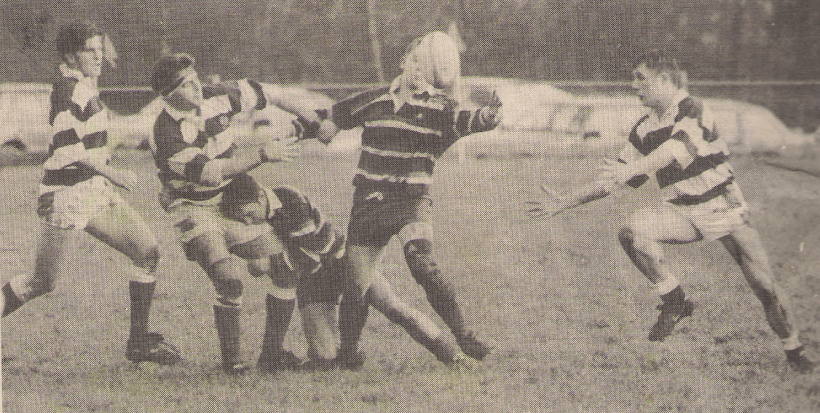
One cold wet December day at Winters Park, Penrith, we were playing yet another local derby game against Wigton. Packing down at loose-head I was uncomfortable but not struggling. Another scrum was called and we thumped in. I was in a good position and began to exert a little pressure on my opposite prop. Their scrum began to shunt backwards a little. I kept on driving when all of a sudden I heard a loud smack. There followed a microsecond of delayed reaction then a burning pain hit me on my exposed left ear, which continued to ring loudly and appeared to be bleeding a little.

“Some beggars hit me” I thought. As the scrum broke up I considered letting fly against my prop but I knew he was not to blame.

“Who did that?” I asked my flank forward who was looking dumb struck,

“Their number six” he replied

“Why didn’t you hit him back”? I enquired

“Because he’s an animal” came the reply.

We ran over to the opposite touch line where a line out was forming. As I got to the line out I searched out the Wigton number six. He was smiling at me and I realised it was Derek Holliday, a farmer’s son from Sebergham. Derek had a certain reputation and wasn’t exactly backward at stepping forward on a rugby pitch! I smiled back.

“Was that your best shot then?” I said quietly walking past so as not to alert the referee.
“No way” came back the reply

“Pity because you’re going to get mine soon”!

The game continued and as I was taught from an early age, I bided my time. Some ten minutes later my time came. A Garryowen kick by our fly half was put high into the darkening December sky. On the hoof I glanced to see who was likely to catch the ball when it came down. It was the Derek Holliday. Time for a little retribution. How I ran after that ball.

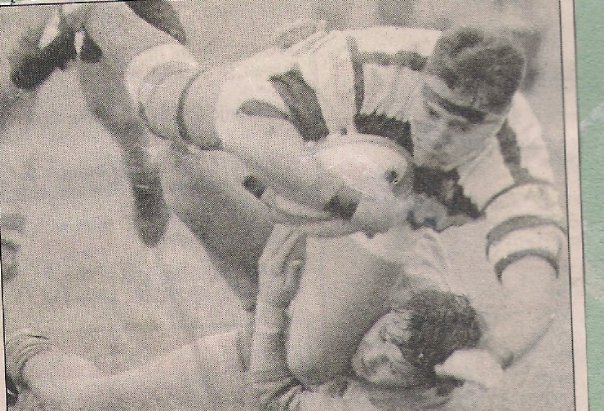
“Mine” shouted Derek. It seemed to take an age for the ball to come down. Eventually it did and Derek caught it cleanly. Immediately two of our back row forwards collared him and he was held facing towards the Penrith team and still holding the ball with both hands as three players including me arrived together. At the very second I got to him I delivered a short-range right hand uppercut which landed sweetly underneath his chin. I heard a little groan of pain and a big maul formed. I drifted to the edge of it in case the referee had seen the punch but not the culprit. He had not seen it. Wigton cleared the ball to touch and we ran over to the line out. As we formed, Derek jogged up and yet again grinned at me. It was a huge, wide grin and not a tooth could be seen in his top gum.

“Bloody Hell” I thought, “I’ve knocked his teeth out”.

“Was that your best shot?” he asked.

“No way” I replied, nevertheless feeling a little guilty about his dental rearrangement.

Honours even, we played on without further incident. I think Wigton actually won the game. Duly showered and changed I made my way in to the clubhouse for a pint. Shortly after Derek walked in. As befits the most honourable of rugby traditions I offered to buy him a pint. He accepted. As we took the first long pulls from our glasses I asked him a question.

“Tell me, that little tickler, it didn’t knock any teeth out did it?”

“Christ no” he said “and you’ve just reminded me”. With that he fished into his green blazer pocket, pulled out a full top plate of false teeth, dipped them into his beer and placed them carefully on to his upper palate. He must have seen the relief on my face. “Lost these in a fight when I was a bit younger” he added.

Many years later I became an employee of the Country Landowners Association. The role occasionally took me to Belgrave Square, the Headquarters of the CLA. On my first visit I was introduced to the CLA’s Head of Environment, Derek Holliday. Later over a beer in the Star Tavern, I reminded him of the incident. He remembered it instantly and claimed that I had “mistakenly” got hold of his shirt and in so doing prevented him from disengaging from the scrum. So he felt it best to make me see the error of my ways. I didn’t even know I had done it, and knowing how Derek played his rugby, I probably didn’t grab his shirt anyway! He then went on to say, that he absolutely knew he had to catch the up and under kick. At the same time knew exactly what was going to happen when he did!

Taking another sup of beer he looked up at the ceiling, reliving the moment, and said “I remember thinking, I must catch this ball and I know it’s going to hurt”!

I never played against Derek again, which was probably just as well, but we still meet up from time to time at Penrith Rugby Club and like all past players recalling the old days, the tries get further and further out, the tackles more ferocious and the punches much harder! We wouldn’t have swopped it for anything else!

“I WILL MAKE A MAN OUT OF HIM” – Part 4

Farming is a hard way of life, without question. No matter how skilled and proficient the farmer, things do go wrong and accidents happen. Losing livestock, disease and illness is all part of the job. Animals can become ill and then die. The role of the large animal vet may be crucial in saving a life. Dick’s pedigree young bulls often sold very well at the breed society sales at Carlisle and Perth. In recent years Dick had bred a National Junior Champion and was a very respected producer within the breed. In the yard I fed and looked after three cracking young lads that were due to be sold the following autumn. Sometimes in winter they were let out of the sheds in to the open yard to feed and exercise.

One morning I arrived down to the yard pushing the usual barrow load of silage and I noticed one of the bulls clearly in distress and looking very bloated. Quickly I ran back up to the main yard to find Benson who did most of the show preparation work on the bulls. The bull had an intestinal blockage and a vet was summoned immediately. I continued with my chores.

Sometime later I arrived back at the yard to find that the vet had no option but to perform an operation in order to release the gases that had become trapped in the bull’s stomach. I watched in fascination as the young vet worked away to insert a valve called a cannula through the animals side in order to insert a tube in to the stomach. Eventually the vet managed to puncture the stomach and then dive for cover as the contents of the bulls stomach erupted from the tube like a geyser. It was the foulest stench I had ever smelt. The relief on the bulls face was immediate. Sadly the cannula had to stay as this problem recurred. I even had to open the valve myself some mornings, careful always to get out of the way. The cause of the problem was ingestion of dead oak leaves, the result eventually was that the bull had to be sold in to the meat chain rather than enjoy a long and happy life as a breeding bull. This event was one of many disappointments in the year that all farmers have to put up with.

Generally working with the pedigree Charolais cattle was good fun. One day in summer up at the Pardshaw land we were touring the Charolais cattle in the Land Rover. Dick had a huge Charolais stock bull called Chesholm Newtown. By all accounts he was very friendly, in fact too friendly. As we drove past him, he started to move towards the Land Rover head down. Dick advised me in no uncertain terms that I should drive the Land Rover out of his way.

I knew better than to argue. Benson told me later that Dick had been driving through the field on his own one day and the bull had decided to have some fun with the Land Rover. At over 1400 kgs, he had nearly turned the vehicle over even though he was just playing! I always kept my eye on Newtown, from that day forward.

By August my placement was coming to an end. I had learned very much about good stocksmanship and a fair bit about myself too. I was well over two stones lighter than when I started. Many times I had gone to bed deciding to pack in and not go back. Every morning I went back for more.

My last morning of employment was to be Saturday 4th of August. It was the day of Cockermouth Show, the local agricultural show. The Clark team were proudly showing a bit of everything. They had dairy cattle, Charolais cattle and mule lambs. Each entry was top class and produced to perfection. In order to buy everyone some time and to ensure my last morning went smoothly, I arrived down at the farm half an hour early. No one else was up and about.

In the cool, still morning air I walked down to the far cow pastures, admiring the new post and wire fences I had helped to put up right through Easter Weekend. Then I gathered up the milk cows that were happily chewing their cud or grazing. Slowly but surely I walked them back to the farm, along the mosses, through the wet morning dew alongside the dry stone wall that Dick had taught me how to gap up. I knew many by name and was able to walk alongside them giving them a pat or a stroke as we went. Old Twinkle with her huge udder waddled along at the back with me resting my hand on her as she went.

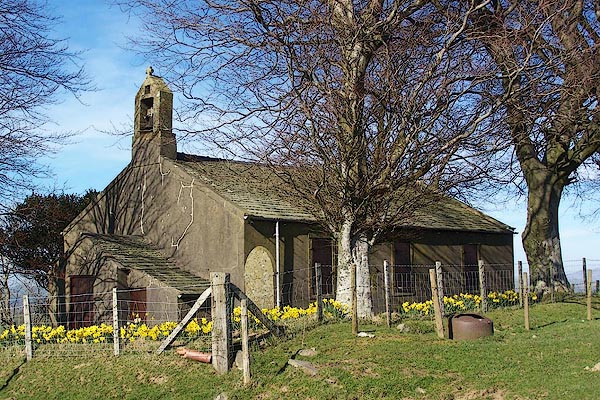
On the banks above the cow pasture i could see St Michaels Chapel at the northern boundary of Mosser Mains Farm. Adam De Mosser cleared these lands to farm in the 13th century. Now for just a few short months 700 years later another Adam had worked on the land, learning skills and experience to last a lifetime.

Back at the farm Twinkle had pushed her way through the collecting yard up to the parlour door. First in as always. By the time Alan turned out to start milking, the parlour was set up correctly, the bulk tank connected and all filters in the right place.

Milking was soon through but there was no time for breakfast as the beautifully cleaned and prepared show animals were loaded in to well- strawed trailers to head for the show field. With a wave goodbye, I was left standing in the yard alone. The job was over and done. Was I sad? No not at all. Was I satisfied? Yes quietly away and quite relieved. With a deep breath and a last look around the yard, I headed for home with a growing realisation that within the month I would be leaving my family and heading a long way south to Cirencester and on to the next chapter of my life.

I hope I have not created too harsh a picture of Dick Clark. He was hard on me and he pushed me like never before or since, but run or run faster can be a good way of working at the right time.

To bring this tale full circle, we have to jump forward five years. It is 1991. I am 26 years old. Three years out of college I have made it back to Cumbria and I have been steadily learning my new trade as an auctioneer at Penrith, Lazonby and Troutbeck. The time has arrived when I am now selling at bigger and better sales.

It is Lazonby auction in the autumn. The prestigious autumn sale of Registered Blue Faced Leicester Ram Lambs is upon us. I am told that I will be second auctioneer on the rostrum. This sale is the cream of the crop. The hierarchy of the Leicester Breeders will be here buying and selling. I did sell some shearling and older tups last year with mixed results (another story), but now this is the big time.

A line is drawn in the catalogue where I am to start selling. The second consignment I will sell is from Dick Clark, Mosser Mains. I go down to the pens to talk to him and other vendors, to see if they have any instructions for me. Dick is busy talking to potential buyers who are looking at his sheep. So I keep out of the way.

Back at the ring my nerves grow and grow. I question myself constantly. Am I good enough to do this? Why am I even here? It is too late now and before I know it the microphone is being handed to me. I take a deep breath, pick up the gavel, and the room is mine.

I sell the first vendors only ram easily and immediately Dick and Alan Clark are walking through the big oak double doors behind their very nice Leicester Shearling Ram. Despite the fact that Dick shouted at me many times at Mosser Mains, he is actually very quietly spoken. I listen very hard as he whispers in my ear. “This should make 1100 guineas”. It is not a reserve, it is just Dick valuing his own stock. I trust him and I know him. He’s never far wrong!

I get in to gear and move quickly through the bids. Soon I am bring the hammer down at exactly 1100 guineas. Unbelievable! I sell the rest of his consignment and before I know it Dick and Alan are  saying thank you and walking out of the ring. There is no time to think though. The sale goes on. After half an hour I realise I am enjoying it and in the swing. With a little prompting from the senior auctioneers who take it in turns to sit with me, I get through my stint. It is over in a flash and I am handing the microphone back. Quietly I move to the back of the rostrum and then it hits me. The first proper consignment of Blue Faced Leicester’s that I sell at Lazonby is from Dick Clark, Mosser Mains Farm. It seems entirely fitting to me.

The following year, following Peter Sarjeant’s retirement, I am now to be the weekly dairy auctioneer at Penrith. It is my first day on the job, a Tuesday morning. As always I am beyond nervous. Can I really do this? What do I know about dairy cows?

The first cows for sale arrive at the unloading docks. Low and behold it is Dick Clark, bringing a very tidy newly calved heifer for sale. He often does sell at Penrith and has a good following. He is first in to the ring and the thought is not lost on me that yet again the first time I sell in a particular sales ring, it is for Dick Clark.

I lean down low as he whispers to me “She’ll make over £1000”.

I’ve no need to do anything other than take bids. Dick’s dairy cattle are popular and always sell well. Even so I take my time. Learned men in the trade have told me never to rush selling a dairy cow. It is not like selling prime cattle to professional buyers. Farmers are often reluctant or shy bidders if they are not used to it, or don’t really like spending their own money. A good auctioneer can work the room, cajole another bid, work the buyers to go that extra few pounds. Much as my instinct is to get the hammer down, I keep trying, imploring another bid from a man shaking his head then laughing at me as I crack a feeble joke. It works though, as he nods his head at me, having one last shot at buying the heifer.

The hammer comes down. Dick is dead pan. He is never going to show publicly that he is pleased with the price, but at £1050 I have done my job well. He politely thanks me and walks out of the ring. A while later I see Dick in the auction foyer. “I’ll have another for next week” he tells me. That’s all the praise I need.

A few years later I’ve moved on and I am going through a wobbly patch in the old auction at Cockermouth. The pressure is on the company. We aren’t making much money, we’ve had some bad debt, and the stock numbers aren’t great. The directors are putting me under pressure. I’m finding it tough. They get frustrated with me and quite honestly it won’t be the last time in my career. I get it right quite a lot of the time but in the words of Dick Clark, I usually manage to bugger it up somewhere down the line. Nobody’s perfect but as I go through my career, I find it difficult to back away from what I believe is right. Colleagues will tell me in future, just swallow your pride and do it the way the directors want you to. I sometimes find that hard to do if I don’t agree. It is a failing of mine- perhaps.

One night I jump in the car and drive to Mosser Mains. I need some wise council. Dick will give it to me straight. I have a small whisky with him. He tells me what I need to do. “Stick to your guns, believe in yourself but at this point in time…. don’t run so fast! The jobs going alright really. The main thing is to keep your head down and get stock in to the market, nothing else matters”.

I feel better having talked it through and I am sure that Dick will make his views known to some of the directors. Within the year the market is full of sheep week after week. It keeps the company afloat as we struggle to get planning permission for a new market. I continue to sell stock from Mosser Mains year upon year.

Several years later, in the new market at Cockermouth, the sad news comes through that Dick Clark has passed away. It is a blessing as he has been steadily failing health for a while. Alyson his youngest daughter lives in Eaglesfield with James, our yard foreman. She works in the café at the mart. We are like family. Lyn, their other sister lives in Canada and we don’t see her so often.

I receive word from Alison that Dick’s widow Liz would like to see me at Mosser Mains. I travel up to the farm with a sense of foreboding. Will this be difficult? It isn’t. Some of the family are there and we have a brew and talk about Dick and the time I worked for them and also about other people that have worked for them over the years for I wasn’t the only one to be educated there. Liz tells me that they would like me to offer a eulogy within the funeral service. They tell me some stories they would like me to include together with some of my own.

I am honoured and very proud to be asked. The service is a celebration of Dick’s farming life. I recount the “you always manage to bugger it up” tale and also about selling the Leicester’s and the dairy cows. He was I tell them, a man of extra- ordinary self-belief and confidence. A brilliant stock man and judge of cattle and sheep, but for all of that, not an easy man to work with, or for! I am told later that the eulogy summed up Dick very well. It is my final job done for Dick, a farmer and a friend who has featured so much in my career.

After 16 years good years I am leaving Mitchell’s. There is an exciting opportunity to join North West Auctions and build a new mart near Kendal. They want me for my experience and they have also employed my father as the architect. This will be the second time we have worked together on a new mart premises. It will also be the last.

It is not a difficult decision to leave Cockermouth. The new executive Chairman is introducing major changes to the business and we don’t see eye to eye in some matters. The best option for me is to move on and at this moment in time, I am in a position to do so. I leave without an ounce of regret, job done. Others will take my place no problem. No one is irreplaceable in this world. I truly believe that everything happens for a reason. As one door closes another door usually opens.

Soon a letter arrives in the post from Liz Clark. Much of the letter will remain private but in the final paragraph she says: –

“Mitchell’s new auction was your baby. You brought it to where it is today…. You have given your all to Mitchell’s.

When you worked for Dick I used to think every night- Adam won’t be back in the morning. But you never failed to turn up for work and I think that’s when you became a man”!

I keep the letter in a safe place………

“I WILL MAKE A MAN OUT OF HIM” – PART 3

As the months progressed I was slowly but surely learning to work with and handle livestock. The Clarks were exceptional stock men. They were confident and talented and it was hard for me to work to their standards and learn those skills. One of Dick’s favourite sayings to me was “You’ll never make a stock man”. One day we were putting the Charolais bulls through the cattle crush where they were to be wormed by dosing gun. My job was to entice the cattle in to the crush by opening the front yoke and showing the cattle some daylight to persuade them to step forward. At just the right moment I had to swing the handle to catch the animals head in the yoke so that it was held fast. All was going well until, one animal pulled back at the very second I was swinging the handle. I missed its head and it ran backwards. Dick was at the back of the crush and hadn’t got the back gate shut. The animal smashed against the back door, knocking Dick off balance.

I got severely castigated and told yet again “you’ll never make a stock man”. By this time I was slowly growing immune and learning to carry on without taking it to heart. A while later our roles had reversed and I was now at the back of the crush. A young bull was being held and just at the point of release Dick walked right in front of the Crush. The bull was startled and ran backwards. I was reaching through the back gate to give the bull a smack to send it forward. The bull was too quick for me and it trapped my arm against the back door. I yelped in pain and gave him a daggers look.

Dick realised what had happened and looked a bit sheepish for a least a couple of seconds. As I rubbed my bruised arm I thought about retorting with a comment about his stocksmanship, but I just dare not do it!

One morning in early May we landed in for breakfast and Dick announced that in view of my continued improvement, he had taken a decision to raise my weekly wage to £30. To me it felt like a fortune but more importantly I was making progress and it had been recognised. Every Friday lunchtime I was allowed to drive in to Cockermouth to bank my cheque. One Friday I nipped down to the card shop on Main Street to buy a birthday card. I had been sorting through old silage bags all morning, which were very dirty and very smelly with the remnants of last year’s silage liquor. I didn’t realise how smelly boiler suit was until I was in the card shop and a lady exclaimed in a loud voice. “Oh my god you are revolting”. Several people nodded and agreed. So much so that I was refused service and asked to leave!

Back to the silage bags and I had worked through a huge pile of them discarding the badly ripped ones and keeping others that may be used for lining newer bags. Finally I was down to the last bag and as I lifted it up I uncovered a huge rat’s nest. There were hundreds of them running in all directions squealing. Some ran up my boiler suit. I admit it, I screamed and ran around stamping like a demented banshee. By the time I had calmed down and the rats had escaped there were quite a few lying dead on the floor.

On a warm Saturday morning Dick instructed me that I was to use the knapsack sprayer and work around the field closest to the farm, spraying any nettles, docks or thistles in the fields and along the boundaries. I was instructed how to mix the weed killer and then I was dispatched. I worked away until noon. I was up in the back field above the farm house. The field was about 10 acres in size and I had about 100 metres to go to complete a full sweep of the boundary. I realised it was lunch time and remembered a story that my old grandfather had told me. He had spent some time in farm service in the late 1920’s. The farm hands were told that they had to be back to the farm at lunchtime promptly. One day he was finishing off a job and thought he had better stick in to the end to show willing. When he got back to the farm half an hour late, the food was gone and all he could get was a salt and pepper sandwich.

With this in mind I dropped the knapsack sprayer and jogged back to the farm. Sitting down to lunch Dick asked me where I was up to. I told him I was about 100 metres from completing the ten acre field. “whaaaat? You’ve come home for dinner without completing the last bit. Get your bloody self back out there now. With that my plate was removed and I went back out. Half an hour later I was back at the table.

“How far have you done this morning?” well I started over there and went in to there up and round there” I pointed. “Is that all?” said Dick. “You’ve done nowt. Bloody dawdling I would say”.

I thought this was quite unfair as I knew I had gone full blast and my arm operating the sprayer had being going up and down faster than a fiddlers elbow. I also knew better than to argue so I just kept on eating. Three weeks later as the weeds died off, Dick finally realised just how much I had done and commented,

“You see that’s one of your problems Adam, You never explain yourself properly”!

Memory tells me that 1984 was a hot, dry summer. Dick tasked me to make a field of hay. I had started in the spring by rolling the field dragging a heavy land roller behind an old 1972 David Brown 990 Selamatic tractor. It had no cab and certainly no roll bar. Nor did it have power steering or a heater. In fact I rolled field after field with this rig, come rain, hail, sunshine and even snow. Up and down the fields I went bumping along on an improvised piece of foam which lined the metal tractor seat.

Then the hay field was fertilised and shut off from all livestock. Over summer the grass grew until the point where the timothy, a long seeded species of grass beloved by all livestock in winter, had headed up nicely and the field was ready to mow.

Dick had also taught me to mow grass with a 2 drum mower and I had now got fairly confident with this bit of kit pulled along behind a David Brown 1375 which did have a cab and a radio! I didn’t really enjoy decapitating the odd rabbit or two, but you don’t see them until it is too late. So now it was going to be my job to make hay.

The grass was duly mown lying in long straight lines on a gently sloping field. Over the next few days I was to begin turning the hay, to allow the green grass to slowly dry out, warm and ripen in the hot sunshine. Each day I attached the haybob to the 990 and set off down to the hayfield. Every morning the long lines of hay were scattered out, and each evening the hay was put back in to tight, neat rows. As the hay dried out, it became crisp and fluffy. The smell was gorgeous. There is no other smell like fresh hay in the meadow especially at dawn and dusk.

After 5 glorious days bumping up and down the field with my shirt off, I had developed a marvellous tan and the hay was ready to bale. In came the old McCormick baler operated by local contractor Harold Braithwaite. My next job was to stack the hay bales in a certain manner in groups of 18 bales, called a stook. These could then be picked up by a bale transporter, a flimsy looking but highly effective piece of equipment that picked up the whole stook which was then driven the short distance back to the farm.

The stook was dropped next to the hay barn, a traditional stone barn perhaps 200 years old with a wooden floored hay loft above. The bales were placed on to a petrol- engined elevator which lifted the bales one by one from the ground up to and through a large hay window and in to the hay loft. The person at the top then positioned and packed the bales tightly in to the barn where they would stay until needed during winter. This is called “mewing” in Cumbria.

In the barn it was very hot and very dusty, I was quite happy to let the other lads mew the hay especially as they were very particular about how they did it. So I lifted the bales on to the elevator at the bottom. Conditions in the hot sunshine were not unpleasant and I had plenty of time to shift all the bales before Dick got back with the next load on the tractor. By tea- time, the job was done. Hot and thirsty we were all in good humour as we went to tea. I was so proud when Dick declared that it was a very good crop of hay.

Having been tasked with the job of making hay I spent some time researching the procedure in my college text books which gave me a technical angle on the job I had done. Imagine my delight at the end of my first year at college when one of the compulsory questions in the practical agriculture exam was to describe and discuss the procedure to make a field of meadow hay. I was able to describe in detail the job I did at Mosser Mains. I passed the exam with flying colours!

“I WILL MAKE A MAN OUT OF HIM” – Part 1


It was a bitterly cold January morning in 1984. My 6 months’ work placement at Cockermouth Auction had come to an end. Now I was about to start to my second placement. The work was required by The Royal Agricultural College before I was due to start a Rural Estate Management Course later that year. My father offered to send me to Australia for a gap year which was all but unheard of in those days. Having hardly been out of Cumbria, this was not too appealing especially when there was a regular girlfriend on the scene too. Many times since have I castigated myself for not taking the opportunity to travel, especially having met a couple of lads at college who had done so and enjoyed it, to the full!

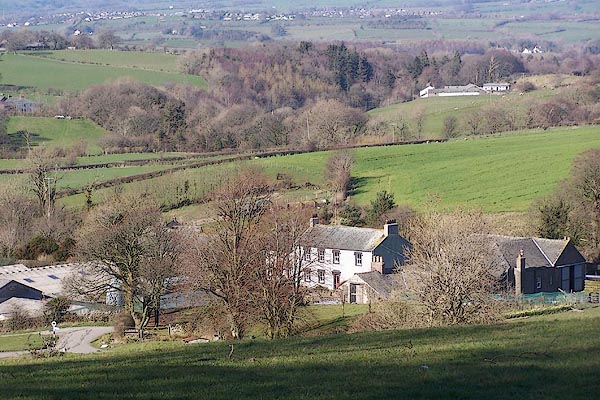
Instead father talked to a local farmer from just down the road. Dick Clark was known and respected the country over as an exceptional livestock farmer. Mosser Mains farm carried a dairy herd, a pedigree Charolais beef herd and a fine flock of Swaledale ewes together with a noted Blue Faced Leicester flock.  lying six miles south west of Cockermouth, the land rises up the northerly slopes of Fellbarrow.  The placement couldn’t have been better and right on the doorstep. What I didn’t know on that first morning was just how hard my time at Mosser Mains was going to be.

Dick told my father that I wouldn’t find it easy. “If he can last” said Dick, “I will make a man out of him”. Armed with a brand new boiler suit, a pair of work gloves and a shiny new pocket knife, I set off in the pitch dark, down the hill to the farm.

So began the hardest six months of my life. Working up to 82 hours a week for a total of £25. It didn’t take long to realise that Dick had two expected speeds at which I would operate, “run” and “run faster”. Youngest son Alan, about 10 years older than me was milking the dairy cows and I was despatched with older son Benson to feed all of the housed cattle including the young stock and a pedigree Charolais herd.

By 9am the early morning work was completed and I was invited in to take breakfast with the family. Liz Clark cooked up a fantastic feast including porridge followed by a full English and toast to follow. As we sat down Dick declared that I was too fat and we were going to have to do something about it. So I was given the choice between the bacon and eggs or the toast. Clearly I was always going to choose the bacon! Then he asked me if there was anything I didn’t like to eat. “I’m not keen on liver & onions” I replied, munching in to my bacon.

The moment I had finished my breakfast I was told not to sit all day and to get back out there. When Dick finally finished reading the paper and came back out to the yard, I was wandering around not really knowing what to do. “What have you done since you came out”? He enquired. “Err nothing, I didn’t really know wh…….” I was rudely interrupted by Dick who gave me my first bollocking of very many over the next few months. “Didn’t know what to do? Open your bloody eyes man. There’s plenty of jobs to be getting on with. Don’t wander round my yard doing nothing”. Lesson number one was swiftly learned. Never again would he catch me doing nothing!

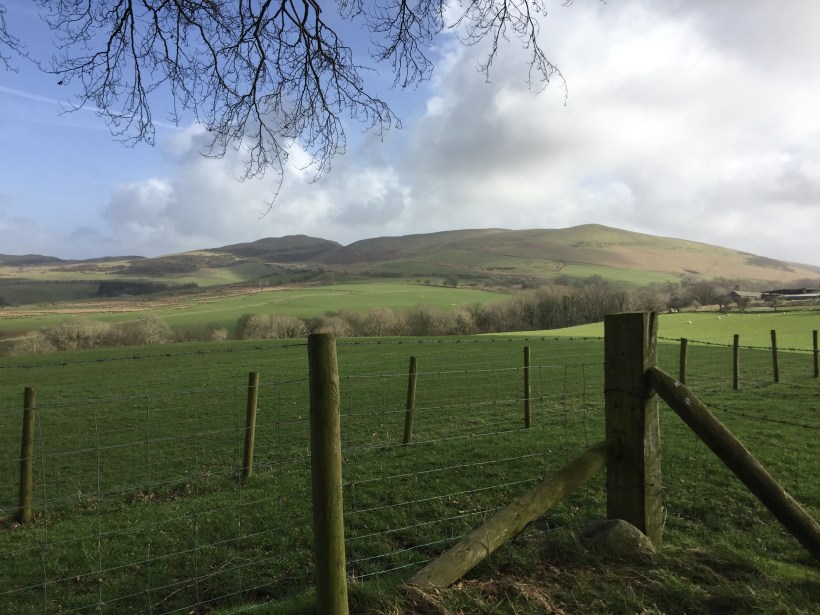
A little while later we were off up to the high ground where the pregnant Swaledale ewes needed some feed. The high ground was actually the most northern slopes of the Lake District running up to the rounded dome of Fellbarrow. From here you could see far across the Solway Firth in to Scotland. Not that I was looking across on this particular morning.

Dick had a fine flock of Swaledale sheep and was a renowned breeder of Blue Faced Leicester sheep too. The ewes were in lamb to the Leicester to produce the famous North of England Mule lamb. Neither Dick nor I had any inkling that one day in a few years’ time I would be selling these lambs for him at Lazonby auction, probably  the foremost mule auction centre in the land at the time. At least that’s what it said in the catalogues!

Dick drove the Land Rover and I sat with my legs out of the back door. Then I was instructed to dribble out the feed which were little hard ewe rolls or cobs as they are sometimes called. The sheep loved this extra feed and swiftly gathered to follow the land rover as a long line of cobs was tipped out slowly.

“Start pouring instructed Dick! Here was the first problem. I couldn’t get the feedbags open” Desperately I searched for my pen knife which was deep in the pocket of my boiler suit. I couldn’t find it. “Are you pouring yet”? Shouted Dick. “No just hang on a minute”. I replied. Big mistake!

“No I won’t bloody hang on. Get that bloody feed out. We’re half way up the field. What the bloody hell are you doing? Are you useless!? What the hell have I taken on here?”

Eventually the bags were opened and the feed scattered. Another lesson was learned. The next morning as I loaded the land rover with feed, the bags were opened in preparation. The feed was delivered to the sheep without fuss. Not a word was spoken by Dick.

Lunchtime arrived on my first day and I was already exhausted. It was a lovely feeling to wash my hands in warm water, smell the fragrant hand soap and feel the heat invade my freezing fingers. My boiler suit was left hanging outside in the passage. It was already covered in cow muck. No matter how I tried, my boiler suits always seemed to get mucked up, whereas the Clark lads hardly seemed to get a splash. I never worked that one out.

So I sat down starving hungry. A plate was presented to me and I could smell it before it hit the table. Liver and Onions. Nothing was said but I could just see the beginnings of a wry smile curling around Dick’s lips. Holding my breath with each mouthful, I ate the lot.

Having cleaned my plate, Dick asked me if I wanted some more. “Yes please” I replied and another huge hunk of liver was delivered to my plate. I ate that too, this time feeling quite sick. Never again if I was asked, would I say that I didn’t like something. Never again did we have liver and onions during my time at the farm!

By evening, milking was completed and we knocked off at 6pm, I made my way back up the hill to High Mosser. I was completely tired out. “Only another seven months” I thought. This must surely get better!

All through the spring I grafted away learning new skills from a talented livestock man. The stock always came first. Lambing arrived and for 6 weeks I did not have a day off. Being a young man who liked a night out, I still went out on a Saturday night, dragging myself out of bed on a Sunday morning to get down to the farm. If I was lucky I might be sent home on at coffee time on Sunday. Too tired to even bother showering I usually went straight to bed only to get up for Sunday evening milking.

The Blue Faced Leicester’s were the first to lamb. Brilliant sheep though they are in fathering the mule lamb, they are quite soft sheep, and not too hardy. They rather need mollycoddling, especially at lambing time. A breeder once told me that the only problem with a Leicester is that all it really wants to do is die. I think he had a bad lambing that year. Dick’s Leicester’s were now lambing in the sheds and one morning I was shouted for. This particular ewe was one of Dick’s prize animals. He had tried all ways to get the lamb out of the sheep but it was just too big. The ewe was twisted and turned and all manner of lubricant used to try and extricate said lamb. At one stage I had the ewe pulled up off the floor by the back legs as we sought purchase to pull the lamb. Even in the cool spring air I was sweating buckets. Eventually, the lamb was born by natural means but four of us were completely exhausted. I realised then that Blue Faced Leicester’s were great sheep but definitely high- maintenance! 

As spring progressed and the grass grew, so the fields were full of ewes and lambs, thriving and growing in preparation for the autumn sales, “the harvest of the fells”. What a brilliant time of year, celebrating yet again the circle of farming life.  meanwhile a young lad raw  but ready, served his apprenticeship, learning just how hard that farming life can be.

JUDGING HERDWICK EWES AND A FUTURE FOR THOSE WHO FARM THEM.

In early October there is a prize show and sale of Herdwick draft ewes at Cockermouth Auction, a market town on the northern edge of the Lake District. The sale has taken place here for over a century. Draft ewes are older sheep that are perhaps no longer fit enough to survive a further winter on the fell. So they are sold to lowland shepherds where conditions may be less harsh.  The ewes may go on producing lambs for several more years away from the fell.

Many years ago in the old Cockermouth town centre market, not long after I had become the market manager and therefore the Herdwick Sheep Breeders official auctioneer,  Joe Folder from Cockermouth produced a fantastic pen of  ten ewes, some of the biggest and best in the market. He presented them in the prize show. They were to compete against some equally magnificent fell sheep from top Lakeland breeders from every corner of Cumbria.

Joe had spent a lifetime in the Herdwick breed, working hard fell farms across Cumbria. For many years he was a National Trust tenant at Baskell farm in the hills above the Duddon Valley. In his later years he had retired to Cockermouth but his passion for Herdwicks remained undiminished. He continued to breed superb sheep none of which would live on high fells. This meant that his sheep were always bigger than many traditional fell- going ewes. This was not in any way a fault, but simply a product of their environment, living and breeding in fields around Cockermouth and the Vale of Lorton. His sheep were always sought after and sold well.

The show judge picked out two pens to contest the draft ewe championship. Side by side stood Joe’s sheep and a lovely pen of draft fell ewes from Gordon Tyson, Troutbeck Park. Standing on the lower slopes of Kirkstone Pass, the farm was purchased by Mrs Heelis (Beatrix Potter) in 1923 to prevent it being developed thereby preserving it as a working sheep farm which was her avowed intent. She did this by personally taking the farm in- hand and establishing a celebrated flock of Herdwick sheep. The sheep grazed to the top of High Street at around 2,700 feet and still do to this day.

After her death in 1943, Mrs Heelis gifted a total of 14 farms covering 4,000 acres including Troutbeck Park, to the National Trust. She did this to ensure that her will would be met and the farms remain viable working holdings for future generations. Gordon Tyson, farmed the sheep for many years and continued to improve a fine flock of sheep until he passed away in 2015. The sheep he brought to Cockermouth market had spent every winter living on the high fells above the farm. Now it was time for them to leave the fell and live the rest of their lives on lower pastures.

Both pens of sheep looked beautiful in the market, fleeces rudded- up along their backs with gleaming white faces in contrast to the grey- blue of the coat below the “rudd”. The Judge asked me how I wanted him to assess the sheep. Joe’s sheep had a size and condition that the fell sheep as strong and as good as they were, simply could not achieve. Stupidly, I said that he should just pick the best pen of draft sheep. I thought I was being diplomatic. The judge awarded the championship to the Troutbeck Park fell sheep and then apologised to Joe because he thought he had the strongest sheep. The judge quoted what I said and explained to Joe why his sheep were placed second. Joe just smiled and shook his hand.

Later in the bar, long after the sale was over, Joe lay his wizened old hand firmly on my forearm. He was approaching 80 years of age but his grip was still like iron. “Young man” he whispered in my ear, using his other hand to remove the pipe from his mouth “You should have just said nowt”. He smiled and released his grip. His point was made and he was quite right. I learned a valuable lesson.

Joe became a friend after that and would rarely miss a Herdwick Sale and the subsequent gathering of shepherds in the bar, right up to the end of his life. In the happy glow of the auction bar following the Herdwick sales, we would enjoy a drink and some good craic above the singing and the raucous laughter of Cumbrian fell farmers, letting their hair down and enjoying the end of the sale season before hunkering down for a long winter often in semi- isolation deep within the Lakeland’s frozen valleys.

I would go on each year for many years to sell those super Troutbeck Park draft ewes, which had it not been for Mrs Heelis, probably would not have been there. Now once again we look to an uncertain future. If we do not find some balance to allow farmers to work the land, farm the fells sensibly and make a living then there may be no future at all.

How important then that we bring the young people through, to learn the fell craft, preserve the sheep flocks and manage our Lake District landscapes. We must persuade them and give them confidence that they have a future in shepherding. Their role is vital not just to Lakeland but every upland area in the country. Farmers are the lifeblood of many rural communities. Their work shapes the landscape for all to enjoy. They are the true conserver’s of the countryside. The days of over- grazing the fells are gone. Now farmers look to balance careful flock management with preserving habitats and protecting fresh water supplies to a greater extent than ever before. It is called stewardship. Tourists are welcomed for they too are an essential and important part of the fabric of the Lake District.

Balance is the key word in all of this. When the correct balance is finally achieved, we will have found a way to allow Lake District Farmers to farm sustainably and with some profit to re- invest, manage the countryside and cater for the visitors, almost 20 million of them annually, most of whom are thrilled to see proper sheep wintering on the hills that they were bred to graze. This includes the Troutbeck Park flock and so many more Lakeland Farms. Famous flocks that some would seek to destroy with unctuous talk of re- wilding and introducing lynx in their place. Madness and utter folly in an already green and pleasant land.

National Trust farms have been breeding grounds not only of fine Cumbrian fell flocks, but also successive generations of young farmers, starting their own careers, getting a first step on the ladder, learning unique skills and local knowledge often from previous tenants in order to survive and farm in Lakeland. Many farmers like Joe and Gordon chose to stay on and enjoy long and successful tenancies, happy in their work.

Today’s farm children, long after our generation has gone, will still be selling at Herdwick sales, gathering at shepherds meets and shows,  singing songs and enjoying a drink or two in the bar with the proud auctioneer, whoever he or she may be. We must never let this die. How important then that landlords like the National Trust and others never lose sight of the fact, that their farms are a vital weave in the fabric of Lake District farming life, it’s heritage, history and as importantly, it’s future.

I’m sure Beatrix Potter and possibly many of today’s Lakeland tenant farmers would agree. Perhaps now is the time to say something, rather than follow old Joe’s advice to “just say nowt”!

FOOD FOR THE MASSES – MAINTAINING STANDARDS AND WHY WE SHOULD SUPPORT ALL BRITISH FARMERS.

Over the last 30 years I’ve worked in the farming communities of Cumbria and to a lesser extent the Yorkshire Dales and the Lancashire Pennines too. In that time several million sheep and maybe a hundred thousand or more cattle have for a tiny part of their lifetime been in my care within an auction mart. I’ve worked with high turnover, low margin feeders, operating highly intensive fattening systems and also very extensive, low production, high nature- value farmers. No one can persuade me there is a right way or wrong way. The best and most successful farming systems are conducive to the type of farm, the area, topography, soils and climate. It is horses for courses. A one- size fits all policy of land management could never work despite what some “experts” believe.

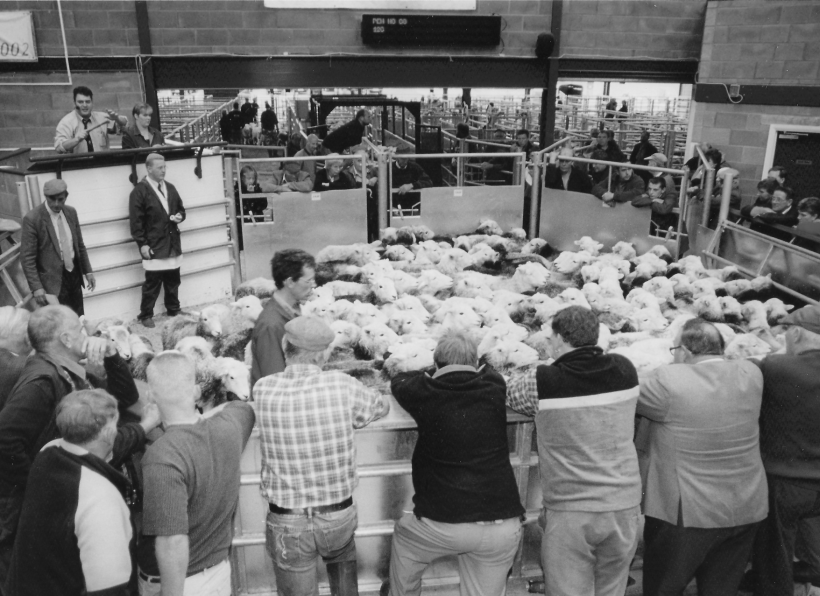
In the auction mart, I owed both the farmer and his animals a duty of care. For the farmer it is important that the animal has safe passage to the buyer’s farm or indeed the abattoir for slaughter. For the animal we try to ensure that whilst in the confines of the auction it is as stress- free as possible, comfortably penned and where necessary fed and watered if the on- going journey is delayed. The duty of care is always impressed on auction staff. Most auction staff now have an NVQ qualification in livestock droving.

Animal welfare continues to be a major contributing factor in the design and operation of auction marts. Quite rightly the performance of the market and its systems are regulated and policed by DEFRA and Trading Standards. Sometimes marts are visited by other groups such as RSPCA and Farm Assurance inspectors. There are also occasional visits from other less desirable organisations, whose mission is to disrupt the market and by subterfuge or even plain lies, seek to pervert the truth about the welfare of animals in our care.

Most markets will always welcome the general public in to the auction environment as long as they too are respectful and keep out of harm’s way. A Health and Safety inspection once recommended a total of 22 different warning signs to be placed in one of my markets between the unloading docks and the sale ring! By their very nature, markets must be efficient, smooth and professional work places. Knowledge and experience of working with livestock (and People!) is essential.

Markets are very much favoured by the farmer. They are seen to be independent sales centres, helping to add value (on most occasions) by bringing a range of buyers to the ring. In other words, a buyer for everything regardless of quality or size. The market also guarantees payment to the farmer. In an age where some meat companies can go in to receivership on Friday and their directors back in business by Monday, this is a very useful safety net for the farming community. There is also a very strong social element to the market in an industry where rural isolation can play a part. I know some farmers in these parts who only leave the farm and socialise with others on auction day!

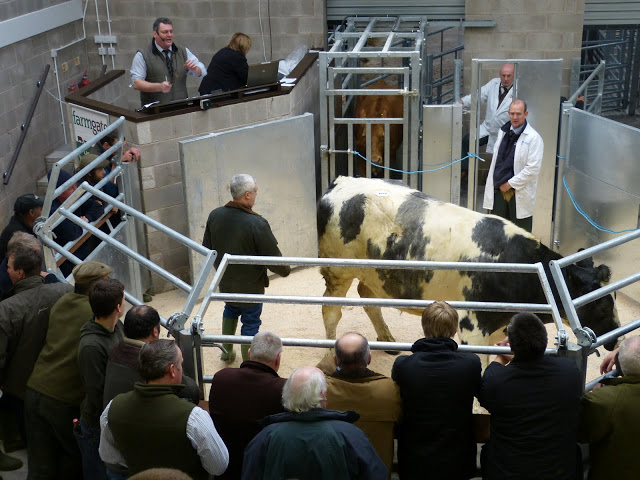
On Prime stock days, cattle and sheep are brought to market and sold to a ring full of buyers representing a range of wholesale and retail meat buyers. These range from the high- ranking supermarket chains to catering butchers and local high- street butchers. Buyers from the ethnic communities are vitally important, particularly in the sheep meat sector. This market continues to grow year upon year.

Our job as an auctioneer is to ensure that any animal must leave the market in at least the same condition as when it arrived. It must not be bruised or otherwise injured. It must not be stressed, as this can affect the meat quality and the way in which the carcase cools and sets. Also it must not have lost condition or meat quality during that time. Buyers will only visit the market if they are confident that animal welfare is high on the auctioneer’s agenda and that what he buys, he will get delivered to the point of slaughter. In this respect there is a trust and a bond.

There is also a trust and a bond between the farmer and the auctioneer. Most farmers genuinely care about the animals they rear and want them to live the best lives they can. This maybe particularly so for farmers with favourite dairy cows, beef cows and even some breeding ewes. The message is hard to get across to the general public and one which needs to be done far better in future. Even among the more commercial and intensive farming operations, where there may be less of a bond between farmer and animal, there is a desire to ensure that the animals are healthy, in the best of condition and able to be sold for optimum value. In order to achieve this, animal welfare has to be a top priority.

The regulation in the auction mart industry as described above is even more intense and just as robust on livestock farms. Every bovine and ovine animal in the UK has an individual ear tag number specific to it. This must be recorded by the farmer or he may be financially penalised at a later date. Everywhere those animals go during their lifetime, their ear tag goes with them. As a result we have the best traceability system in the world. Without any shadow of doubt, our livestock production and welfare rules are of the most stringent with few countries able to bear comparison. This has been embraced by UK farming to a great extent despite past farmer grumblings about farm assurance being only for the supermarkets benefit.

As an industry we are passed that now. We are genuinely proud of the high standards we have achieved and are maintaining. That is why supermarkets, government and the general public should recognise that our standards, food provenance and traceability comes at a price, an on-cost to the producer which is not redeemable at the point of sale nor re- reimbursed by the supermarket. There is no added value to the farmer for giving assurances to the general public. It could be said that only supermarkets benefit when they choose to promote “assurance”, hence the grumbling.

Worse still is the fact that supermarkets are very happy to promote “farm assurance” with brands like “Red Tractor” but only at a time when it suits them. For when farm gate prices rise and there are several reasons why this can happen, the supermarkets like to have a Plan B. This takes the form of imported frozen meat such as New Zealand lamb which is pre- purchased several months before it is to be sold to the British consumer, shipped half way around the world and kept in frozen storage until the supermarket decides to off- load.

Time and again in recent years this has occurred at the time of peak lamb production in the UK, often in the autumn and winter months when public demand is highest. The frozen goods are then given premium shelf space, advertising and of course clever “two for one” offers designed to make the consumer think they are getting a real bargain. At this point our un- rivalled standards of welfare, traceability and provenance go out of the supermarket window. This is the biggest heresy of supermarkets who hide behind their public facing statements that British lamb is “out of season”. It is a lie and a slap in the face for the UK producer. It is disrespectful to both the farmer and the consumer as is the often deliberately confusing and misleading labelling system on meat products. There are many examples of this. Some of the larger supermarkets play on the consumer’s lack of knowledge and information. Time and again they market price over quality and provenance.

If we are to maintain our standards, support viable and sustainable farm businesses then these issues have to be dealt with and things must change. It is clear that governments are not prepared to act in any meaningful way. The Supermarket ombudsman has proved to be pretty toothless up to now.

We are at a crossroads leading up to Brexit. The farming industry perhaps like other industries too, is in a state of limbo. Few farmers may be prepared to invest in future development. Without the safe but some would argue penal umbrella of the EU common agriculture policy, we neither know what or where our markets will be. Like for like support measures are only guaranteed until 2022. We do not know what support measures (if any) will be in place thereafter for farmers, especially those that have in the past helped to keep food prices relatively low and stable (another supermarket win!) Also we don’t know what trade deals government may agree to increase the volume of imported food from around the world, where we know production standards, animal welfare and ethics are simply not up to scratch. Food production and farming may be the throw-away bargaining chip to sustain other industries through trade deals.

If future, farming policies are to succeed, government, supermarkets and other industry players need to step up to the plate. There is no shame in encouraging the message to “Buy British”. There will be no shame in explaining to the public why farming needs to be financially supported. Viable and sustainable farming business’s will ensure investment, best practice, encouraging a culture of more production from less inputs and in doing so, protect and conserve the environment. I have concentrated on my area of knowledge however I am well aware that across the country we have a wide portfolio of highly productive farms growing arable crops, field scale vegetables and fruit all of which I fear are under- valued and under- utilised by the good people of Britain.

There may be multiple benefits to be had in creating such a farming policy. As the population of Britain and indeed the rest of the world continues to rise, the pressure on food production and by association our landscapes and environment will continue to grow. We can make plans to tackle this head- on and be ready to do so but only by starting now. Ten years hence will be too late!

By that time, we may well be regressing to post- Second World War food policies, rationing, poaching and black marketeering to combat food shortages, and the pressure on clean water supplies. In that respect, and I have said this repeatedly since 2001, once again the farmer will become the “housewife’s” best friend. Forgive the term “housewife” in the modern age, but you get the gist. My concern leads me to question, at what price to our landscapes and environment?

The public will need our farmers and their food. Let’s make sensible plans and provisions to stock the larder now. It will provide far better value for money than crisis management, which is where one day we will end up, as the country starts to go hungry.

Finally there is a sadly misguided and ill- informed belief among many politicians that if the supply of imported goods fails and prices rise that British farmers can just “turn the tap on”. I have actually heard that phrase used. The connotations of such a policy are frightening. Trashing the land to feed a starving population would be such a backward step, akin to the American mid- west in the early twentieth century. I believe such stupidity adds even more weight to the argument to invest and support balanced sustainable farming and food production with looking after the land, improving soils and maintaining the environment. Take the fetters off farming, release the handbrake now and we have every chance in being able to sustain the British Isles and our people for generations to come.

“I know that man”!

It is early July in the summer of 1991. I am 26 years of age, a qualified Chartered Surveyor but still an auctioneer learning his trade. My only hobby is playing rugby but last season was very hard. My right knee has been hurting badly for months. I am playing on a Saturday then hardly able to train through the week. My coaches think I am being lazy. In the end I decide to visit my doctor and I am referred to a specialist. He says I have cartilage damage and need surgery. There is a waiting list and I may have to wait six months. I tell him that I have private medical insurance and he tells me he can do it next week.

I am admitted to a private hospital in Carlisle in less than one week. The surgeon tells me that he will perform open knee surgery. I ask him why he can’t do keyhole as I know other rugby players who have had this type of non- invasive surgery performed and their recovery was extremely swift. That operation is not possible in this hospital or so I am told. I am then reassured that the operation will be straightforward and that my cartilage will be tidied up. I am guaranteed to be back on the pitch and fully fit by October at the latest.

I am pre- opped, anesthetised and sent down to surgery. The next thing I remember is waking up in a recovery room. My injured leg is elevated and wrapped in a huge bandage. A nurse is repeatedly smacking me on the back of my hand and telling me to wake up. My eyes focus and I see a large print on the wall. It is an old farmer pal of mine from Ennerdale called John Hind. He is pictured in a show line up, proudly holding on to a Herdwick Tup. I keep trying to focus on John but he is blurry.

“Adam, what are you looking at?” questions the nurse. I am still concentrating on John.

“Adam!” The nurse now has an edge to her voice.

“You see that man there” I croak. “I know him, he’s my friend”

“Yes of course he is” I sense her tone and realise she doesn’t believe a word I am saying.

“I know that man” I respond.

 “Yes of course you do”.

“No… I really do. He’s called John”.

“Yes of course he is”.

Then the pain hits me. My knee is burning with pain. I can’t move my leg one centimetre without agony. I desperately need to pass water but I just can’t do it in to a cardboard bottle while lying down. I try and try but I can’t push water uphill.

Eventually I realise I must sit up and get my legs over the bed to do it. The nurse doesn’t want me to. I insist. So she and my girlfriend Paula, later to be my wife, drag me up and lift both my legs over the side of the bed. The pain makes me scream but I have to do it. I manage to pass water and the relief is fantastic but then my legs have to be lifted back on to the bed. I have to scream again.

I spend 4 days having to do this until eventually the surgeon arrives and removes the bandage. My knee is grotesquely swollen but the stitched up wound is clean.

“Bloody hell what happened?” I ask the surgeon

“Ah well when I got in there, your entire lateral meniscus was in flakes, so I whipped it all out”.

“But I didn’t ask you to do all that”

“Ah well I had to and you did sign the consent form. I’m afraid your recovery will take longer but when it’s healed you should be able to play rugby until you’re at least thirty. However you will most definitely suffer from ostio –arthritis by the time you are 40. I’m pretty sure we will have a cure by then” He smiles as he whips round and leaves the room.

Exactly one year later, my knee has not healed. I have not managed to run a step in that time. The pain never goes away. Any exercise produces massive swelling around the knee. I re- visit the surgeon and he tells me it is just one of those things. Some people heal and some don’t. Then he delivers a bomb shell. Unless this knee finally heals up in the next few weeks, I am going to have to accept that my rugby career is over.

He sends me on my way in shell shock. The following day I get a bill from him to add to the £4,000 paid out by my insurers. It is £1500 for rehabilitation and after- care. I write him a stinging letter telling him why he will not get another penny from me.

Two months later and my knee is finally feeling a little better. I pluck up the courage to go for a gentle run. I expect the worst but the next day, my knee does not swell and I am ok. I start to build up the runs and my leg is getting stronger. Soon I get back to training and eventually I start to play again. My knee never heals properly again. From then on after every game my knee swells to an enormous size. I keep persevering and I am getting through games and training but my knee is now permanently swollen, all the time.

I love my rugby so much that I play a few seasons for Aspatria in the National Leagues before returning to Penrith I keep on playing in to my late 30’s. By now my knee has deteriorated and I run with a permanently shortened stride but I can still play, so I keep going as long as I can. Eventually with a young family in tow, I give in. I hate not playing, sitting at home on a Saturday not able to visit the rugby club to watch games. I have started to sing in a band so that is an ocassional distraction.

It is the autumn of 2006. I am forty one years old. It is a Saturday morning. The previous day I sold several hundred suckled calves in Cockermouth market, a hard and long day’s graft. It is the last big autumn sale of the season. I could do with a release, may be a few pints in the pub tonight.

The phone rings and it is my old rugby pal John Sealby. He is the same age as me. He still plays rugby every week for Penrith 3rd XV. He tells me that they need a front row replacement for a league fixture away at Ambleside in the heart of the Lake District. They will only use me if they really need to. My heart begins to pound. A game of rugby, after all these years!

I am ratching about under the stairs when Paula catches me.

“What are you doing?”

Looking for my rugby boots”

“You’ve got to be joking”

“No”

“Well you are a …… idiot”

She doesn’t speak to me until I am picked up by the lads. The deal is supposed to be that if we are winning comfortably, they give me a 10 minute run out at the end, buy me a beer or two in the clubhouse and give me at least four stops on the drive home from Ambleside to Penrith. We settle on The Travellers Rest, Grasmere; the Kings Head, Thirlmere; The White Horse, Threlkeld and The Sportsman’s Inn, Penruddock. All of this is agreed. I have to be home by 8pm for X Factor or I won’t be spoken to for most of the following day either.

We arrive at Ambleside to find that there is no referee and three people haven’t turned up for Penrith. An Ambleside committee man agrees to Ref but admits he doesn’t really know a lot of the new laws. I am happy to hear it because neither do I. However the bad news is that we only have three front row players and one of them is me. So I am in the starting line-up. The day is now going downhill.

I struggle to lean over and tie my old boots that have not seen the light of day for four years. They are dried out and won’t bend. One is missing a couple of studs. My bad knee is locked at about 70 degrees because I have so much strapping on it.

The Ambleside captain comes in and asks for a word. He tells me they don’t have an experienced front row. They have a young boy barely out of school playing hooker. Can we have a gentleman’s agreement that we all just take it steady in the scrums? I nod my head in complete and full agreement. So we run out on to the pitch which after the incessant rain of last night is most definitely water logged. In fact the corner in front of the clubhouse is actually under water.

The first and only other time I played on this ground was for Cockermouth as an 18 year old, 23 years earlier in 1983. It was December and it snowed so hard on the way home that my pal Ray Faulder who was driving, actually turned off the A66 and in to The Pheasant Inn near Bassenthwaite without realising it!

Back to 2006. The teams line up, Penrith in their traditional myrtle green and white hoops, Ambleside or “Side” as the local supporters prefer to scream are in Black with Gold cuffs. I stand to receive the ball with my boots already full of water. I am at this point beginning to agree with my wife’s last comment to me.

The whistle blows and the ball is kicked to us. We gather the ball, there is a melee and I get elbowed in the face. Then we spin the ball down the backs. There is a kick and the ball sails in to the Ambleside half. I run across the pitch towards the ball. They retrieve and spin the ball down their backs. There is another kick and the ball is again in our half. I run back across the pitch and find myself back where I started. I’ve run two widths of the pitch and I am totally knackered. I stand with hands on knees fighting for breath.

The ball is now on the far side of the pitch. The whole Penrith pack bar one, is advancing. I walk up the wing in attempt to at least be in the same half as my team. Then the ball starts to spin through the Penrith backs. Now I may be old and fat, but I can still read a game. If I can keep up with our backs and they don’t drop the ball, then there is an overlap with me on the end of it. I run as fast as my stick thin damaged old legs can carry me and sure enough the ball is delivered to me, unmarked. I have a 20 metre run in to the near corner. I waddle over and dive head long in to a 6” deep pond of cold, muddy water. On the TV you see internationals players dive over the line and slide 10 yards. I belly flop to an immediate halt. It is my first touch of a rugby ball in four years and I score in the corner.

The team is ecstatic. I am embraced and slapped on the back and I hear words like “legend” and “superstar” being uttered. I’m so exhausted I can hardly walk back to the half way line. They kick to us and we immediately knock- on. “Thank God we are taking it easy in the scrums” I think.

So we form the scrum, make our binds and I gently lean in ready to lightly make contact with my opposition. Bang! He thumps in to me so hard that he knocks the wind out of me and I see stars. He then begins to wrestle my arm, and bore in to my head with his own, growling fiercely. The scrum breaks up and I look at their captain on the other side who just shrugs his shoulders.

“Right oh” I say “let’s have it”. So I spend the next 75 minutes battling for all I am worth in the most competitive scrummaging I have had since my first team days. My try scoring run is the only time I actually touch the ball during the entire game. I am there for nuisance value, nothing more.

Later in the game, I spy young Jonathon Benson playing for Ambleside. He is a farmer’s son from Langdale that I have watched grow up from a young boy. He is passionate about Herdwick sheep and he is a decent rugby player for an 18 year old. He is aggressive and good with the ball in hands. I decide to slow him down. I find him at the bottom of a ruck and manage to rub his face in the mud. Look, don’t feel sorry for him! I’ve had it done to me plenty, and I was smiling all the time to show there was no real malice. He gets up spitting mud out of his mouth and he is smiling too.

The game finishes after what seems like an entire day. We line up by the changing room doors, clap the opposition through our tunnel of players and shout the traditional “three cheers for Ambleside”. It takes me 20 minutes to get my boots, bandages and shirt off. By the time I get to the showers, they are cold and I can’t get the claggy Lakeland mud out of my hair. Back in the changing room it takes me another 20 minutes to get dressed. My neck and back have seized up after 30 scrums and my right knee won’t straighten.

In the clubhouse, there is pie and beans which is taken with my first pint. Across from our table I spy young Benno. I call him over for a pint. This is one of the best parts of the game of rugby. No matter what has gone on during the game, back in the clubhouse, it is all forgotten. We stand at the bar and down a few pints in quick succession. Benno is not a big drinker and he is getting fairly merry already. It is not the last time over the next couple of years that our paths cross on the pitch and in the auction. He is a likeable young man and I try and support him in his early farming career as much as possible.

Soon it is time to leave. We shake hands with the opposition and make our goodbyes. Four pub stops and a couple of hours later I am home in time for X- Factor. I am so stiff I can’t move and I’ve had a few pints. I am sound asleep before the first advertising break. Never mind X Factor, It is a big “No” from the Missus…

By the middle of the following week I am still as stiff as ever and I limp around the auction. I bump in to John Hind, who now works part time in Cockermouth auction as a drover. My sore knee and his presence reminds me all those years ago of my hospital visit. I tell him the tale. “I know that man”. He laughs and says he has a copy of the self- same print.

For the rest of the rugby season, I don’t miss a game for Penrith 3rd XV. I lose two stones in weight and feel great to be a rugby player again. It also gives me much pleasure to coach some of the young players. There are certain tricks to be used in the front row that don’t get taught at school! If wasn’t for that bad knee, I would still be playing now!

Advice from Jos Naylor

I’ve met and worked with most Lake District farmers over the years. Here i recall a farm visit to Jos Naylor in the Wasdale Valley one cold January morning.

Photo taken by my friend and ex- rugby team mate Ian Mallinson.


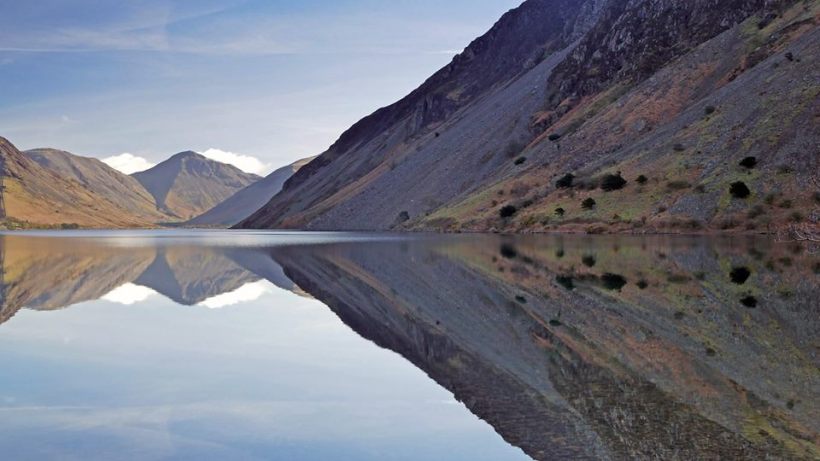
It is a freezing cold January morning as I make my way along the narrow roads of Wasdale. This is a truly remote part of the Lake District. Only a few miles from the Irish Sea, the Valley is dominated by some of the highest fells of Lakeland. Great Gable stands magnificently at the head of the valley flanked by the Scafells to the south and the Ennerdale fells to the North. Wasdale Screes fall sharply in to Wastwater. At 258 feet deep, it is the deepest lake in Cumbria. The lake bed is actually below sea level. The geography is stunning on any day of the week. A mass of tumbling rocks and boulders, with great swathes of scree, carved out and exposed by dying glaciers at the end of the ice age. At this time of year, with the winter wind and rain howling in from the Irish Sea, it is no place for the timid.

One can but imagine the Norsemen of the 10th century clearing the valley bottom to settle and colonise. For them perhaps it was almost a taste of home. Much later William Wordsworth was to describe the valley as “long, stern and desolate”. Perhaps he was visiting on day rather like today!

The working farms up here a hard places and it takes a special type of farmer to work them, in a land where local knowledge and custom is time honoured, trusted and proven.

Beneath the highest mountains at the head of the valley sits England’s smallest church. Dedicated in modern times to St Olaf, the main church beams are reputed to be taken from a Viking longboat over 1,000 years ago. My journey will not take me that far today.

It has been snowing hard and freezing at night. There is a bitter nip in the air and the swirling eddies of bitingly cold wind, chill to the bone. My car heater is on full, as I press on up the lake side road, my tyres smashing through the icy puddles.

I am on my way to see Jos Naylor at Bowderdale Farm. Jos is a legendary character. A world champion fell runner, he was often called “The King of the Fells”. His achievements on the hills are incredible.  In 1975 one of his greatest feats was to conquer 72 Lakeland peaks, running over 100 miles ascending 38,000 feet and in a time of 23h 20m.

The Cumbrian hills are both his work place and his hobby. Passionate about this landscape, he is both proud of the sheep he breeds and the landscape they live upon. Naylor’s have worked this valley for a few generations and Jos’s son Paul is following on behind and doing a great job. These are hard, cold and wet farms on the western fringes of Lakeland. It takes special people with unique skills to thrive in this environment. The sheep bred on the hills are also hardy. If they can survive harsh winters grazing on these fells then they can certainly do well later in life when they are often sold as draft ewes to more lowland climes. In my time as a Lakeland auctioneer in the autumn months, I sell many thousands of sheep from most of the farms in the valley. These are my dog days and the sales that I will later look back on with most pride.

I arrive in to the yard, and Joss is working amongst some young Herdwick sheep he has penned up. There are snowflakes scurrying and diving around the in the air. The cold makes me catch my breath. From the boot of my car I quickly don extra layers and some fingerless gloves. Jos acknowledges me and keeps working. I’ve come to see the sheep, and I start to work with him. After a while the job is done. He is satisfied with the outcome.

Only then do I notice that on his upper body Jos is wearing nothing but a cotton checked shirt, sleeves rolled up above the elbow and unbuttoned down to the navel. He is it seems oblivious to the cold. I expect that as the snow begins to fall faster we will retire to the kitchen for a drink. Not a bit of it. Jos leans back against the sheep rails and folds is arms across his chest. He begins to question me about Cockermouth Auction. This is the late 1990’s and we are still no nearer to getting our much- hoped for market. The old town centre site is working at maximum capacity and we are selling thousands of lightweight lambs from most of the farms in Wasdale and nearly every other valley.

“You would wonder where all these little lambs go” he says. I tell him that the vast majority of the lambs are slaughtered in Britain and sent in carcass form to countries all over Europe. Thousands of little fell lambs produced by Cumbrian farmers weighing around 30kg as they are sold, end up on tables from France to Turkey. This growing market is a godsend to all hill farmers who breed such lambs in the hills that have a limited market in our country.

I crack a joke. “You know Jos, these little lambs are Cumbria’s second best export after nuclear reprocessing. Jos laughs because he has a working relationship with BNFL and the Sellafield plant is just a few miles distant from Wasdale.

By now my fingers and toes are going numb. Jos doesn’t seem to notice. He is impervious to the cold. He asks me if I am still playing rugby. I tell him that I am however at 33 years old, I’m getting towards the end of my career, and my knees are hurting more and more.

Jos looks me in the eye. “Listen lad. If you enjoy it and still want to do it. It doesn’t matter if you aren’t as good as you used to be. Just keep doing it, because there will come a day when you just can’t”………

Those words stick with me and I often think of them years down the line when I am in my forties and still lacing up my boots. I still love it and still want to do it. I do so in the knowledge that soon the day will come when “I just can’t”.

“Still running then Jos” I say though chattering teeth. “Oh aye” he replies.  “I like to get up on the tops, clears me head, and gives me time to think”.

“Not on a day like today though” I joke. “Oh yes” he says in all seriousness, “wouldn’t be a problem. You see I know these fells, every bit of them, and I know me, what I can do and what I can’t. Too many people go on to the tops and they don’t know them, and they don’t know when to get off. Then when they realise they need to get down, it is too late”!

He goes on to tell me that not too many years ago, a crack squad of Special Forces people approached him to go out for a training session on the fells. Jos says that one by one he left them for dead as they gave up and dropped out, until the last one finally could go no further. Jos had to help him back down to safety, so exhausted was the soldier. “I kept him going with boiled sweets” he said. “He thought he could break me but it “nivver” happened”.

Jos tells me that all his power is in his legs. He is remarkably tall for a fell runner, but he is stick thin in the upper body. His legs are made of steel and judging by his dress code on a freezing January day, he is impervious to pain.

He does admit though he does like to warm his bones and has rather taken to spending time in the Canary Islands where he has bought a home. The thought of being in such a place at this very moment is very appealing, at least to me.

Our meeting has come to an end and Jos is eager to get on with more sheep work. He is going out in to the fields to “look the sheep”. I bid him goodbye and by the time I remove my winter clothing in order to get back in to the car, I lose Jos in the gathering wisps of winter snow as he half walks and half runs up the in- bye land above the farm. In a minute he is gone from view. It is a good job that I am not required to go with him. I couldn’t keep up!

By the time I leave the valley, my fingers and toes are coming back to life. His words of advice stick with me for years as I carry on dragging my ageing body around the rugby pitch, loving every minute of it until at the age of forty four I am forced to retire, because finally, “I just can’t”.

Jos also heeded his own mantra. For some years later at the age 70, he successfully ran over 70 Lakeland fell tops, covering more than 50 miles and ascending more than 25,000 feet. All of this in under 21 hours. I don’t think the words “Just can’t” are in Jos Naylor’s vocabulary.

KESWICK HERDWICK TUP FAIR

It is the autumn of 1995. I am 30 years of age and the new manager of Mitchell’s Auction Co Ltd. Mitchell’s operates the livestock mart in the town centre of Cockermouth, the market town bedecked by Wordworth’s daffodils each spring, and full of Lake District sheep in the autumn, brought to the market for sale from every valley in the county. The market company is one of the oldest auctions in the country having been created in 1873. As a boy at Fairfield junior school I could hear the auctioneers in full flow and so wanted to run across the car park to the auction. Now I am here managing the place!

There is one important sale that does not take place at Cockermouth Auction although it is always conducted by Mitchell’s. It is the famous Keswick Herdwick Tup Fair. For decades this event has taken place in the park lands above the Twa Dogs pub heading out of Keswick towards Penrith. With great care and precision, Herdwick breeders set up temporary pens in which to hold the annual crop of Herdwick rams, or tups as they are known in Cumbria. Not long after first- light, a procession of vehicles and trailers arrive at the field and the tups are expedited to the grass pens in preparation for the prize judging and eventual sale.

The manager of Cockermouth auction always conducts this sale. It is a long- standing tradition. This year for the first time, the sale is in my hands. I have been nervous for days leading up to the fair. I am new to the job, I don’t really know Herdwick sheep and I only know a few of the local vendors and potential buyers. It is a big responsibility but none of the Herdwick breeders seem to bat an eyelid. They all seem happy to have me selling at their main annual event of the year. Either that or they are good at hiding it!

I arrive early to show willing. It is typical tup fair weather, wet and windy. The clouds are lying low on the southern slopes of Skiddaw, towering above Keswick. Even the top of Latrigg is hidden from view. In front of me I observe a sea of green waterproofs, plastic leggings and wellies. There is an autumnal nip in the air and the leaves are falling from the trees and swirling in the breeze. The Lake District Herdwick farmers are impervious to the rain and cold wind. Winter hasn’t started for them.

Generally speaking the weather is always the same for the Tup Fair. The green landscape is broken only by the magnificent sight of the Herdwick Tups in the pens. There in front of me are 250 of the finest Herdwick males penned together side by side. It is a beautiful view. The older tups now in full bone and full bloom are pumped up like African lions. Striking in their familiar rudded – up (red) fleeces, another long- standing Herdwick tradition. They are testosterone filled pocket battle- ships ready to fight each other or ready to serve ewes, whichever opportunity happens first. The smell of the sheep, the wet wool and the rudd is all- pervading. It is the smell of autumn sheep sales.

It is getting towards tupping time when in just a few weeks’ time, the Herdwick ewes will be brought down from the high Lakeland fells and introduced to their new male friends. This is the only sale of registered Herdwick rams in the year. Each tup has been inspected by a panel of Herdwick Sheep Breeders Association members and has been judged to be physically correct and fit for sale.

Before me stands the cream of the crop, the pride and joy of each and every Herdwick Farmer who is selling. Many of the sheep will have been shown at various Lakeland agricultural shows throughout the year culminating late in the season at Eskdale and Wasdale. The Tup twinters often attract most interest. These are three year old sheep that are about to live through their second winter (twinters). They have not had the chance to serve any sheep being too young the previous autumn. As such they are untried and unproven. Some have massive potential and have been observed by potential buyers at various shows. Some have only been brought out to show at the very end of the season once the opposition has been assessed.

It is good fun watching potential buyers trying to get a good look at the sheep without appearing too interested. It doesn’t do for some buyers to broadcast that they like a certain tup. This can attract other potential buyers who respect the opinions of others and might even out- bid them at sale time. Herdwick tup buying can be a furtive business. Many times in later years I take a bid from a surreptitious hand flapping over the top of the wall, the owner of the hand trying hard not to be seen other bidders. More often than not everyone knows whose hand it is anyway. It is even more fun to knock the tup down to the hand and give the correct name out without even seeing the person. The thumbs up over the top of the wall was the sign that I had got it right!

But this is Keswick and today there are no walls. There isn’t even a rostrum. I have to stand on the ramp of a sheep trailer looking out over the sheep pens, with many bidders standing even further away behind the pens, and many farmers standing either side of the trailer. There is no microphone and I am expected to shout for about 5 hours which is how long it takes to sell 250 Herdwick Tups, one by one.

The judging has taken place, the prizes awarded and it is sale time. The rain is incessant and I stand on the trailer ramp with a shepherd’s crook which I use as a gavel, banging it down on the ramp to signify that a sale has been made. My other hand is trying to hold on to an umbrella, but it is a forlorn hope. There is water dripping in to my eyes and I am having to shout above the wind and rain to a large group of several hundred farmers all around me.

I have one asset by my side. Stan Edmondson from Seathwaite Farm is going to help me. He is a director of the auction company. He is also both a Herdwick legend and a Lake District legend. Anyone who has walked through the farm yard at Seathwaite heading for Scafell or Great Gable will have been greeted by Stan. His cheery wave and standard shout of “Aye- aye” will have been heard by thousands of Lake District visitors over the decades. He has a life- long experience of breeding and working with Herdwick sheep. He takes and interest in the people who visit his valley. “Where’ve you been and what have you seen?” is a phrase oft heard from Stan as people walk past.

Prior to the sale Stan tells me that he is going to stand with me and “keep me right”. This means he will point out sheep that he thinks may make a good price and to tell me the names of all the buyers who I don’t recognise. Stan knows every person on the field and probably their fathers and grandfathers before them. The problem is that Stan isn’t that good with names. Throughout the sale I am offered a number of suggestions as the hammer comes down. “Oh that’s what his nyam, thoo knaas, Johnny’s Grandson, thoo knaas him” and so on!

Stan is nearly 80 years old. His days as a world champion fell runner are long behind him, but he knows Herdwicks through and through. Despite being crippled with arthritis, he stands for 5 hours bent over his trusty shepherd crook, his eyes alive to the sheep in the ring, and the people bidding for them.

One by one The Herdwick tups are brought in to a little ring area in front of the auctioneer’s trailer. They charge about between me and the sheep pens. The vendors wave their arms frantically to try and make the tup show to attention. Occasionally they grab hold of the sheep to ensure it stands in the correct way, or to stop it jumping out of the ring. It’s a constant whirlwind of motion that I have to ignore as I urgently scan the crowd for bids.

I start the sale and manage to get quite a few sold but it is without doubt the hardest I have ever had to work. Herdwick Sheep Breeders are slow bidders. You cannot rush them. You cannot jump them up with big bids. You have to let each lot take its course. The grim reality is that no one actually knows how much a Herdwick tup is worth. Certain bloodlines are prized and there is only a limited gene pool within the breed. Tried and tested aged tups can reach a decent price. Young twinter tups of good potential can make a few thousand pounds. It depends on the breeding and of course the conformation.

Auctioneers pride themselves on stocksmanship and knowing the true value of the stock they sell.  A Herdwick auctioneer must accept that neither he nor many of the Herdwick shepherds have much of clue as to what the sheep are worth. Nobody minds how low you start, so you just keep taking the bids until they cease. At that point the stick is banged down on the ramp, the hammer has fallen and the sale is made.

In time as I gain experience, I learn to do the exact opposite of many top quality pedigree auctioneers that I have watched and admired. For in other breed circles the auctioneer judges the animal and the people bidding for them. If circumstances allow, they go big from the start, taking large bids in the knowledge that certain buyers will go with them and maybe even new records will be created. When I sell Herdwick tups, I take smaller bids as the lot progresses. This way I can often eek out an extra 500 guineas beyond where I might be were I taking much bigger bids. It takes longer but in time record prices will be broken using just this method.

I’ve been selling or rather shouting for over 4 hours without a break. In that time I have only sold 200 tups, but that is normal. Old Stan has been doing his best with the names. It is also a tradition in Lakeland to sometimes give the name of the farm rather than the farmer. So I am knocking sheep down to Nook Farm, Brotherilkeld, Troutbeck Park, Fell Foot and many more famous Lakeland farms. Often I have no idea who actually farms there. In time, I will grow to know each and every one of them. Even better, the course of my work as a Lakeland auctioneer will take me to so many of these farms on a regular basis. Time and again I am made welcome, and made to feel like I am part of the Herdwick world. So often I travel over the famous mountain passes of Lakeland on my way home from visiting Lake District farms. Always I feel I am blessed to do this for a job, and get paid for it.

Stan is also good at pointing out the sheep he likes. “This might mek a bit”. He is generally right, but not always! Eventually we are down to a handful tups left to sell.  A little Herdwick tup lamb comes in to the ring. Tup lambs are rarely sold, being given the chance to grow in to their second winter and sold as a twinter. This little lamb is only a few months old and is striking in that is jet black all over. Herdwick lambs are born very dark or even black. Their fleeces lighten with age. This little ball of fluff really is jet black.

It has been bred by another legendary breeder, Joe Folder now residing near Cockermouth. Stan lights up. “Ah now I like this” he says. “Set it off at 400 guineas”.

“What?” I am incredulous. It is a tiny little ball of fluff. “Set it off at 400 guineas” he repeats. Rather non- plussed I set the bidding off at 400 guineas. After one minute of scanning the crowd and constantly repeating “400 guineas, I’ve 400 bid, any more this time”. I turn to Stan and quietly apologise. “Sorry old lad, no one is bidding”

“Nay” he says “ah thowt it would mek all of that”. So I drop down to 50 guineas and immediately there is interest. 5 minutes later the bids have been coming in thick and fast. Finally with a last shout “all done? Last chance, hammers up, goes this time”…. The Herdwick tup lamb is sold for 400 guineas. Stan is triumphant. He thumps his shepherds crook on the trailer door “there thoo is” he beams “I telt tha”.

Joe Folder, smiles and winks at me. It is a sign of approval and we become friends from that day forward. The buyer of the lamb is non- other than Jean Wilson, a lady feted within the Herdwick world and far beyond. Jean Wilson is synonymous with Herdwick Sheep. Her rock by her side is her husband Derek. Years later Derek tells me that “Jean was bred to breed Herdwicks”. It is in her blood. She will travel the world to promote Herdwicks and her wise council is sought by many a young breeder starting their Herdwick career.

Like so many of the old school breeders, her knowledge of the Herdwick sheep and her skills are all encompassing. Meet Jean at any show or sale, and she will know the history and breeding of not only all of her own sheep but probably most of the other farmers sheep too.

Years later I was required to inspect and value many of Jeans best sheep and also the sheep of many other Herdwick Breeders in the foot and mouth epidemic of 20011. This was without doubt the hardest, most upsetting, soul- destroying job I was ever asked to undertake. For in 2001 these sheep were wintered away from home on the fertile soils of the Solway plain on the northern shores of Cumbria. Jean and so many other farmers could never visit those sheep or see them again for foot and mouth disease was raging in north Cumbria and the government  deemed that the sheep, healthy or not, could never return home and worse still, had to die.

The sorrow in having to speak to Jean after the deed was done will stay with me forever. Even then through the tears and upset, she was able to tell me which sheep I had inspected, their breeding, their bloodlines and their value to her which far outweighed the monetary valuation I had placed upon them. Later that night I cried my own tears behind closed doors. Tears for Jean and all the other breeders and for the sheep themselves most of which were not diseased, but slaughtered in perfect health. What joy to see Jean and so many other Herdwick breeders rise again although it has taken a long time and the pain of those times will never be forgotten.

Recently while speaking at a farmer’s dinner I told the tale of the little jet black tup lamb. I had forgotten that Jean had bought it and was telling the story simply to mention Stan’s instruction to “set it off at 400” and how I eventually got to the price.

As I started to tell the tale. Derek Wilson who was in the audience with Jean, stood up and stopped me. “Do you remember who bought that lamb” asked Derek?

“Err no” I replied.

“It was Jean and when she got home with that laal black thing I bollocked her for bringing it back”

Jean immediately stood up. Leaning backwards with her eyes almost closed as Jean does, she came right back at Derek “ah but you’ll hev til admit” she said to her husband, “eventually he did make a fair decent tup”. Derek had to agree and of course Jeans idea of a decent tup is normally a pretty good recommendation! 22 years had gone by since Jean purchased the little jet black lamb but she remembered the sale as much as I did. “There was just summat aboot him I rather liked” she would tell me later.

So my first ever Herdwick Tup Fair in Keswick is over. I have survived. It even stopped raining and I was able to remove my waterproof jacket. The business is concluded, tups loaded into trailers or just left in the pens, and everyone retires to the Twa Dogs Inn. I sit with Geoff Edmondson from Langdale and we have a pint of Jennings Beer. Geoff sits back in a relaxed position with his rudded waterproof leggings shoved down over his wellies to protect the pub décor. He takes a sup then folds his hands across his chest. “Well Adam Lad, do you think you were getting the hang of it”. “I didn’t think I did too badly for a first go Geoff”. He laughs. “Don’t worry about it. I’ve been among Herdwicks all my life and I’m still learning the bloody job… like”

Soon the traditional singing has brought the bar to life. Glen Wilkinson from Tilberthwaite whose flocks run across the Coniston fells, has his thumbs shoved firmly down in the pocket of his jeans. His head is cocked to one side, cheeks ruddy from the warm glow of the fire. Eyes closed in concentration he breaks into a bass baritone version of “Black Velvet Band”. We all sing the chorus in raucous fashion. Then David Bland from West Head stands up. His sheep run high up along the Helvellyn range. He takes a deep breath and then word perfectly sings “Old Shep”, in a version as good as the King himself. Some of the younger farmers cajole Syd Hardisty from How Hall on the shores of Ennerdale. “Come on Syd, give us Jobby Teasdale’s Warlick!” Syd stands up and his own unique rambling style, half sings and half recites his famous party piece.

I am relaxing in the warm glow as day turns to dark and thinking to myself, “This is great but if I’m doing this sale again next year, I’d like to have it in Cockermouth auction”!

The following year after some hard work on my part I have persuaded the Herdwick Sheep Breeders Association to allow Keswick Tup Fair to be held in Cockermouth Auction for the first time ever. The older breeders who have been to Keswick come rain or shine for decades are unhappy. Tradition is tradition. Some of the younger breeders and one or two influential Herdwick Council members have backed me and are prepared to give it a go. That is another story!


Welcome to the Lake District – Wasteland or Wonderland?

Recently a journalist from a national newspaper described the Lake District as a sheep- wrecked wasteland. It is not the first time journalists have sought to de- cry farming in Cumbria. This man has been making a habit of it having written about the need to re-wild areas like Cumbria, claiming that sheep compact the vegetation and soils on Lakeland’s fells, exacerbating surface water run- off, contributing to flooding issues, destroying flora and fauna and so on. You get the picture.

His comments were generally not well received in Cumbria. It wasn’t just farmers that bristled but also owners of tourist businesses  and I have to say some environmental bodies who work with farmers in Cumbria too and found the approach unhelpful. People who know and love our county may not be dissuaded by controversial sound bytes designed to increase the author’s profile, but to anyone reading newspapers and considering visiting Lakeland for the first time, they may well have been dismayed to read those damaging and deliberately provocative comments. Farmers maintained a dignified silence to the point where they were goaded on social media by the journalist, desperately seeking a reaction. Few bothered. The most ardent environmentalists are of course singing the praises of this re- wilding approach.

I cannot comment on those books or articles. I haven’t read them in full. I have however heard other people’s thought’s. Whilst most have found the extremes of sheep removal and re- wilding unpalatable and for some quite laughable, there was an acceptance that farm management could and should make positive contributions to protect and conserve Lakeland’s environment in future, but not at the expense of the farmers or all of their sheep!

So is our beloved Lake District a wasteland or a wonderland? 40 Million Tourist’s visit Cumbria annually spending around £2 Billion. That doesn’t sound like a wasteland to me. I’ve never met a tourist yet who doesn’t love to see sheep on the fells as they grind and sweat their way up the well- trodden paths of Lakelands finest fells. What better a back drop can you have as you sit and eat your sandwiches in the gentle summer breezes on the tops, watching the Herdwicks grazing the slopes, listening to the faraway bleat of lambs, momentarily lost from their mothers in the thick grasses and swathes of bracken?

Farmers tell me that on many fells and commons the grass sward is quite thick these days, butterflies are returning and most of the land managers I know are proud of the wildlife, birdlife and other habitats on their farms.

So what is the story? Well, it is common knowledge that in the austere years following WW2, this country and many other European countries were counting the cost of war. There were food shortages and rationing. Successive governments sought to get the country back on track. The farmer was the housewives best friend. She needed the dairy man, the shepherd, the beef farmer and the pig producer like never before. Over one third (33%) of the weekly wage was spent on food. Our farmers were respected for the fine job they did. Food was a necessity and not that readily available.

Gradually over the next few decades food austerity began to dwindle. All the while food production was in full swing. The new common market gave farmers quotas and targets, positively supporting increasing production through various measures. Add to that new technology, better farming methods and increasing yields and it did not take that many years to reach saturation- point. Crazy as it sounds we were soon over- producing. We well remember the Butter Mountains and wine lakes as excess stocks were bought and stored under what was simply called “EU intervention”!

In Cumbria during my working life our farmers were paid subsidies to keep more breeding stock via a host of support measures. There were headage payments for breeding cattle and sheep, top- up measures to ensure a guaranteed price on some prime stock at the time of slaughter and tradeable quota’s for milk production and sheep. The result in nearly all upland areas of the UK was that farmers kept more and more stock to take advantage of the subsidies. Who could blame them? I would have done it and so would most people. As a result, more sheep were kept on the fells than ever before, more cattle grazed in the valleys and more milk cows put through the dairy parlours all across the country.

The general public did not complain because food was becoming cheaper year upon year. This has continued to the point where the average food spend as percentage of earned income is now estimated to be as low as 11%, a far cry from 1950. What this means is that the consumer has far more disposable income to spend on other goodies. Food is so cheap it has become disrespected. My grandmother would scrape every last scrap of margarine from a tub. Nothing was wasted. Food would be re used or re- heated by her in the following days. Grandfather raved about three day old lamb hotpot which he claimed he would happily eat every day as the flavour matured with each re- heat. Today it is not so. Food is no longer valued by the consumer. In 2015 UK households binned over £13 billion of edible food, nearly £500 per household per year.

Out with the rubbish has gone public and political respect for farmers and also consumer knowledge about food production. It is a travesty that young people learn so little in schools about farming, food production and the environment. Indeed all the talk about farmers for many years has been the misguided myth that they are production subsidy junkies, living in high old- fashion, driving large country cars and abusing the animals they farm in search of maximum production and profit. A visit to and a chat with any lake district farmer would soon put paid to that.

Many farmers in the Lake District are very good at talking to the public. They have to be as most Lakeland farms are criss- crossed with public footpaths leading to and from the fells. My old friend and auction mart director Stan Edmondson positively revelled in meeting the stream of visitors trudging past Seathwaite farm in Borrowdale, heading for Great Gable or the Scafell’s. “Where’ve you been and what have you seen?” was a phrase that many will remember him by. In this and other respects farming is linked arm in arm with tourism, indeed perfect bed- fellows in areas like Cumbria. So much so that Cumbria Local Enterprise Partnership is currently drafting a rural growth plan linking farming and tourism tightly together.

By the late 1980’s it was clear that some of the Lakeland fells were becoming over- grazed. Solutions were offered and on some fells farmers were financially encouraged to reduce the numbers of fell ewes grazing on high during the winter months. At this time a plethora of non- governmental organisations began to grow with a very fixated view on how the environment, rivers, lakes, habitats, flora and fauna should be managed in areas like the Lake District. By the mid 1990’s production support had disappeared. European and government policy dictated that support payments to farmers should be based on environmental rules and outcomes.

At this point the relationship between the farming community, government agencies and environmentalists began to sour. Farmers were now being asked to keep even less sheep and cattle in the name of environmental protection. Blamed for the loss of habitat, over grazing, water quality and all the while being ordered by supermarkets to offer uniformity in supply, quality and conformation (remember the wonky vegetables) and at reduced or even penal prices, times suddenly got pretty difficult for farmers.

The BSE crisis of 1996 followed by the collapse in Beef prices, then a collapse in sheep prices, Foot and Mouth disease in 2001, an subsequent years when there was no export market, brought the livestock farming industry to an all- time low. Hard farming areas like the Lake District suffered as badly as any other area of the country. Many farm businesses were able to survive only with the subsidy payments available, using this money to prop up loss- making livestock enterprises. Profit almost became a dirty word in farming.

Sound business advice would have suggested that those farmers doing worst should actually cut and run, sell up and let those of the biggest size and scale swallow the smaller poorer farms. It didn’t happen. Why? Well here is the rub to all of this. Despite all of the issues and problems that have beset the farming industry over the last thirty years and more, there is one factor that remains unaccounted for and that is the human factor, farmers themselves.

Generations of farming families have worked these hills and valleys. There is pride and stoicism. It is passed from generation to generation and is bred- in, rather like the hefting gene in genuine fell sheep. In the bad times young farmers have perhaps had to take second jobs and work elsewhere but so often there is hope and expectation that one day, the farm will be theirs. The cycle will continue.

At this stage of my own career as a Lakeland auctioneer I have worked with at least three generations of family farming and my how times have changed. What does not change is the passion and the care to farm the Lake District “to the best of our ability”. I talk to many young farmers whose priority is to learn the skills peculiar to farming in their valley or on their fell. Every fell or common is different. Now they are also challenged with learning new skills, how to improve the bio- diversity on the farm, how to manage the water, how to deal with flooding. These are all part of the modern Lakeland farmer’s new challenges and working practice. The good news is that I haven’t met many farmers who are not up for the challenge. I see this a huge positive for the government, general public and all those concerned principally with conserving the environment.

So how is it going to work in the future? No one has crystal ball good enough to see through the hazy maze of Brexit, future government policy, climate change, international politics, and a world population set to increase from 7 billion to over 10 billion in the next thirty years. These are global issues we have to address. It is now clear that we have to put the past behind us and craft a land use policy in this country which achieves some very simple aims: –

  • Sustainable food production
  • Viable farming
  • Conserve and enhance our natural environments
  • Protect our fresh water supplies.
  • Farmers collaborating with farmers to achieve all of the above.

We cannot stick our head in the sand. At some stage in the next couple of decades we will go hungry in this country. We have such a reliance on cheap imported food from all over the world that it is dangerous. The reality is that food importation costs are going to rise, climate change will effect food production, pressure on fresh water supplies will increase significantly and the potential for political and religious disagreement is only going to strengthen.

As a nation we have to plan for the future. We have to get past short- term government thinking with manifestos designed only to win votes at election time. As a country we have to be bigger than that. The four aims I suggested above or not in any way exclusive. Instead they are totally linked and mutually inclusive.

In my opinion, the group of people best placed to deliver those aims are farmers. The cheapest, most cost effective way to deliver those public benefits is by supporting farm businesses. They have the skill sets and the ability with training and guidance to make this happen and achieve those aims. How do we do this?

I would be crunching the numbers to see what level of sustainable food production will be required to feed a population in the UK expected to exceed 80 Million by 2050. I’d be working with the farming community to improve productivity and efficiency under the concept of “more from less”. In other words how to grow more food with reduced inputs and costs. This means embracing new technology, improved working practices, better training and exchange of knowledge.

At the same time I would be engaging the UK leaders and experts in environmental protection. I would be asking and agreeing a set of goals and targets focusing on areas of greatest need. I would be looking to improve bio- diversity in those areas, encouraging improvements to habitat, improving our water quality and how we actually manage the land particularly in water catchments and areas of potential flooding.

All of this has to come at a public cost. Food production and environmental management is not a freebie. If you want cheap food in the shops sold at or under the cost of production, then food producers have to be subsidised. This is where reality has to kick in for supermarkets and other food processors. Environmentalists cannot expect farmers and other land managers to carry the cost of environmental protection and enhancement. Nor can they reasonably demand that their need of financial support is any greater or more important than the farmers. If the population starts to go hungry, they will forage the environment to survive. A balance is clearly required. We’re already past the “them and us” stage. They have to work in partnership.

If government buys in to the goals I suggested above, they then need to gather all parties together. All of them have their own goals and agenda’s. Through discussion and negotiation, a common set of goals and targets can be achieved. Everyone will have to settle for wins and losses, but at the end of an embryonic and totally new land management policy will be tabled and agreed to with which to go forward.

The final job will be to cost and apportion the level of public funding required to achieve the goals and targets. Again it will an inclusive subsidy regime rather than exclusive. Leading the field will be the farmers who will be tasked and supported in producing great food, cheaply and economically whilst at the same guaranteeing to conserve and where possible improve the natural environment.

This has to happen on a regional or even local basis. One size fits all national policies have not worked. Local knowledge on the ground has been ignored far too often by government people in far- away offices who have neither the knowledge nor the experience to administer agriculture and environment policies. Someone at a high level needs to grasp this fact and put their head above the parapet. DEFRA and other agencies are simply not fit for purpose in their current state.

Once the policies and goals are fixed, a public purse needs to be tapped in to in order to fund food production and environmental support. All the while the government must actively promote the new land use policies to the public. Consumers need to be educated in a number of ways. This will include the importance of all the land- use goals, British Values whereby it is no disgrace to promote “buying British” or even better “Buying local”. Incidentally British values are already supposed to be taught in Britain’s schools and colleges.

The public would then hopefully realise that once again, the farmer is a friend, perhaps in an even stronger way than 70 years ago when food production was the only goal. In the words of Bob Dylan “the times they are a- changin”. The problem as time goes on is that the changes are happening faster and faster. While politicians dither leading up to Brexit we are losing valuable time to get our agriculture industry in order and set up for the next round of challenges.

We need to be preparing the next generation of young farmers right now. They will be tasked with managing our lands and producing our food in future. The challenges facing them will be harder than ever before. Their position and status in society will be a key driver. The public support package needed has to be identified and put in place as soon as possible. Farm business support organisations like our own Farmer Network have been promoting these policies for years and have been in some ways, ahead of the game.

Farmer’s work best when they work together, but over the years the collaboration between farmers has reduced or even disappeared. In that respect we lag way behind our European counterparts. We need to get it back. Why? Because everyone is good at something, but no one good at everything. There is the opportunity to network, share and learn together. All of this will help achieve the land use policies we need. The same goes for government agencies and other land- use organisations. Too many are skilled in their own speciality but know nothing about the practicalities of farming. Just as our farmers need to become more environmentally savvy, so the environmentalists must become more farmer savvy. It has to happen in order to create joined up policies. There has to be a balance.

In thirty years’ time, I would love to think that our “wonderland” Lake District still attracts visitors from all over the world, but it may not be the case. If it is not, then I pray that at least we can feed our population and protect our precious little corner of the planet. I cannot get away from my strongly held belief that is the young farmers of today who will provide this for the generations of tomorrow.

The good news, and I know this because I work with them regularly, is that our young farmers are keen, enthusiastic and totally committed to farming the Lake District in the future. Far from the wrecked wasteland that some have sought to portray I believe our marvellous landscapes will be enhanced in future, our food production systems and our water quality improved. All of this will be achieved by our farmers many of whom are just starting their careers now, but only if they are properly and sensibly supported.

What a responsibility, what a challenge!