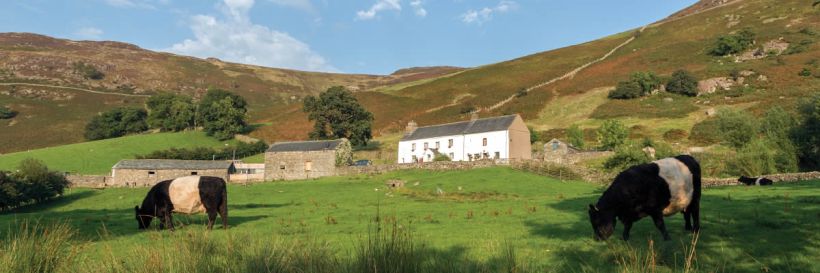
“Farming in Cumbria is being swallowed up by nature and net zero”!

“I’ll crack on and do it meself”.

My old farming Grandfather began his working life as a young boy running errands for the slaughterhouse located close to his family home. As a teenager he progressed onto the line, and at 15 years of age was well capable of butchering animals for local farmers and butchers.

You must remember this was an austere decade following World War 1, leading up to Wall Street crash and a great global depression. No one had it easy save perhaps the odd local Lord or those owning the iron ore mines deep below the surface of the Furness Peninsula.

On leaving school Grandfather went into farm service and quickly learned that as soon as the lunchtime bell rang, he should take his place beside the other farm workers employed on the local estate. Having tried to show dedication and commitment on his first full day of employment by finishing the task in hand, he arrived late to the lunch table to discover that all that was to be had was a salt and pepper sandwich. Everything else had gone. “And go steady on the salt young Jackson.”

Moving home to work in an expanding family coal merchanting business meant that many years down the line, he was able to achieve a dream, buying a small farm to rear beef and sheep, thus reversing an unfortunate family circumstance in the early 1800’s when our farming forefathers were driven off the land and into the iron ore mines.

Grandfather savoured his home-produced meat at the table, and nothing more so than the fattiest lamb hotpot, which in his opinion, gathered more flavour with each warming of the pot. The young grandson’s protestation that he really did not like “the fat-bits,” was met with utter scorn. Let us not even talk about salt on our porridge.

One summer when I was young teenager working on a neighbour’s farm in my home village near Cockermouth, a prime lamb caught its head in a gate and sadly broke its neck. My old grandfather was on his holidays with us. Now long retired and barely able to walk but for the aid of two stout walking sticks, he just happened to shuffle down to the farm to see what we were busy with. Spying the deceased lamb Grandfather shouted to our neighbour,

“That lamb needs hung up and bled.” Not getting much of a reaction, Grandfather decided to pursue the conversation. “I’ll crack on and do it meself.” The thought of losing several potential meals would be unbearable to a man brought up in the 1920’s.

Farmer John was to admit to me later that this was never a favourite task, but one which most farmers have had to do from time to time. However, he could not allow a 70-year-old retired and almost disabled farmer to take on the job and it was abundantly clear that he was not going to be allowed to put it off until later!

In the 1960’s grandfather bought the defunct slaughterhouse building and converted into a house for himself. Those old boys and their wives were made of stern stuff. A different era perhaps but resilience is in-bred and is what will ensure the success of future farming generations, although we may never see the return of what Grandfather called a “proper fat lamb.” Thank goodness!

Community is more powerful than beaurocracy

After a break from blogging, i’ve decided to strike up once again. I can only hope that my musings are of interest to someone….. somewhere!

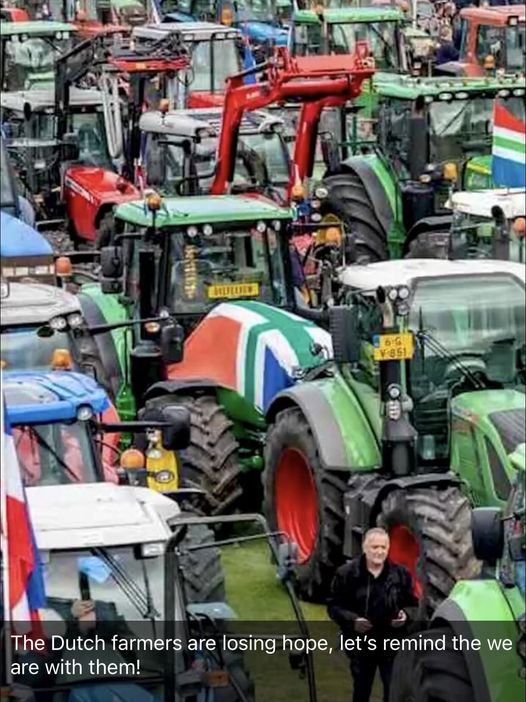
A wise fellow told me recently “Community is more powerful than beaurocracy”. After watching events unfold today in the Netherlands, i am drawn to conclude that the man was right!

https://www.bbc.co.uk/news/world-europe-64967513?fbclid=IwAR1Iu6kJ4J4OvNeexNLD6GrrpTA17OjUeGozO5djIQ0c1nzMnkltXY8RZhM

What is happening to some Dutch farmers in the name of the environment is truly shocking. The government is “offering” to buy- out thousands of farms in order to slash the use of nitrogen fertiliser and cease agricultural emmissions in the country. The livelihoods of farmers and the future of food production appears to be justifiable collateral damage as they are hung out to dry by the politicians.

If farmers don’t accept, they are being threatened with what the attached press report says is an “Expropriation Scheme”. The sensible conservation organisations are even saying “Hang on a minute! This is not entirely the farmers fault”.

There are parallels with UK farmers over the last century in that they have all been systematically supported and encouraged to produce food at all costs for several generations. The Women’s Land Army during World Wars, rationing coupons, and intervention buying are all but forgotten.

No one remembers that farmers were asked by successive governments to keep more livestock, rip out hedges, drain wetlands and farm every inch of the land that could be ploughed in order to feed a starving hungry people. Today farmers are being held accountable for those policies and blamed as the root of the evil. UK food security isn’t really on the political table.

Now the Dutch people are standing up for their farmers and rural communities. They don’t want this! They have voted in solidarity for the new Farmer- Citizen Party which last night won the country’s provisional elections. Who does want this sort of rural land- use policy? Well actually a small but very powerful group of people in the UK might. Some with vested interests, would love to see this re- enacted across Rural England. There’s money in it, in fact large amounts. Whilst there are many who see a genuine need to change the way we manage the land, and in many ways they are not wrong, there are others sniffing an opportunity.

Even now across the UK there are landed estates, some private, some corporate, getting rid of tenants as soon as they can, either to sell land to enable large- scale greenwashing investment, or to plant their own land for their own gain. All of this is generously funded by Government through new planting and environmental schemes. There’s more profit in this than can ever be made out of letting land to tenants, and there’s a perfect facade to hide behind – “we’re saving the planet”! But what of the farmers and local communities?

The average length of tenancy across the UK is now a pitiful three years. Three years does not give a tenant farmer time to settle, raise a family in the local community, invest in the land and business and build a life. It’s a far cry from the old days of the protected multi- generational tenancies that allowed sons and daughter to take over from their parents and their parents before them. Now the loss of every tenant replaced by trees, drives another nail into the heart of a community. It also prevents talented young people from committing to the industry in a tried and tested way, by taking on a tenancy.

These are disturbing times for rural folk in the UK, and especially those connected with farming and food production. Farmers are not blameless and there is an absolute duty on them to leave the natural environment in a far better shape than they found it. It is not unreasonable to think that the scenes in the Netherlands may one day be played out in the UK as thousands of acres of productive food- producing land is re- appropriated and re- purposed in the name of the nature and climate change.

The equitable solution is for government to work up a set of rural land- use policies that balance farming with nature, where both thrive, and develop in harmony. Farming has to change for sure, but with it should come opportunity, stability and trust. Right now we’ve a long way to go. Meanwhile we watch developments across the water with interest. More than 20 million people from all over the world visit Cumbria each year loving the landscapes, the Cumbrian people, the sheep on the hills and cattle grazing in the valleys. I wonder how many would join a UK Farmer- Citizen movement if they realised that the county they love to visit may be under similiar threat. Time may tell……

YOU’RE NEVER TOO OLD TO LEARN….

I went off to the Royal Agricultural College, Cirencester in September 1984. To a boy from the hills of Cumbria, it was a world away from the sheltered life I had known. My parents were proud, my old farming grandfather even more so. In many ways it was a rude awakening to the harsh realities of life and people. I met some of the best and some of the worst. “Mountain Man” as i was christened by fellow students from the south, had an awful lot to learn about both. These experiences have continued through my whole career.

The qualification was everything. Rural Estate Management was the key to the door for a lifetime of working within the farming community.

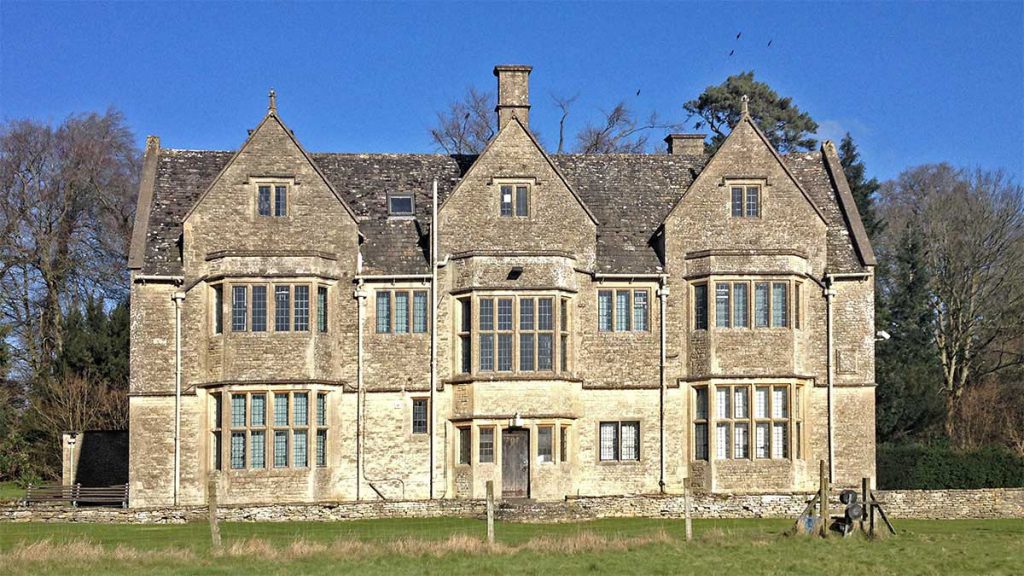
Trent Lodge Hall of Residence, Cirencester – second floor right hand window – my room!

Three years later I returned to Cumbria in my battered old Mini 1000, with rather more life experiences under my belt, and a new job as a trainee land agent and auctioneer for Penrith Farmers Kidd’s. A 20 minute interview with the Managing Director, Harry Richardson secured my dream job. It was a no- brainer for me to return to my home county.

The learning was far from over. For on my very first day and less than five minutes into the job, I ran into the first of many bollicking’s off a farmer.

The brand new Penrith market on Junction 40 of the M6 was full to overflowing with trailers backed up the A66. It was pandemonium. I donned my shiny new auctioneer’s coat and headed for the calf ring to help auctioneer and now life- long pal, David Jackson. As I rounded the corner, I bumped straight into Geoff Faulder, Ewan Close Farm. A man in his late 60’s, he was clearly disgruntled, having to queue to unload calves. He looked me up and down.

 “I don’t know who the bloody hell you are – Boy” he said, “but get out there and sort the bloody mess out”! With that he turned tail and left me standing open- mouthed. Things did settle down and in time Geoff became a good pal, as did his brother Jared, a top county buyer of sheep in local auctions, including his favourite, Lazonby.

Today my own college life seems a world away. Those three years were important not only to learn about my chosen profession, and get the certificate, but more widely to learn to communicate, deal with people and to gain some much-needed self- confidence. I made some good choices in the knowledge that I desperately wanted to return to live and work in Cumbria, but I also made some bad choices in other areas of my life. I wouldn’t change it, but oh boy, would i do it differently! Hey, hindsight is a wonderful thing and I’m still learning, for you are never too old to learn!

Today my auctioneering duties are part- time and still very enjoyable. I’m classed as an old hand now. It is good to work with a young team and where needed impart a little advice or just offer support where i can. I am perfectly at home dropping down livestock trailer doors or opening ring gates as much as i am in the rostrum, although there is nothing beats the buzz of a good trade when you’ve got hold of the gavel.

Five years ago i became the Managing Director of The Farmer Network based at Newton Rigg College near Penrith. I get much pleasure seeing the myriad of ways our non- profit company finds to support farmers and their businesses. Our goal has not changed since the Network was formed 15 years ago. It is to support a viable and sustainable farming community.

I enjoy talking to students on campus and have even tried my hand at lecturing in farm business management. Many students are the offspring of farmers that I grew up with. It is the circle of farming life. Those students are going through the same learning experiences as I did back in the 1980’s when the girls had big hair and big shoulder pads!

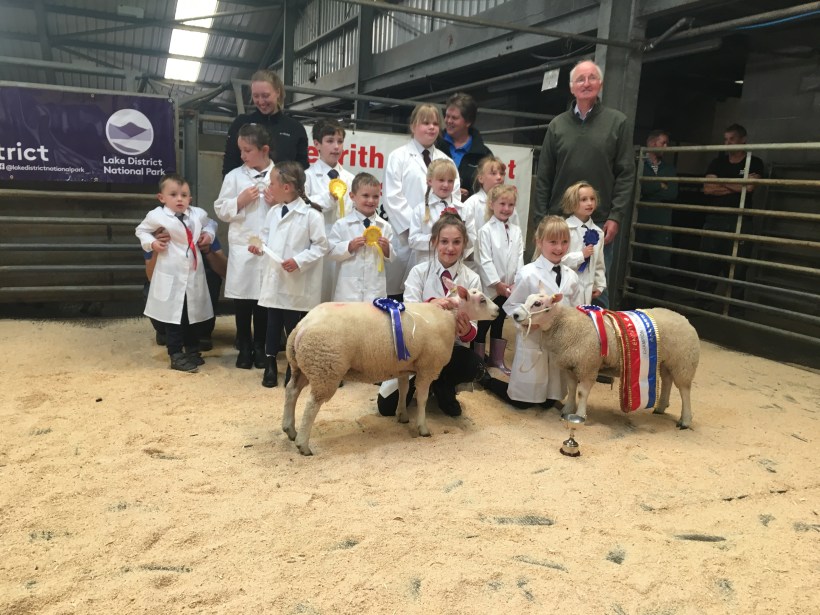
College life for todays “Aggies” is more important than ever. They are the generation that will have to work within a rapidly changing industry. It is so important that we prepare them with the necessary skills both to farm smarter and manage the landscapes in evolving ways. In our industry we start them young, encouraging a strong worth ethic and great pride in the job. In the mart, young handlers sale days are just one of the learning experiences offered.

The future of Newton Rigg college is under threat. The parent organisation Askham Bryan which owns the Penrith campus has persuaded the further education commission that the college is not viable. They have been given permission to sell the site and if this happens the sale proceeds will taken out of the county, back to Yorkshire. Too many this a cruel and unjust end to a bastion of Cumbrian farming life.

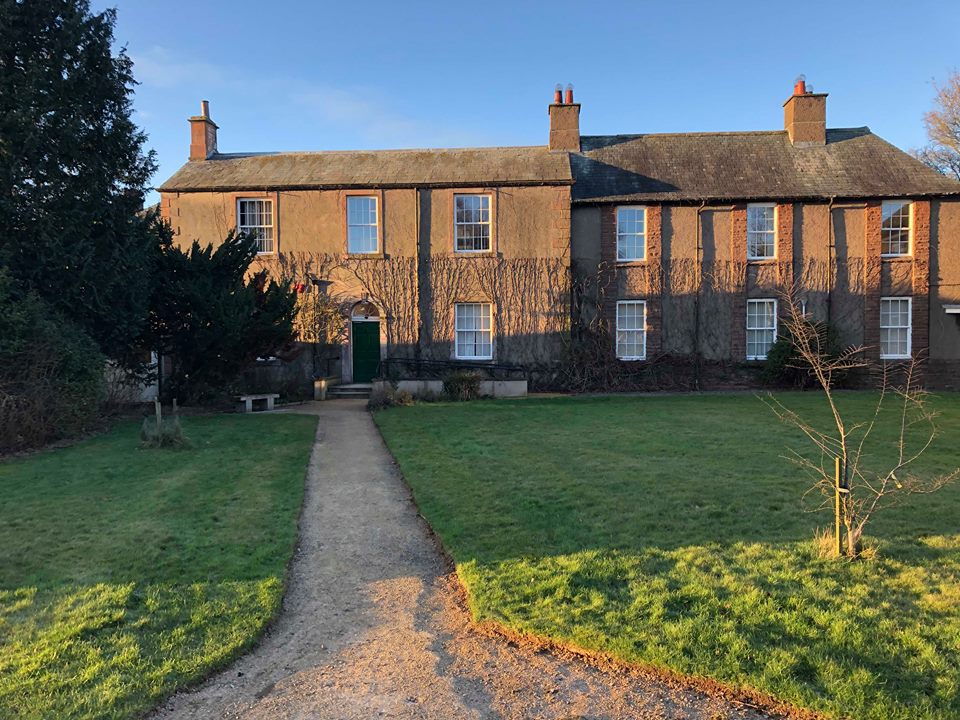
Newton Rigg Farmhouse – present home of the Farmer Network – but for how long?

Even worse is the fact that we will lose a cherished and respected seat of learning in Cumbria, the second largest red meat and dairy producing county across the country. To the farming community and indeed the wider rural community, this is an appalling state of affairs. Closure is due July 2021.

An independent Newton Rigg Land- Based Education Taskforce was formed consisting mainly of representatives from the agricultural and educational sector in Cumbria. The taskforce has been trying to formulate a plan to save Newton Rigg as a seat of learning or at least to ensure that land- based learning can continue in Cumbria in some form. I am proud to be part of the group knowing full well the importance of not only further education, but life- long learning for members of the farming community. There are currently three consortia interested in talking over the campus, and a bidding process is underway. The Land Based Education Taskforce remains in place to offer support where it can. There is still hope!

Our young people starting their careers will be brilliant farmers, food producers and conservationists, in fact the best yet, all in one package. I am convinced of this. If i have one message for them it is: – “learn and keep learning because you are never too old”.

More than 30 years have passed since the day i walked into Penrith mart with my shiny new auctioneers coat. These days my white coats are rather larger than they used to be, but i still feel the same privilege working for the farming community . Difficult though these times of change may be, i have an unwavering belief that farmers are going to become more and more important to this country. We just haven’t quite woken up to the fact yet. Time will tell!

WHAT ARE CUMBRIAN FARMERS WORTH TO CUMBRIA?

What value do we place on farmers and their role in society when looking at the capital assets of beautiful areas like Cumbria?

Old grandfather Jackson farmed close to a small village on the Furness Peninsula in South Cumbria. It was always his dream job and a successful coal merchant business allowed him to invest in land and stock. He was a dog and stick farmer relying on his friends, Alan and Harry Wood, to “bale” him out (literally). Many happy hours I spent as a young child sitting on someone’s knee on a Fergie tractor as Grandfathers meadow was baled by a farming neighbour.

Grandad always insisted on turning a few swaths by hand. As a young boy in the early 1920’s he spent many hours working on local farms. These were truly austere days following the First World War. Everyone worked together, everyone helped. They had to! Turning his own hay with a huge hay fork reminded him of his own heritage and the culture of that time.

Image result for forking hay

Today we are trying to embrace the concept of Natural Capital as part of the 25 year Environment Plan. In 2015, attempts to value the UK’s Natural Capital estimated this at £761 billion. Bearing in mind Cumbria’s exceptional environment and abounding natural assets, it is fair to say that our County contributes considerably to that estimate.

Within Cumbria’s 6,800 square kilometres we have 2 national parks, 3 AONB’s and 2 World Heritage Sites – the Lake District – and a Roman wall. We also have something equally important, a human population of around 500,000. For all the natural capital we are so fortunate to have, our geography, location and infrastructure ensures that we have the lowest population density in the country and one of the poorest performing economies when measured as Gross Value Added (GVA).

These are challenges to the future economic viability of Cumbria and there are other challenges. As we seek to embrace natural capital as an asset, there is another piece to the land management jigsaw that needs to be slotted into place. The common denominator in the countryside and natural environment of Cumbria are the people that farm the land, manage the environment and do so much to create the landscapes that attract over 47 million visitors every year to our county.

What value do we place on our people? How do we begin to value our Social and Cultural Capital and how do we slot this into the jigsaw to form the perfect picture alongside Natural Capital? Perhaps it comes down appreciating that farmers matter more than we realise. The bedrock of many rural communities? Is that too strong?

What of the heritage and culture that our forefathers have created? My old grandfather, even in his own small way, was a proud farmer. Happy as he was turning hay by hand on a sweltering summer’s day in July, his great joy was visiting Ulverston auction to sell his lambs, just one man in the farming community, supplying and supporting many more communities country wide. What value should we place on that?

The Lake District World Heritage Site inscription delivers the perfect summation: – “Both the long duration of our farming culture and the survival to the present day of its distinctive character is considered to be of outstanding universal value.”


GET YOUR HEAD TO THE LEFT!

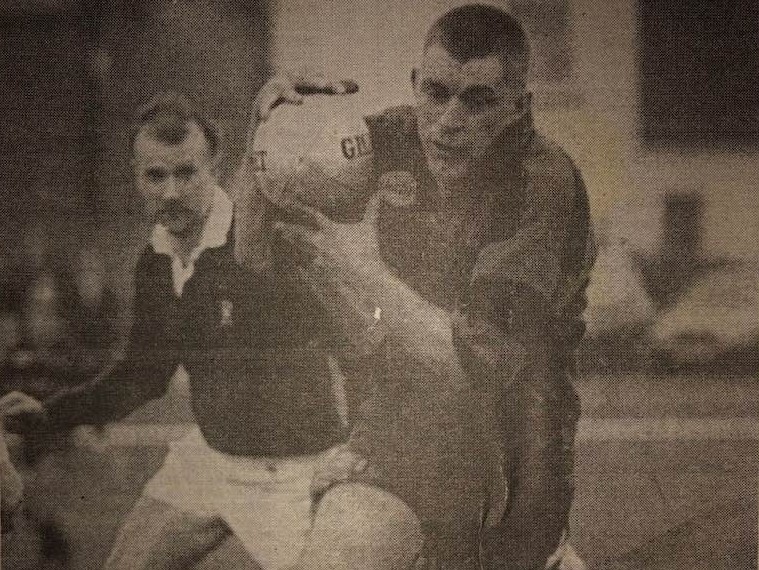
Rugby was a different game in the 90’s. There were no video referrals or radio mics. If a problem on the pitch needed sorted, it got sorted. Here is an example of how the game was played by Aspatria RUFC.

It is 1993. Aspatria RUFC have a mid- winter national league fixture at Sudbury way down south in Suffolk. As usual we leave Penrith at 3pm on Friday afternoon heading over the A66 and down the A1. The Redcrest luxury double decker coach is full, the atmosphere convivial. The playing squad sits on the top deck around numerous tables. Committee men and supporters are downstairs.

Immediately a Forwards V Backs game of Trivial Pursuits gets under way. George Doggart is over from Sweden and wants to bet on the pie questions. The Backs are full of educated, learned men like Jimmy “Jinky” Miller, Tom Borthwick, Dave Murray and Colin Campbell. The forwards however, have a secret weapon, a genuine mastermind within their ranks. Neil Wedgwood from Maryport who only just made the bus straight from the early shift at British Steel, is an unbelievable font of knowledge. His consistency in answering even the difficult “art and literature” questions is breath-taking. Single handedly he wipes the floor with the backs. They sit open mouthed as the last piece of pie is slotted in by Wedgie with a shrug of his shoulders. He is a classy open- side wing forward, always in the right place at the right time, quietly going about his work. And he is brilliant at “Triv”.

It is a great team building exercise and we are proud to represent our Club and County as we head South. We are dressed in our club shell suits and we are men on a mission. We feel like professional rugby players even though in this era there is no such thing in the union code.

Eventually we make it to The Stansted Hilton Hotel. Aspatria Rugby Club has a deal with the hotel chain and we always stay at a Hilton if there is one close to our opponent’s location. We have a team meal and then the squad retires to the bar. I am fairly new so I am rooming with a seasoned professional. It is Tony Clemetson one of our second row forwards. I am in awe of Clemmo. He has a certain reputation on and off the rugby field. He can mix it whenever he wants to. He also has a large number of caps for Cumbria. Not many Cumbrian teams like playing against Clemmo. He is heavy- handed and he can do real damage.

The squad is encouraged to stay loose, and have a drink if required, but not overdo it. Clemmo and me stick together and find ourselves having a couple of pints of Guinness. We are both selected on the bench for tomorrow’s game by rotation. Substitutes are only allowed to come on as an injury replacement. It is unlikely that we will get much of a game.

I don’t intend to keep drinking, but we find ourselves on a table with two very camp flight stewards and a couple of air hostess’s one of whom is perhaps coming towards the end of her career, with a few air miles on the clock. The air stewards seem to love having a drink with two 17 stone rugby players but the old hostess has had one too many and she is telling me her life story. She is slowly sinking in to “could have been’s” and “should have been’s”. Most of the players have retired to bed. Clemmo and me are left with Justin, Larry and a lady who is now in tears and looking for comfort. Then Robbo arrives. Forwards Coach.

“Adam what have you done to upset this lovely lady”? “Get yourself off to bed. You too Clemmo and that’s an order” We make our goodbyes and as I look back across the bar, Robbo has one arm around Justin and the other arm around the hostess. We have a chat with a couple of supporters who are on the beer. By this time Robbo has come back and joined us. “Saved you there boy” he says with a wink as we head for the lift.

Next morning we are down at breakfast with slightly thick heads. The Guinness has not gone down too well. We then go to a team meeting. It has poured down heavily all night. Tommy Borthwick, player- coach, announces that there is a change of plan. The pitch is expected to be heavy and it may well be a battle of attrition between the forwards. Clemmo is promoted from the bench to starting second row. I will have to stay warm because Steve Irving, our County Loose Head Prop is carrying a shoulder injury and may not last the trip. Clemmo and I both supress groans. I am more worried about the fact that I have never actually played in the Loose Head position in my life, never mind a national league 3 game. In fact i’ve only had a handful of games at tight- head. Not for the first time am i left wondering what the hell i’m even doing there!

We go out to the car park and do some warm up jogging and line out drills. Then we are on the coach to the game. Tommy Borthwick hands out banana’s. Everyone has to eat them. He’s read in Muscle and Fitness that NFL stars in America chew bananas constantly. My banana is more green than yellow. I force it down. It is sour and almost crunchy. I feel decidedly unwell.

The game kicks off in pouring rain but the pitch isn’t too bad. I’m taped up, greased up and sitting on the bench in my padded subs suit. It’s toasty warm and I am hoping that Aspatria will rule the game comfortably as they generally do in most forward battles. It is a style for which we are noted and even top class teams like Wasps and Moseley have struggled to take the Black Reds on up front. I rather hope that I get a nice 20 minute run at the end with no pressure.

The first couple of scrums are a real mess. I can see that the opposition tight head is collapsing in on Steve Irving. It is deliberate and designed to stop Steve doing what he is very good at. It happens again at the third scrum. This time Steve doesn’t get up. His bad shoulder has been damaged. He will have to leave the field. “Right Adam, you are on” says Robbo. “Oh Shit” I nearly blurt out.

So I am stripped for action, sleeves rolled up, and a wad of Vaseline covering my neck to allow my head to slide easily in to the alien world of the left hand side of the scrum. I haven’t even played in this position on the scrummage machine, never mind a national league match. I am straight in to the game at the reset scrum. I bind as tight as I can on my hooker Nigel Brown. He will guide me through this and I have Clemmo in the second row behind me. “Get your right leg back” says Clemmo “and get your head under his chin”

We thump in and I immediately see stars. It’s nothing to worry about. This always happens to me in the first scrum until the nerves in my neck warm up. I get a good bind with my free left arm and my back is straight. I actually feel quite comfortable. It is a Sudbury put- in to the scrum. The advantage is with us. Nigel may choose to contest the strike but he is experienced and he knows I am not. So he gets his legs back in to a pushing position. He is also exerting immense pressure with his head and shoulders on the back of his opposition hooker and my tight- head prop.

The ball is presented by the Sudbury scrum half and I feel a surge of power from behind me. Clemmo is pushing as is Malcolm Brown on the flank. They love this. I can feel my opposition begin to creak with pressure. Then he does exactly what he did with Steve Irving. He releases his bind on my left arm and nose dives into the scrum. I don’t have the technique or strength to stop it. The referee is getting edgy and he doesn’t understand what is happening. He urges us to keep up. He is rambling on about heads above hips.  I shrug my shoulders to say “not my fault” but i’m not one for pointing and gesticulating.

We reset. Immediately my prop sinks in again. He knows he’s going backwards and he is trying to win a penalty. As we stand up I look at Clemmo for guidance. “When he goes down again, get your head as far to the left as you can” he whispers. “And remember, to the left”…

We crash in again and I hold my prop up as long as I can before he dives for the deck. As we collapse I get my head out of the scrum as far to the left as I can. It hurts. Everyone gets up. Well everyone except my prop who is lying on the ground clutching his head which is bleeding profusely. He has to leave the field for treatment. It dawns on me what has just happened. As the scrum went down, Clemmo stood up and followed through with his right boot between me and Nigel, exactly where my head should have been, had I not moved to the left. Clemmo has imprinted a perfect set of stud marks on the props head. It is quite illegal of course but is the law of the jungle at scrum time. If a referee cannot sort out a problem, or does not know how to, the team’s enforcer, and every good team has one, will sort the problem for the team. Aspatria always had more than one! Clemmo shows absolutely no emotion.

A few minutes later my opposition prop is back on the field, bandaged up. We scrummage again and he doesn’t look me in the eye. As we engage he stays straight and true. I have no trouble for the rest of the game. It is an arm- chair ride and that suits me just fine (don’t tell Steve Irving). As a result I am able to run about and carry the ball regularly. Late in the game I peel from the front of the line right around the back with ball in hand. Charging past their fly half i almost get to the opposition posts before being hauled down. We score from the re- cycled ball.

I don’t remember the final result but and I am elated to have finished the game in on piece and head held high. Minutes later I am in the big team bath sitting next to Clemmo. He soaps himself and explains the instructions he gave me on the field.

“You see Adam Lad, the same thing happened in a game last year, so I told Steve Irving to get his head to the left. The problem is he doesn’t know his left from his right”. He had to come off and get six stitches when I caught him in the lug. I didn’t want that to happen to you!

COMMUNICATION WITH THE CUSTOMER IS EVERYTHING!


I was given my first company mobile phone in 1996. I’d spent months trying to persuade the auction mart directors to let me have one. Their answer was; “there is a phone box in most villages if you need to phone the office”. Then we lost a buyer’s order because I was out and uncontactable. A phone was duly purchased.  I used it late one Saturday evening to ring my fiancée from the rugby club bus to come and pick me up. My fellow players thought it rather amazing.

Farmers of today could not live without a mobile. They are in use everywhere from the milking parlour to the tractor cab. Our younger farmers are tech- savvy and rather brilliant at marketing. The back- end normally starts in late summer with social media posts showing “the top pen for next Wednesday’s sale” or “our run of heifers for next Friday”.

Some farmers post working shots throughout the year. Who can forget the photos of buried sheep being rescued from snowdrifts or stock huddled together in flooded fields as farmers battled on to rescue them.

My point is that farmers are brilliant at preaching to the converted. They are doing a great job of pre- marketing their wares to farmer- customers but now is the time to try and go a stage further. Yes, selling to best advantage is of premium importance but with the rise of social media, we should make a concerted effort to engage with the public, lift the profile of farming and persuade the world why farming, food and looking after the environment matters.

“Public payment for public goods”. If the Agriculture Bill receives royal assent by the end of March 2019, this will be our future funding regime. Now is the time to engage much more closely with the public. Food doesn’t grow in supermarkets. Our farmers need to use those newly learned marketing skills to reach their end- user, the last link in the food chain. I for one would be delighted to see a farming good- news story to counter every negative piece of anti- farming propaganda we read or watch.

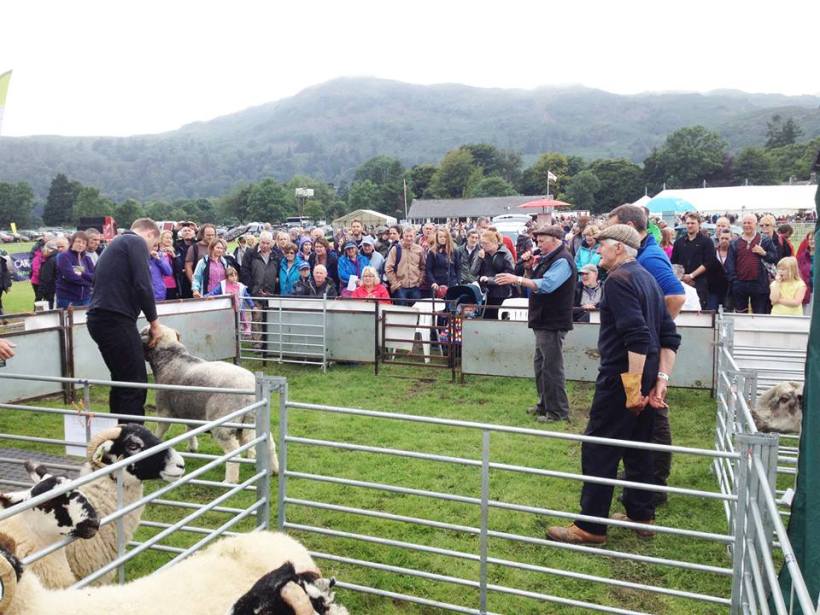
So let’s get the message out there and go one step further than social media. More on- line video’s, more TV and radio interviews, more books. Whilst we are at it, what about a more concerted effort to engage our public on the farm with open days and meet and greet events. The Farmer Network and other organisations have been doing this for years on a small- scale. The photo above shows Herdwick Sheep Breeders Chairman working with volunteer farmers to talk to visitors at Grasmere Sports. Don’t leave it to someone else. Get involved

So when we promote the “top pen” or the “run of cattle” on social media, maybe explain why this is important not just to farmers, but to the public. We must lift our profile. Public payment for public goods…… like it or not, it will be the future.THE LAKE DISTRICT – OUR LAND, OUR LIVES, OUR HERITAGE.

CHRISTMAS SHOPPING IN PLYMOUTH

Up in the attic searching for Christmas decorations, I came across a box full of old rugby programmes. I spied a programme Plymouth V Aspatria, Saturday 18th December 1993. My mind went back to the game, which was one of the most memorable I played in.

Up in the attic searching for Christmas decorations, I came across a box of old rugby programmes. I spied a programme Plymouth V Aspatria, Saturday 18th December 1993. My mind went back to the game, which was one of the most memorable I played in.

We travelled down to Plymouth on Friday afternoon, on the usual double decker coach. It was a hell of a long journey but the lads were in good spirits with the usual board games and banter.  It is amazing to think that in those amateur days, a little team from North Cumbria could travel the length and breadth of England playing league rugby for zero financial reward. Sure there was some free kit and few expenses to be had, but the small squad of players were on that bus for two reasons: – to play the game of rugby union and to represent Cumbria, that far off county of lakes and mountains that some teams we played against had very little knowledge of.  This was the last game to be played before Christmas and we were shopping for much needed points

Friday night saw a late meal waiting for us at the Hilton Hotel, always a Hilton Hotel for Aspatria. Then it was a couple of drinks in the bar before bed. I was rooming with Tony Clemetson our rumbustious second row. Clemmo on his day and the right mood was a force of nature. It was always good to talk to roommates before lights out. It helped to know what made people tick and what they were about. Clemmo always had an edge to him and I for one was always glad to know he had my back on the rugby pitch.

After a good night’s sleep we breakfasted before running up and down the car park doing some walk- throughs and drills, mostly for lineouts and back row moves. Then with time to spare I took off for a walk with our club captain Mark (Tank) Richardson. I enjoyed this as it took my mind of the game and stopped the nerves building too early. I did this on a few occasions with Tank. A huge presence on the pitch, he was unstoppable from close quarters, he quietly got on with the job, leading by example. When the unsubtle stuff was needed, Tank never failed to step up to the plate! Off the pitch he was a quite family man. Often on our walks he would stop at a shop and by a couple of presents for his young children. At the time I didn’t appreciate the pressure on family men, leaving their families for most of the weekend to travel the country in pursuit of a decent standard of rugby. Several of our players had children and it must have been hard for those men leaving their wives and partners with young family.

Some years later I was delighted to see Tank’s dedication to Cumbrian rugby rewarded when he was selected to play for the Barbarian’s.

Soon we were on the coach for the trip to the ground. We could see that the pitch wasn’t far from the sea. By now a real storm was brewing. As we alighted from the coach we could see rain squalls whipping across the pitch. It was frankly horrible weather, freezing cold and a muddy waterlogged pitch. We were used to this of course!

As we walked in to the changing room we saw a few of their players run out on to the pitch, dance about in the mud as their feet got wet and then quickly run back in to the warmth of their changing room. This was noted by Malcolm Brown. Malcolm was our pack leader on the field, assisting club captain Tank. As we changed in to warm- up kit, Malcolm urged us to get a move on. Finally with tracksuits, extra sweat- shirts and pom- pom hats on, were ready to go out.

Now here was the genius of Malcolm. “Right lads” he said. “Did you see those ponces out there?” He looked all of us in the eye and he was starting to froth at the side of his mouth. This was always a good sign as it meant he was already up for the game.

“T shirts and shorts only” he instructed. “We’re going out there to show these soft southern b….s what we’re made of. We are men of Cumbria, don’t forget that when we are on the pitch”. His tone was rising all the while, so we stripped off our tracksuits and sweatshirts. When we were ready we ran out as a squad dressed in a single T shirt and a pair of shorts.

“Down on the ground now” barked Malcolm and there in front of the grandstand we lay down on our fronts in the freezing mud. “20 slow press- ups, count them Clemmo”.

As Clemmo counted, Malcolm kept on talking. In the Plymouth changing room we could see a crowd of faces peering out the window at us. “Look at them” he said. They are already frightened of us. They don’t want it. They don’t want to be here. WE DO!”

For the next 30 minutes we ran and ran, hitting tackle pads, doing drills. It was so wet and cold we were actually glad to do it just to keep warm. Finally, satisfied that we were ready, Malcolm marched us back in to the changing rooms, dripping in mixure of sweat and cold rain. Plymouth hadn’t appeared.

Taped up and greased up we went back out in to the melee. Our tactical coach Tommy Borthwick wanted us to play our normal wet weather game. Kick for the corners and let the pack do the rest. Up the jumper, traditional Aspatria power play. For a second I pitied our backs who were going to have 80 minutes with very little to do!

That afternoon I was propping against a man who the previous season had been a Bath 1st XV squad player and had dropped back to league three. We had a good battle and it was honours even as I used the Syd Graham shoulder on knee technique to good effect on our ball. I was also fortunate to have men like Nigel Brown at hooker, who was the most awkward, niggly hooker a team could have. He was always breaking his bind and getting his head under his oppositions chin for annoyance. Great to play with but a nightmare to play against.

They couldn’t live with us that day and in those dour conditions and with a team absolutely driven to win, we were never going to lose. We would have run over a cliff for Malcolm that day. For 80 minutes he urged us forward as “Men of Cumbria” and we blew them away.

Sitting in the team bath later, slowly feeling the warmth creep back in to our bodies was a great feeling. We had travelled 300 miles and were taking home maximum points for Christmas. We celebrated long in to the night around Plymouth. Eventually we found ourselves back at the hotel at about midnight. I spied a grand piano in the hotel lounge. I sidled over to it and to my amazement it was unlocked. I slid on to the piano stool and begin playing and singing Christmas songs. Soon some of the lads came over and eventually some hotel guests even joined us. It turned in to a proper rugby club sing- song. I well remember our club chairman David Miller and his wife Margaret, swaying with the crowd. What a way to finish a great day’s rugby.

Sunday morning was a quiet affair. We breakfasted and then jumped on the bus for the long journey back. Some players slept off their hangovers, others watched the on- board film, The Fugitive starring Harrison Ford. Eventually after several hours and as dusk was falling, I was dropped off at Penrith, job done.

I look back now and realise how proud I was to play in those games. A former Aspatria player and good friend Alistair Grant, said to me many years later, that the biggest driver at Aspatria was the constant desire not to let the club down on the pitch. I knew what he meant!

Best in show – “The Judge is always right”!

Some farmers and also some auctioneers thrive in the show ring. That is acting as the master Judge, picking out a class winner or indeed an overall champion from a ring full of cattle and sheep. Many times in my career I have had the honour of being asked to judge livestock at agricultural shows throughout Cumbria. My preference was always to say no. Despite being an experienced auctioneer, the thought of putting myself up for even more criticism than usual from farmers was never that appealing.

How many times have we heard farmers with loud voices talking in the local vernacular around a show ring; “See yon Judge theer, he’s got that wrang he has. Ah would nivver hev given it to that owd yow. He’s wrang thoo nas, he’s wrang and that’s aw there is till it……”

Working on the premise that the Judge is always right, it should never have bothered me but hiding behind the excuse that I didn’t want to upset a potential auction customer, I always politely refused. Later in my career however I began to realise that the older I got, perhaps less chances I would have to do some show judging. Knowing as many farmers as I do, I thought I should perhaps start to do my bit and prove that I had learned something over the years.

As it happened the very next judging invitation came from an old friend, Richard Vickers, of Loweswater Show. Technically Loweswater was always my local show. Having been brought up in a little hamlet called High Mosser, on the most Northerly slopes of the North West fells, a short walk over the hill behind our farmhouse brought us down the steep fell road to Loweswater Lake.  Golden summer nights were spent swimming in Loweswater Lake beneath the wooded slopes of Burnbank Fell as the sun descended over Graythwaite Heights.

Loweswater show was the only show that as children, me and my sisters were allowed a day off school to attend. Indeed one year I managed to win the local boys under 14 Cumberland and Westmorland Wrestling class, before being destroyed in the open U14 class by Dave Kirkby, a farmer’s son from Egremont. He was a highly skilled, experienced wrestler, strong as an Ox who simply squeezed me in to his chest picked me up off the ground and with my legs paddling in thin air, gently laid me on my back on to the ground. That was the end of my wrestling career!

During the many years working at Cockermouth Auction every single farmer in the parish was known to me, many but not all, becoming friends. Richard Vickers was an old pal from school days. He was truly a “Loweswaterite”, growing up at Askhill farm at the Western end of the Lake. As well as farming with his father Willie, he also worked for a few years at the old market in Cockermouth on leaving school. Then he set up a small contracting business which included cutting all the hedges around my father’s land. Later he was to build his own farmhouse and buildings at Mosser Heights which rose up and over the hill to almost join with his father farm in the Loweswater valley.

Richard called to offer an invitation from Loweswater Show committee to act as the master judge to pick the overall champion or best sheep in the show. I was about to give my usual apologies when I realised that this was a real honour and I may never get the chance again to judge at my local show. I had to say yes. The thought of standing in the show field to the south of Lorton Village almost in the shadow of the famous fells of Grasmoor and Whiteside, with Melbreak just to the south, was at the time, quite appealing.

Agricultural shows are a part of the fabric of rural life. They are celebration of all that is good in local communities. It is a chance to showcase the very best livestock, perhaps with a view to selling in the auctions later in the year. Shows are about people. It is as much about socialising as it is about business. Old friends meet up, stories are shared and there is always a happy atmosphere. The commentator drones over the tannoy, reading class results, calling competitors and sometimes just recounting a funny tale. In valley shows like Loweswater, the tannoy can echo and be heard as clear as a bell on fell tops. It is strangely comforting. Without the farming community, all of these shows would simply disappear and to a large extent so would many of the communities. That is why agricultural shows are so important and why so many people work on committee’s to ensure the shows take place. It has been done this way for generations. It is a wonderful custom and very much part of Lakeland’s heritage.

Before I knew it I was actually there on a bright sunny Sunday morning during the first week in September. The view of the fells was quite spectacular but no time to dwell, I was there to do a job. As I arrived, the judging of various breed classes was in full swing. I decided to keep myself at a distance, close enough to see what was going on, but far enough away to remain uninfluenced by the farmers discussions or indeed judging criticisms.

The craic was good with lots of banter among friends and soon the tannoy was bursting in to life again.  “Would our master sheep judge Adam Day make his way to the show ring please”. A quick hop over the pens and I was right there in the thick of it.

In front of me stood the breed winners from all the previous classes. These were the sheep that in the opinion of their own judges were the breed champions on the field that day. My job was to pick the champion of champions, the best sheep on the field!

There were several sheep of all breeds in the line-up. Slowly and methodically I worked my way along the line. Every shepherd was known to me. They are trained how to handle and show sheep from the moment they can walk. There is a huge skill in breeding these quality sheep, in other words putting the right tup on to the right female sheep to produce a top quality lamb. The shepherds have an honest eye for the best traits in both the ram and ewe. In their minds they see what they hope will be the perfect match to produce a sheep of showing potential.

The shepherds are also taught how to present the sheep to best advantage at show time. Each one is washed, dipped and crimped to perfection to highlight best features and perhaps even to disguise an odd gentle fault. This is a skill akin to any beautician or hair stylist trying to make the most of their clients attributes.

When showing, the shepherds are taught to watch the judge at all times, make sure the sheep is standing perfectly with four square legs under the body and a high head carriage to show off a straight back or top line. As a judge you can feel the eyes watching your every move as you proceed along the line. Each sheep that I came to needed a soft steady appraisal, looking from the back, side and front. Then a closer inspection, a quick look or feel along the sheep’s teeth. The mouth should be correct, the teeth, neither over- shot nor under shot. Then a firm pressure along the back to judge the amount of muscle, the width across the loin and on down to the hind legs. These are the basic requirements of all sheep breeds, good strong head, correct in the mouth and square in the leg.

Each breed also has different characteristics which are important to them. The lowland breeds producing the very best quality butchers lambs need lots of muscle and a good coverage of meat on the carcase though not too fat because that is not what the modern housewife likes to buy or cook. The hill breeds need to be strong in the leg and tight- woolled to keep out the rain in the winter months as they graze the high fells. There are also breed trends in terms of colouring on the legs, the fleece and even the hair on the faces.

Soon I had reached the end of the line. I immediately picked out two special sheep that I knew in my own mind would be champion and reserve, but which one?  The words of one of my old auctioneering mentors Peter Sarjeant came back to me. “If in doubt, stick to your first instinct, it is usually the right one”. But there is a protocol to be followed and that is to ask the shepherds to “lowse” the sheep, meaning let them go. All of the sheep ran together and huddled in the corner of the pen, here I was able to judge different sheep side by side, trying to pick out why one sheep was better than the other. Nothing changed my mind from my first viewing and now we were down the nitty gritty on judgement day.

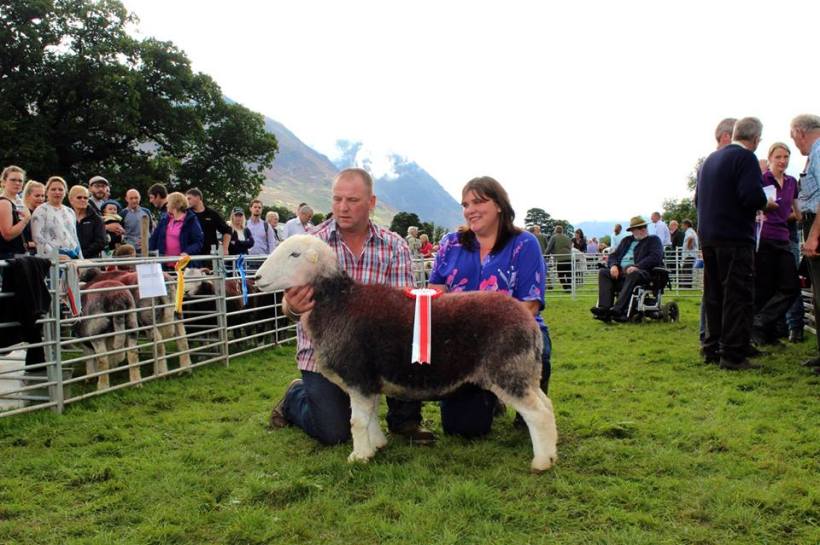
The sheep were “gathered up” again, each shepherd generously helping all the others, as there is always camaraderie and respect in the sheep show ring. It was time for a last look, a scratch of the chin, a final glance and short walk and a gentle pat on the rump of my champion pick. This I followed with a hand shake and a respectful kiss on the cheek for Barbara Stagg, the owner of the Herdwick Twinter. Also a handshake for her partner Andrew who was holding the sheep.  The crowd of farmers and show visitors clapped respectfully as I congratulated them with a few words of praise for their lovely sheep. I have known Barbara for many years and her father and grandfather too. In fact, many, many years ago, her grandfather Gordon Stagg from Croft House Farm, Buttermere was the first Herdwick Breeder to sell a tup for 100 guineas!

Quickly I moved over to my reserve champion, a tap on the rump of the Swaledale ewe and a shake of the hand (no kiss) for The Gill family from Newlands near Caldbeck having originally farmed in Loweswater. Two outstanding sheep, the young, previously un- shown Herdwick and the older Swaledale ewe that had delivered much success in the show ring in recent years. So why the Herdwick? Well she was so clearly an outstanding girl, the muscle and power meant she was solid as a rock to handle. She had a beautiful head and very strong legs, with a tight brown fleece that will lighten in colour as she ages. My instinct was always to pick her. Thankfully a few other knowledgeable farmers told me they couldn’t have gone past her either. When Arnold Lancaster from Torver thumps you on the back says and says you haven’t done so badly, then you know you’ve got it right. Had I not then he would soon have told me. Only at that point did I begin to relax a little!

With the judging completed it was time to enjoy the show, have some lunch in the catering tent enjoying good banter with some of the sheep breed judges as to why I didn’t pick their sheep! Then a final look around the show field before setting sail for home.

As I pulled away from the show field I took a last look down the Lorton Vale, past Melbreak and on to The Buttermere Fells, Red Pike and High Style. It is quite simply a beautiful landscape, created by sheep, managed and conserved by shepherds and enjoyed by so many people who visit and admire our county. These are my fells, my farmers and my friends. I have enjoyed working for this community very much over the years, every farm visit a pleasure, actually being paid to drive through and work in these Lakeland valleys. Driving my car over Whinlatter Pass heading for home I felt contented, honoured and proud. I’ve had a good working life as a Lakeland Auctioneer. I hope it’s not quite finished yet.
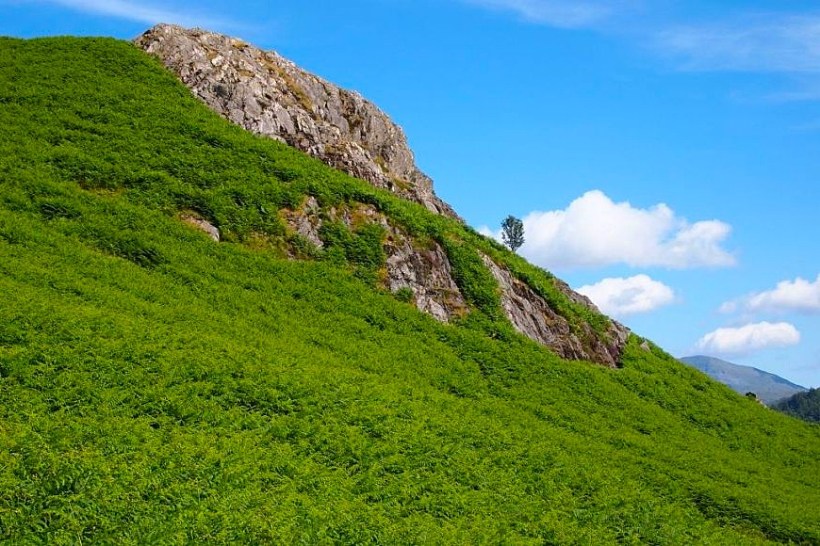
THE LAKE DISTRICT – OUR LAND, OUR LIVES, OUR HERITAGE.

He talked of his spirit being lifted every time he visited the Lake District. This he said would be the same for the many who come to our county to appreciate the landscape and the views. The landscape, he said, was created by communities, a living breathing landscape where sheep roamed the fells. To him this agro- pastoral system was important, vital and must be protected.


Much of my family history is entwined with Cumbria and the Lake District. We can get back to the early 18th Century through a number of lines. Along the East Fellside of Cumbria and in the industrial villages of West Cumbria we’ve worked the ground above, as farmers and labourers, and we’ve worked the ground below as miners of iron ore and coal. One thing hasn’t changed too much in all that time. My forefathers, had they lifted their eyes, would have seen the same craggy fells, rolling Pennines, the green valleys and the deep lakes. For this land is our land. It’s where we belong. There are many more people just like me, with same ancestry.

Today I attended the opening of the Lake District UNESCO World Heritage Site on the shores of Derwentwater, at Keswick, one of Cumbria’s most popular tourist destinations. I had no idea what to expect other than a few scant details on an e- mailed invitation from the Lake District National Park Authority. What we did know was that His Royal Highness Prince Charles was to officially open the World Heritage Site accompanied by Michael Gove, Minister for the Department of Food, Environment and Rural Affairs. This is the department that governs farming without actually mentioning it in the title. That is a pretty good clue as to how farming has been viewed and treated over the last couple of decades. Our food producers have been unloved, unappreciated and frankly down- beaten. The public perception has been one of greedy, subsidised farmers doing little for it and driving round in large expensive 4 x 4’s. Reality is far from perception. Food health scares, disease crises, years of dreadful farm gate prices and poor support from supermarkets and over- zealous, ill- informed government agencies have left their mark. Things must change. Perhaps that’s why so many farmers supported Brexit. A huge leap of faith for them, or a belief that things must be better for them?

In Keswick I bumped in to several farmers as we arrived together and went for coffee prior to the ceremony. I caught up with Joe and Hazel Relph who farmed at Yew Tree, Borrowdale before retirement. It was common knowledge that the Prince of Wales regularly used to stay at Yew Tree farm on his annual Lake District break although they would never talk about it. Will Cockbain was with us too. I’ve sold hundreds of sheep over the years for the Cockbain family at Cockermouth Auction and admired Will’s common sense approach to the politics of farming as he has fought on behalf of Lake District farmers at a high level. Then a great catch up with Brian and Jayne Knowles who farm the Southern reaches of the Shap Fells and are leading lights in the Rough Fell sheep breeding world.

Soon it was time to go outside. We walked on to Crow Park to await the special guests’ arrival. In bright spring sunshine I took a few deep breaths and savoured the view. Catbells seemed almost in our pockets. Beyond lay the Newlands fells and then the Grasmoor range. To my left the massive round of Skiddaw, once a huge volcanic plug three times the height it is now, and the namesake of my old school house. Friends all. Some of my forefathers knew these hills as I do today, walked them and mined them. This is part of my heritage.

Six months ago I stood in Crow Park with a group of volunteer farmers and their sheep as we met the general public, showed them the animals and explained what farming in Cumbria means and what it delivers. There were visitors from all over the world. Just talking to them for a few minutes, opened up a new horizon for them. Many were simply clueless about the landscape and its guardians. Several promised to look at farming in a whole new light. We went home tired yet quietly satisfied, wishing we could do more.

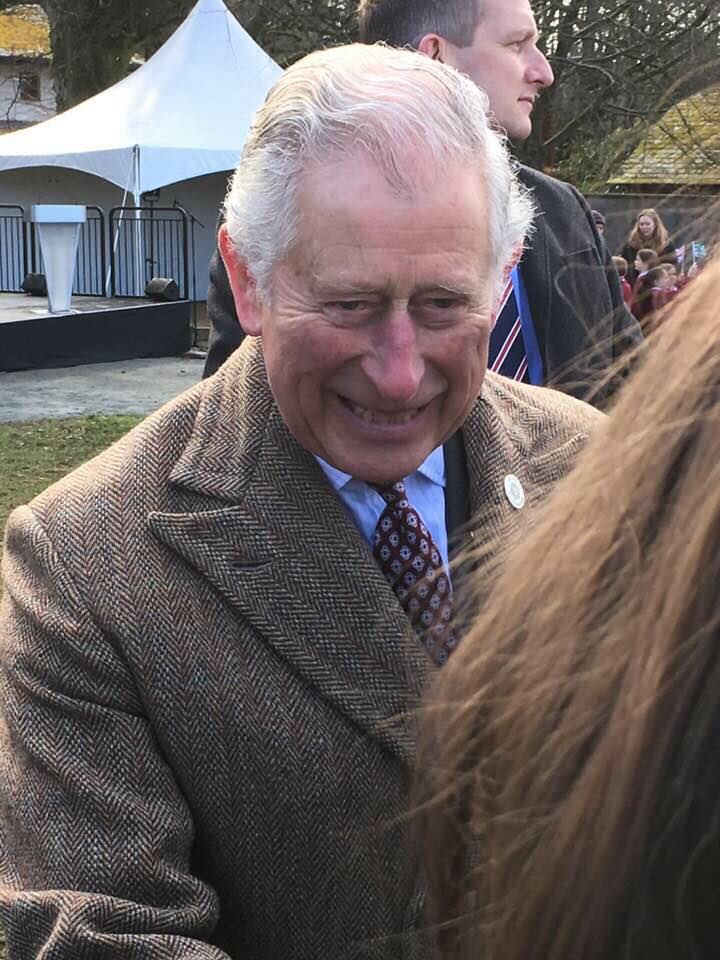
His Royal Highness Prince Charles
His Royal Highness, Prince Charles, opening the Lake District UNESCO World Heritage Site. March 2018. Photo’s courtesy of Ashnessfarm.co.uk

Back here once again, the sun continued to rise above the Helvellyn range, with a little warmth on the face against a cool spring day. What else could you expect in Cumbria in late March? Soon in a blaze of flashing lights, the royal cavalcade arrived. Hundreds of school children screamed and waved Union Jack flags as his Royal Highness took his seat. There were songs and dance performances from local children all of which was entirely fitting. Soon it was time for the unveiling of the New World Heritage Site. Prince Charles took to the microphone. His speech was frankly music to the ears of many rural Cumbrian people. He talked of his spirit being lifted every time he visited the Lake District. This he said would be the same for the many who come to our county to appreciate the landscape and the views. The landscape, he said, was created by communities, a living breathing landscape where sheep roamed the fells. To him this agro- pastoral system was important, vital and must be protected. It was a message of support for farmers, their businesses and their very real contribution to communities and this land – our land.

I found myself murmuring “here here” on more than one occasion, impressed by a man who clearly knows and understands the pressures rural communities in Cumbria face. These pressures are economic, social and environmental. The Princes words flew in the face of the ardent some would say misguided environmentalists who seek to rid the land of livestock, turn farmers in to park keepers and and in doing so, see the demise of local people living in established and real communities. His words drew rapturous applause from many local people.

All the while I stood next to or rather just in front of Anne Cornthwaite who farms at Ashness Farm just above the famous pack horse bridge a few miles south of Keswick on the road to Watendleth. Years previously, Joe Relph’s father Charlie farmed here. As a young auctioneer I actually sold implements in the field at Ashness at Charlie’s retirement sale. Later as manager of Cockermouth Auction, I always tried to help and support young farmers at the start of their careers. Anne’s son Henry used to bring sheep to the market. He was only a young lad, recently left school and now responsible for the marketing of their sheep. I wanted to give him confidence, so that he enjoyed his trip to the auction and would go home happy to his mum. “Ring me on a Tuesday” I used to say “and I’ll tell you what the trade will be like tomorrow”. This I continued to do until it was time for me to move to fresh pastures. As I said earlier, these are real people in real communities. We all have our part to play.

I asked Anne what she thought of Prince Charles speech. She said “rather uplifting for upland farmers like us”. She went on to say that she just hoped Mr Gove was listening and taking it all in. Many farmers were thinking the same thing. For he has a singularly important role to play in the future of rural landscapes going forward.

Soon we will be released from the common agricultural policy that has shaped our farming industry and regulated our land use over the last forty years or more. Now Mr Gove must decide what package should replace it. Farmers and environmentalists are vying for government support. The government has said it will support payments for public goods without explaining what public goods actually are. Those of an environmental bent will say this is about improving the natural environment, habitats, wildlife and clean water. This must come first. They rarely mention food production, or human communities. Farmers, particularly keen younger farmers are proud stockmen for whom the sheep and cattle often come first.

My personal belief is that the truly successful farmers of the future, particularly in the upland areas of Cumbria where farming and tourism go hand in hand, will be proud livestock producers that can also farm in an environmentally sound and productive way. As the world population continues to rise, the truly successful farmer will be one that produces great food and protects our rural landscapes better than ever before. It is a balanced land use policy for the future and it is my definition of public goods. I whole heartedly would want to see this encouraged and supported by both the government and the good people who visit our county, eat our lamb and beef and drink our milk. Support farmers, allow them to make a profit, reinvest in the farm and the community. Reward them for getting it right.

If Mr Gove and his successors get their bit right then Cumbria and the Lake District will remain our land, part of our lives and our heritage for generations to come. It’s not just about the Lake District though. The East Fellside and the western slopes of the Pennines where farming is so important must also be included in this. Here communities rely so much on farmers particularly in difficult times like the recent snow storms. Losing the farms would be a death knell. Many in The Yorkshire Dales will feel the same.

That is pretty much as His Royal Highness Prince Charles called it, on a bright spring morning on the shores of Derwentwater in 2018. The alternative is too bleak and too barren to contemplate.