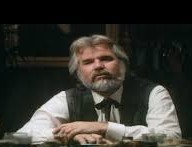
“On a warm summers evening, on a train bound for nowhere”. My young farmer pals and maybe a few older ones will immediately recognise the opening line from Kenny Rogers’ country classic, “The Gambler”. I’ve sung this song many times and it’s a magical feeling to be on stage with the audience stamping their feet in unison and singing that chorus right back at you; “When to hold ‘em”! Happy times that are becoming increasingly hard to find in the farming world.
Many within our industry might be feeling that we are currently “staring out the window at the darkness”. Much of the trust and security within farming policy has gone out of that window. A continuous flow of negative policies around land use, support schemes, taxation, and trade deals among a few, have left many farmers feeling like they are out of aces.
As far as politicians go right now, it is impossible to read their faces. The warm words towards farming and food security are not being backed up actions and clear intent. We’re waiting for believable reassurances about the future of farming in the UK, but all of a sudden, they’ve gone deathly quiet.
It is a despicable situation where some farmers, many in fact, are finding themselves in limbo and unable to trust and rely on government farming policies. That goes for farm production, environment and nature. The whole thing seems to have ground to a shuddering halt, as if someone has pulled the emergency chord on the train bound for nowhere.
Right now, the only safe approach is to go back to basics. The farm business can only survive if it is making profit. How good a handle do you have on your business? what’s making most? what’s losing least? and how do you know? The song says it is about “knowing what to throw away and knowing what to keep”.
Farm business accounts may not be sufficiently detailed to allow you to look at the profitability of individual enterprises, but you need to be able to analyse your costs. Then there is cashflow. You never count your money when you’re sitting at the table, but how do you cope with the periods of the year when cash is tight which is a particular issue for some livestock farms. Can a different farm enterprise, diversification, or income from off the improve cashflow? There will be time enough for counting, when the dealings done.
Every gambler knows, the secret to surviving, is to manage risks and improve the odds. Perhaps you might focus on what you are good at, but if you only have one main enterprise then this could make you more vulnerable to market fluctuations and the impact of weather. It would seem that in this respect, every hand could be a winner, and every hand could be a loser.
Environmental payments are a way of bringing income into the farm business and reducing risk, but relying on environmental payments has suddenly become a bigger risk given the pressures on Government spending both now and into the future. What a damn mess.
So, a back-to-basics approach might actually be the least risk. You can only play the hand you’ve been dealt but a well-managed, tightly run farm production business might be the ace you can keep. Who would have thought that after all these years of ELM planning and development, we would be gambling for a future in this dire situation.
 The Lakeland Auctioneer