We took off to Morocco in mid-January for a few days of warm sunshine in Agadir. It was a nice hotel and after the over-enthusiastic animations team had got the message that we would not be partaking in “very special dart competition” or “very special aqua-fit” in an Arctic-temperature pool, we finally enjoyed the peace and quiet.
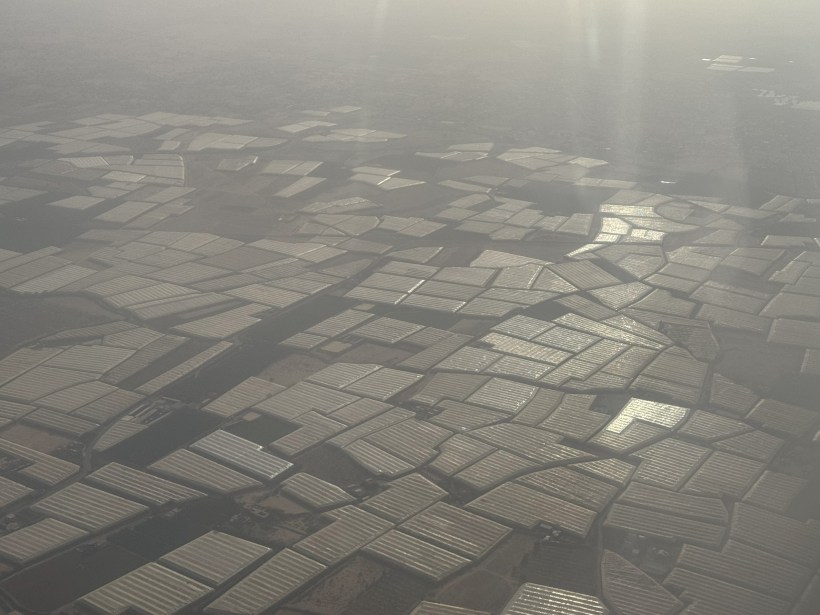
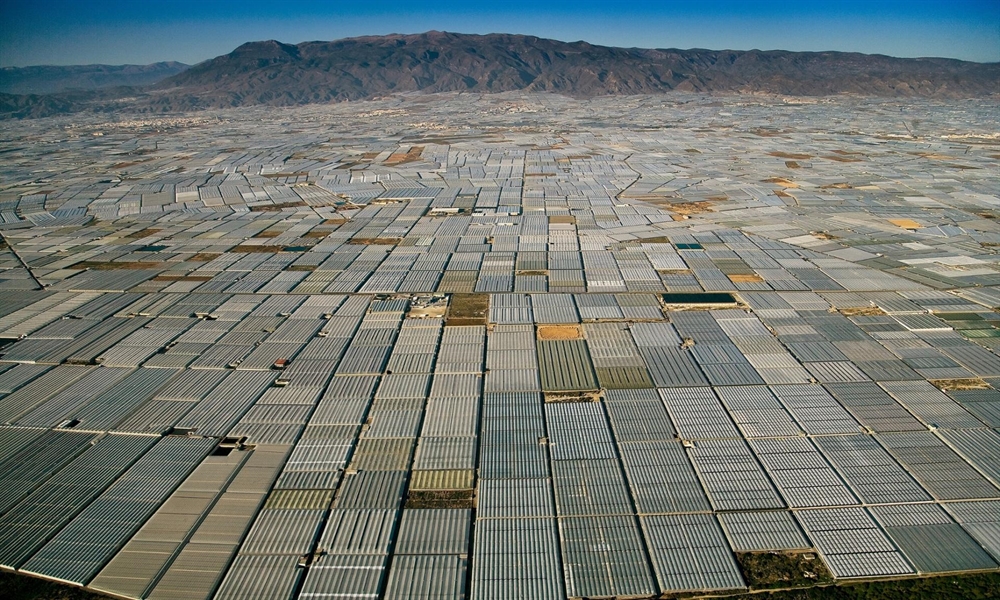
Out and about, I got talking to a taxi driver from a farming family. He shared his concerns that his countries drive to produce more food for export was beginning to cause huge problems. Landing into Agadir airport I had already noticed just how much more farmland was now under plastic, trying to satisfy winter-demand for fruit and vegetables from countries like the UK. I took this photo on final-approach.
The Moroccan told me that farmers were extremely worried as there had been no meaningful rainfall in South Morrocco for several years. He took me to a bone-dry riverbed that once irrigated an entire region. It had been dry for a long-time. He showed me acres of dying Argan orchards, parched to death. He complained bitterly that the price of Argan oil had quadrupled in the shops over the last couple of years.
He explained that the melt waters of the Atlas Mountains and the natural aquifers that have irrigated crops, for decades are running out. Climate change, an expanding population and an increase in global demand are putting huge pressure on the country’s natural resources. House building is going on at an incredible rate as people from the inland Morocco are flocking to Agadir hopeful of work. Over 38,000 people have arrived in the last two years. Our driver simply shook his head. It was so obvious that this is not sustainable.
With nowt better to do towards the end of the holiday, I took it upon myself to research the importation of foodstuffs to the UK from Morocco. In one year to the end of Q3 2024, we imported over £500,000 (half a billion) fruit and vegetables, a rise of 21.5% in just one year. No wonder the sea of plastic on farmland around Agadir had so visibly increased.
Morocco is only one example of the increasing pressures of climate and population. There are many more areas across the globe beginning to feel the pain. All of those goods are imported cheaply but at what cost to both the environment and our home production? Today UK fruit farmers are grubbing out orchards, being paid as little as 6p per bag of apples for the home market. Our horticulture sector has been in decline for years, replaced by imported fruit and vegetables.
Last year UK vegetable production decreased by 4.9% to 2.2 million tonnes. Home-grown fruit down 12% to 585 thousand tonnes. These are DEFRA horticulture statistics and they are chilling.
We need to wake up. Right now, we’re focussing so much on Net Zero and Nature to heal our planet, and yet we turn a blind eye to our failing food security, actively reducing our food self-sufficiency whilst exporting the very issues we’re trying to address in our own country. We’re contributing to a global climate issue whilst patting ourselves on the back that we’re doing our bit for the planet by re-purposing our own productive farmland.
UK farmers contribute around 10% of UK greenhouse gas emissions in order to produce just over half of the food we eat. Right now, farming is an easy target. It seems there is absolutely no concern about food security in the UK. We’re being fed in part by a growing sea of plastic across the globe, but in the end, at what true cost to people and planet?




 The Lakeland Auctioneer