“Farming in Cumbria is being swallowed up by nature and net zero”!

“Work hard and play hard, as long as you are able”.

“Let them be going Adam-Lad”

I write a monthly blog for the Cumbria Farmer magazine. I try to keep it light hearted, but sometimes you have to have a rant! Here is my piece from September 2024:-

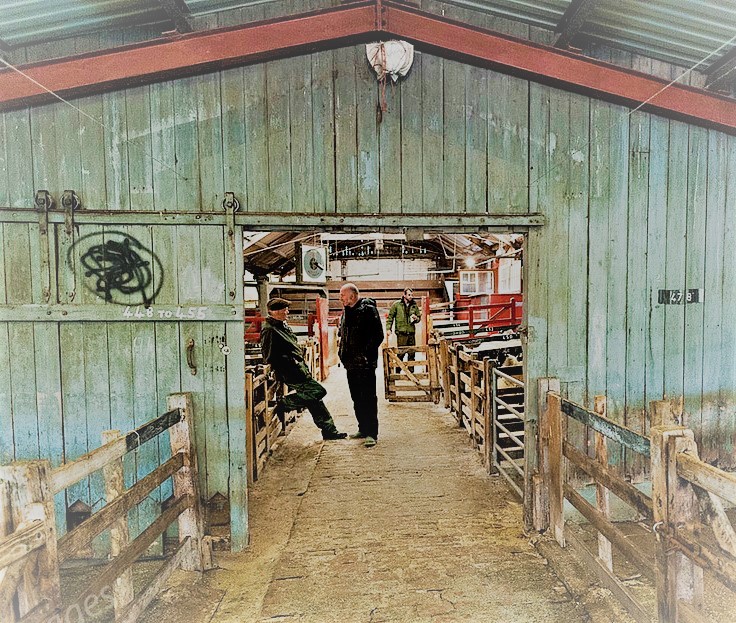
I was a trainee auctioneer at Lazonby in the late 80’s when sheep numbers across the land were at maximum. This was of course driven by government policy with headage payments encouraging farmers to keep as many breeding sheep as they could. This fact is either not known or conveniently forgotten by those wanting to see a continued diminution in sheep numbers in the hills in order to drive a different agenda.

There was a huge furore in 1987 when the brand-new Penrith Mart at which I started almost as it opened in July, was not actually big enough to hold a sale in early September of 17,000 Mule Gimmer Shearlings or Thaves to our southern friends. The decision was taken to move the sale to the long-established Lazonby Mart, also run by the same auction company and located a few miles to the North West of Penrith. Lazonby was known nationally as one of the foremost sheep markets in the land with buyers flocking there from Cornwall to Caithness.

That day auctioneer Gordon Teasdale rattled through the sale, rarely travelling more than £5 to £10 on any lot and finished by early afternoon. The sheep were often going the ring through in multiples of 100 and being bought by farmers and large estates from across the UK. The headage payment was of course a major influence.

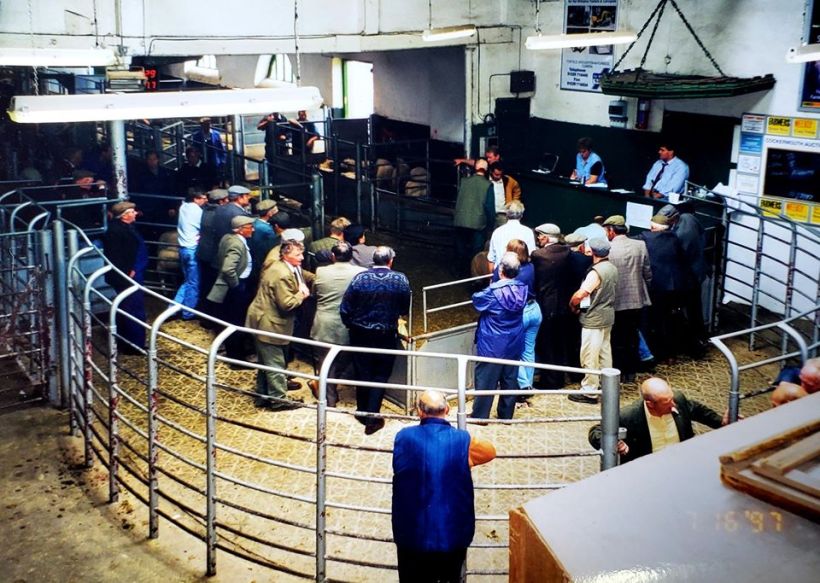
As a trainee, I was manning the gates either in or out of the ring, often to the cry of “He takes the lot, 300 to you Sir, let them be going Adam-Lad”. They were often gone before the hammer had even fallen! A constant and perpetual motion of sheep, moving from sellers pen, to sale ring, to buyers pen, and then onwards to a new farm and a new flock.

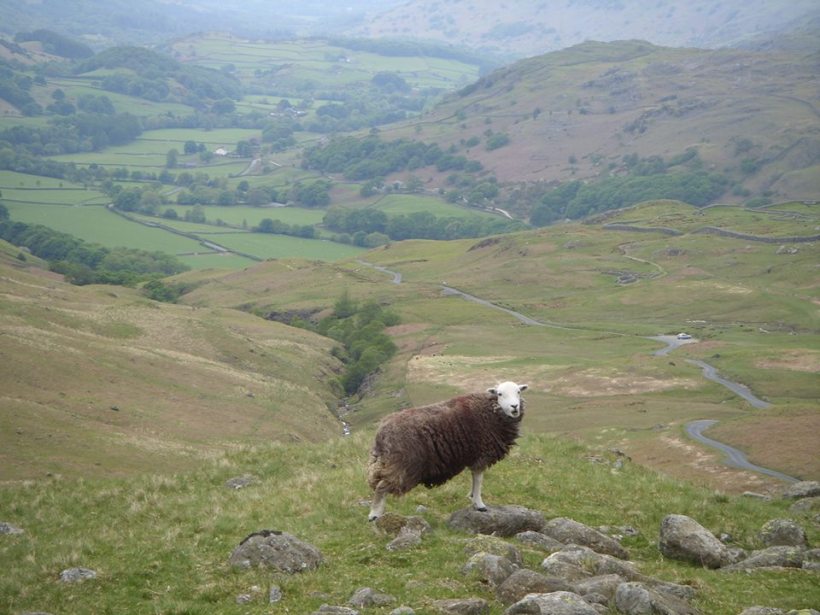
Today the sheep industry is far removed from what it was. The sheep breeds are pretty much the same. Some would debate whether they have improved or not as there are always “trends” and beauty is in the eye of the beholder. The traditional and precious skills of upland flock management and the local knowledge on common, fell and moor are still there, but many hill farmers fear the future right now. They are under attack.

Headage payments are long gone, replaced by evolving and far from complete environmental payment schemes. Now in some areas of Cumbria and Northumberland, shepherds protest that that have been left with too few sheep with which to manage the upland environment and make a living, the payments offered being too meagre.

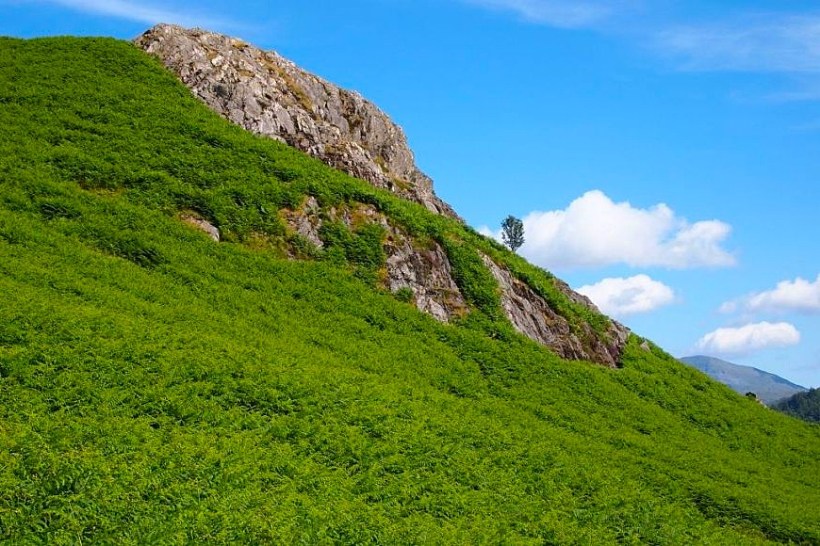
Natural England, a non-governmental organisation with seemingly governmental power has very fixed ideas on how many sheep should live on the hill wishing in some areas to introduce a blanket sheep stocking rate. In some harsher parts of Cumbria, this will be right. On many commons it will be way wrong. That is what I hear from many shepherds and conflict continues to brew. Even more conflict occurs when whole flocks are removed from the fell, never to return.

Many farmers do not want to be paid- off to remove sheep forever. The damage it is doing to remaining but reduced hefted flocks is all but crippling in some areas of Lakeland. Most want to find the right balance between farming and nature. This is new untested science, but that balance could be found between willing partners. Instead, in some cases farmers have been pressured with almost no choice and no debate, to remove the sheep from the hill.

Thousands of sheep buyers will visit Cumbria this Autumn as they have for decades, putting millions of pounds into the local economy. Behind every farmer you can count another 40 or so businesses that support the farmer to a greater or lesser extent. With the loss of the sheep and shepherds, the majority being displaced tenants, also goes the rural community and the bedrock of the rural economy. We’re in danger of losing it all as trees and environmental schemes replace livestock, and formerly tenanted farmhouses become Air B&B’s or second homes.

“I’ll crack on and do it meself”.

My old farming Grandfather began his working life as a young boy running errands for the slaughterhouse located close to his family home. As a teenager he progressed onto the line, and at 15 years of age was well capable of butchering animals for local farmers and butchers.

You must remember this was an austere decade following World War 1, leading up to Wall Street crash and a great global depression. No one had it easy save perhaps the odd local Lord or those owning the iron ore mines deep below the surface of the Furness Peninsula.

On leaving school Grandfather went into farm service and quickly learned that as soon as the lunchtime bell rang, he should take his place beside the other farm workers employed on the local estate. Having tried to show dedication and commitment on his first full day of employment by finishing the task in hand, he arrived late to the lunch table to discover that all that was to be had was a salt and pepper sandwich. Everything else had gone. “And go steady on the salt young Jackson.”

Moving home to work in an expanding family coal merchanting business meant that many years down the line, he was able to achieve a dream, buying a small farm to rear beef and sheep, thus reversing an unfortunate family circumstance in the early 1800’s when our farming forefathers were driven off the land and into the iron ore mines.

Grandfather savoured his home-produced meat at the table, and nothing more so than the fattiest lamb hotpot, which in his opinion, gathered more flavour with each warming of the pot. The young grandson’s protestation that he really did not like “the fat-bits,” was met with utter scorn. Let us not even talk about salt on our porridge.

One summer when I was young teenager working on a neighbour’s farm in my home village near Cockermouth, a prime lamb caught its head in a gate and sadly broke its neck. My old grandfather was on his holidays with us. Now long retired and barely able to walk but for the aid of two stout walking sticks, he just happened to shuffle down to the farm to see what we were busy with. Spying the deceased lamb Grandfather shouted to our neighbour,

“That lamb needs hung up and bled.” Not getting much of a reaction, Grandfather decided to pursue the conversation. “I’ll crack on and do it meself.” The thought of losing several potential meals would be unbearable to a man brought up in the 1920’s.

Farmer John was to admit to me later that this was never a favourite task, but one which most farmers have had to do from time to time. However, he could not allow a 70-year-old retired and almost disabled farmer to take on the job and it was abundantly clear that he was not going to be allowed to put it off until later!

In the 1960’s grandfather bought the defunct slaughterhouse building and converted into a house for himself. Those old boys and their wives were made of stern stuff. A different era perhaps but resilience is in-bred and is what will ensure the success of future farming generations, although we may never see the return of what Grandfather called a “proper fat lamb.” Thank goodness!

Young Farmers-Much to offer, given the chance!

My thoughts after a difficult debate with young farmers about their future.

Last night i was the guest speaker at a Young Farmers Club in Cumbria, a role that i very much enjoy having been one myself many years ago. The young people were a mix of seniors already of working age, many of them directly employed on the farm or in farm- related jobs. There were also several juniors who are learning the art of healthy, respectful competition, and a mix of farming and life skills. Many of them will gain confidence to judge stock, speak at meetings and perhaps engage openly with our buying public in future. All of this, as it did for me, comes from Young Farmers Clubs.

For the last part of the meeting, as i have done a few times recently, i turned my chair around and asked them how they were doing? What they were feeling at present? What future do they envisage?

The debate that ensued was outstanding. The level of knowledge and understanding at the current political situation in the agriculture industry would have taken your breath away. If only people in government or policy makers had been there to listen. They can “engage” all they want with the rest of us at stakeholder meetings, but the discussion in the room was worth so much more than all of that.

One young man asked me what i really thought the future would be for Cumbria’s upland farmers like him. What could family farms like theirs do knowing full well that ELM cannot and will never replace BPS and that ELM with what they know at present, does not appear to work for them – Wow! Answer that in a room full of young people all desperate to farm and have a future on the land.

A young lady talked about their family farm with commons grazing. The commons group had decided not to accept a new Commons stewardship agreement. Several farms would be vastly increasing the number of the sheep on the fell as the only viable way forward because the new agreement being offered was so poor. She seemed genuinely disappointed and downhearted by this. Not perhaps what might have been expected knowing the conflict on the hills of Cumbria.

Another young lady privately expressed concerns to me that at the end of her parents tenancy she would be desperate to agree a new tenancy with the landlord for herself. Her great fear is that her landlord might not even give her the chance, perhaps taking the land back in hand to plant trees or chase other environmental money. This is becoming more and more prevalent in Cumbria. Or maybe they would just go for the highest rent offered, this despite the fact that two generations of the family had farmed the land to the best of their ability and will leave the farm in a far better environmental state than they found it. She asked me if there was anything more that she could do.

So many more young people expressed fears and concern. There was not a lot of joy in the room. Indeed there was a level of stress apparent that should not be there for young people at the start of, or prior to commencing their working lives. Perhaps the level of debate around farming family kitchen tables is increasing. Perhaps our young people are listening, sensing or even engaging in difficult conversations about the future of farming, patricularly in the hills.

I believe that this is a micro-cosm of where we are in farming and rural land use today. Whilst government officials continue to publicly extoll the virtues of ELM and its progress, the reality on the ground is far from the company- line.

I tried to give them some hope. “Stick in” i said. “We’re in for a rough few years but we will come out of the other side”. Some will not…. “Things may be different, but your buying public will need you much more in future”. I hope my words were not hollow.

Against the background squelch of anti- farming rhetoric chasing around social and other media, i offered an accolade and a pat on the back. “The work you do in producing food, rearing livestock many of which will go on to be the backbone of flocks and herds across the country, and managing the landscapes that bring 20 million people to Cumbria is so important. You and your families help make our beautiful County what it is”.

I then told them that they were vitally important to the future of Cumbria as is the case in the Yorkshire Dales and Northumberland as well. Their job description will say “farmer and environmentalist”. That’s no bad thing, in fact what a huge responsibility and one which needs time, confidence and trust to learn and embrace. Far longer than the transition period of ELM.

I only hope that their role is adequately rewarded and respected over the next few years, before food production becomes a real thing again, as it surely will. If that is the case, something needs to change, and quickly. I’m afraid i don’t buy in to the government rhetoric that we’re on course and on track in farming and other rural land use. Here’s hoping, but i won’t hold my breath!

The National Federation of Young Farmers Clubs has a simple tagline, “Fun, learning achievement”. It also says that membership is for anyone who appreciates the countryside and rural life. What is clear is that their current members will have a tremendous amount to offer in future. Let us hope, especially in productive yet beautiful places like Cumbria, the Yorkshire Dales and Northumberland, that they get a fair chance. Right now, many are clearly very concerned. I wish we could do more for them.

“LIES WILL COME BACK TO BITE YOU”!

As a child I was always told to tell the truth, admit my mistakes and apologise before the untruth was found out. I can’t in all honesty say that I carried that mantra through to adulthood completely, but then who does? Most auctioneers of course! But certainly not those people in the higher echelons of national politics going by recent events.

My mother used to say, “Lies will come back to bite you”, and generally speaking, as a child they usually did. We’ve all been in that position, and it is remarkable how often large teeth marks are left in people’s derriere.

Last year I saw a spoof photo of a well- known politician with an extremely unruly mop of blond hair. The photo showed him talking on his mobile phone expostulating that he personally was going to take full responsibility to make something happen immediately. Behind him there was an advisor saying, “Excuse me Sir, just to let you know, there is no phone signal here”.

This reminded me of an incident in a Cumbrian auction mart many years ago when a prime sheep buyer was proudly showcasing one of those new- fangled mobile phones. As he walked around the auction office with phone to ear, he could be heard saying in a very loud voice,

“Yes I need light lambs. I’m as fit as fire today. I’ve got people on for me all over the country”. The conversation appeared to bounce back and forth with other sheep buyers in rapt attention. And then the most amazing thing happened. Mid- sentence as he was listing how many sheep had been bought for him in each market across the UK, his phone rang!!! with that well known shrill and annoying jingle from the 1990’s that got on everyone’s nerves.

He could have played it cool and pretended that the signal had been lost and that the other person had rung him back. But these were the early days of mobile phones, and this thing looked like a brick. The sheep buyer had only just got it and couldn’t work out how to stop the “diddle- lala, diddle- lala” ringtone. Frantically he pressed all of the buttons passing it from hand to hand like a hot potato. The other buyers laughed loudly and in the end in desperation the phone was dropped on the floor.

You can imagine the banter in the ring for the rest of the sale. If nothing else, it proves the point that “lies come back to bite you”. Many of us within the farming community hope very much that this is further proven in future as we remember the words of a Conservative minister regarding the farming industry,

“If you have high standards here, and then you allow food in from elsewhere, you are not really contributing to higher animal welfare and environmental standards, you are simply off- shoring those lower standards – and that is wrong”, said Michael Gove on Countryfile. Should that dreadful scenario become a reality, then my advice to him and his mates would be “best wear some thick pants”. By the current direction of travel, it would appear they need to wear Kevlar.

Community is more powerful than beaurocracy

After a break from blogging, i’ve decided to strike up once again. I can only hope that my musings are of interest to someone….. somewhere!

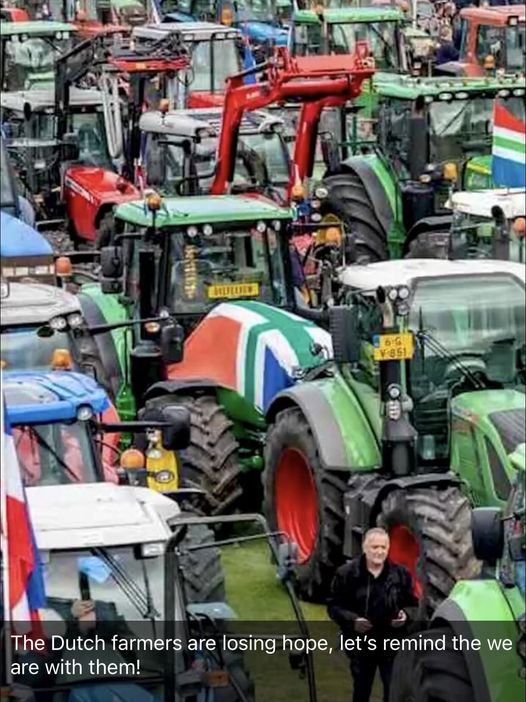
A wise fellow told me recently “Community is more powerful than beaurocracy”. After watching events unfold today in the Netherlands, i am drawn to conclude that the man was right!

https://www.bbc.co.uk/news/world-europe-64967513?fbclid=IwAR1Iu6kJ4J4OvNeexNLD6GrrpTA17OjUeGozO5djIQ0c1nzMnkltXY8RZhM

What is happening to some Dutch farmers in the name of the environment is truly shocking. The government is “offering” to buy- out thousands of farms in order to slash the use of nitrogen fertiliser and cease agricultural emmissions in the country. The livelihoods of farmers and the future of food production appears to be justifiable collateral damage as they are hung out to dry by the politicians.

If farmers don’t accept, they are being threatened with what the attached press report says is an “Expropriation Scheme”. The sensible conservation organisations are even saying “Hang on a minute! This is not entirely the farmers fault”.

There are parallels with UK farmers over the last century in that they have all been systematically supported and encouraged to produce food at all costs for several generations. The Women’s Land Army during World Wars, rationing coupons, and intervention buying are all but forgotten.

No one remembers that farmers were asked by successive governments to keep more livestock, rip out hedges, drain wetlands and farm every inch of the land that could be ploughed in order to feed a starving hungry people. Today farmers are being held accountable for those policies and blamed as the root of the evil. UK food security isn’t really on the political table.

Now the Dutch people are standing up for their farmers and rural communities. They don’t want this! They have voted in solidarity for the new Farmer- Citizen Party which last night won the country’s provisional elections. Who does want this sort of rural land- use policy? Well actually a small but very powerful group of people in the UK might. Some with vested interests, would love to see this re- enacted across Rural England. There’s money in it, in fact large amounts. Whilst there are many who see a genuine need to change the way we manage the land, and in many ways they are not wrong, there are others sniffing an opportunity.

Even now across the UK there are landed estates, some private, some corporate, getting rid of tenants as soon as they can, either to sell land to enable large- scale greenwashing investment, or to plant their own land for their own gain. All of this is generously funded by Government through new planting and environmental schemes. There’s more profit in this than can ever be made out of letting land to tenants, and there’s a perfect facade to hide behind – “we’re saving the planet”! But what of the farmers and local communities?

The average length of tenancy across the UK is now a pitiful three years. Three years does not give a tenant farmer time to settle, raise a family in the local community, invest in the land and business and build a life. It’s a far cry from the old days of the protected multi- generational tenancies that allowed sons and daughter to take over from their parents and their parents before them. Now the loss of every tenant replaced by trees, drives another nail into the heart of a community. It also prevents talented young people from committing to the industry in a tried and tested way, by taking on a tenancy.

These are disturbing times for rural folk in the UK, and especially those connected with farming and food production. Farmers are not blameless and there is an absolute duty on them to leave the natural environment in a far better shape than they found it. It is not unreasonable to think that the scenes in the Netherlands may one day be played out in the UK as thousands of acres of productive food- producing land is re- appropriated and re- purposed in the name of the nature and climate change.

The equitable solution is for government to work up a set of rural land- use policies that balance farming with nature, where both thrive, and develop in harmony. Farming has to change for sure, but with it should come opportunity, stability and trust. Right now we’ve a long way to go. Meanwhile we watch developments across the water with interest. More than 20 million people from all over the world visit Cumbria each year loving the landscapes, the Cumbrian people, the sheep on the hills and cattle grazing in the valleys. I wonder how many would join a UK Farmer- Citizen movement if they realised that the county they love to visit may be under similiar threat. Time may tell……

“We will get there”….

Written for the Cumberland News June 2020.

“There are people on the pitch, they think it’s all over – it is now”! How I jumped up from the kitchen table and cheered as Geoff Hurst thumped the ball into the top right- hand corner of the German net. It was only a re- run of the 1966 football world cup, but I was lifted up.

Recently we haven’t had much to cheer about and not much of a feelgood factor. We’ve just gone about our lives as best we can. It pains me to say that we are not over the worst. Once the virus is beaten, it’s going to take a long time for the economy to recover. In agriculture we are in danger of being sucked into a short – term comfort zone. For most farm businesses, things ain’t so bad although there are of course a few exceptions. Constant reappraisal is going to be required. Where are we now and where do we want to be?

My feelings have not changed. Longer term, Cumbria has a bright future. The visitor economy if It can survive the current crisis, will recover to a stronger position. If we can ally farming and food production alongside the tourist sector to a much greater degree, then let us not miss the opportunity. Local food, produced, marketed, and consumed ethically and sustainably within the county is a great public good to be able to deliver.

The limitations of the grand global market have been exposed as have the mistruths about UK farming on climate change and greenhouse gases. Methane production from ruminant animals has been going on since first we crawled out of the primordial soup and “chowed” on a grassy tuft. What were the lifetime emissions of 100-ton Sauropods over the 120 million years they roamed the Earth? Annual gas losses from oil extraction emit twice as much methane to the atmosphere than the entire global bovine population?  Time for some perspective, then let’s go forward in the right way.

I know some who will accuse me of being a little Englander, but it isn’t that at all. I’m talking about best use of our local resources. We grow grass, farm livestock, and look after the landscapes. So, when we do reduce our agriculture emissions (currently 10% of total), and contribute to making Cumbria carbon neutral (or better!), I would hope to see fair reward for farmers and a little respect!

Last week I watched a documentary re-run of the 1996 European football championship. I remember my spine tingling way back then as Stuart Pearce stepped up to take a penalty in yet another shoot- out. He had missed one in the 1990 world cup and England went out.

Now here he was volunteering to go again, stepping up to be counted. He absolutely smashed it past the Spanish goalkeeper, bottom- right, to wipe away 6 years of misery and prove he had the ultimate bulldog spirit. Again, even though it is 24 years later, I was off around the kitchen table “Get in”!

We will all need some of that spirit before this crisis is finished. It might be day by day, month by month, but we will get there.

YOU’RE NEVER TOO OLD TO LEARN….

I went off to the Royal Agricultural College, Cirencester in September 1984. To a boy from the hills of Cumbria, it was a world away from the sheltered life I had known. My parents were proud, my old farming grandfather even more so. In many ways it was a rude awakening to the harsh realities of life and people. I met some of the best and some of the worst. “Mountain Man” as i was christened by fellow students from the south, had an awful lot to learn about both. These experiences have continued through my whole career.

The qualification was everything. Rural Estate Management was the key to the door for a lifetime of working within the farming community.

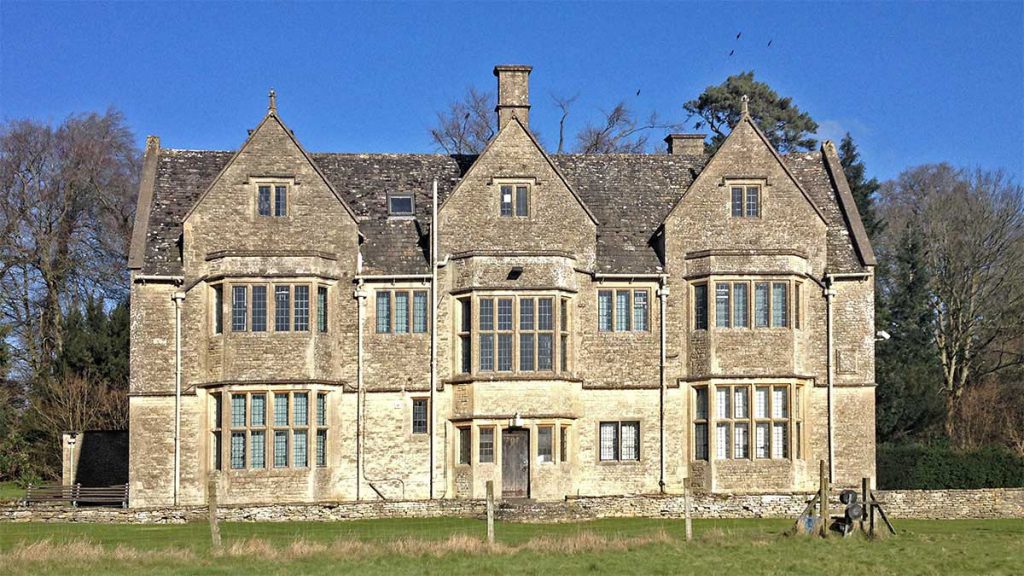
Trent Lodge Hall of Residence, Cirencester – second floor right hand window – my room!

Three years later I returned to Cumbria in my battered old Mini 1000, with rather more life experiences under my belt, and a new job as a trainee land agent and auctioneer for Penrith Farmers Kidd’s. A 20 minute interview with the Managing Director, Harry Richardson secured my dream job. It was a no- brainer for me to return to my home county.

The learning was far from over. For on my very first day and less than five minutes into the job, I ran into the first of many bollicking’s off a farmer.

The brand new Penrith market on Junction 40 of the M6 was full to overflowing with trailers backed up the A66. It was pandemonium. I donned my shiny new auctioneer’s coat and headed for the calf ring to help auctioneer and now life- long pal, David Jackson. As I rounded the corner, I bumped straight into Geoff Faulder, Ewan Close Farm. A man in his late 60’s, he was clearly disgruntled, having to queue to unload calves. He looked me up and down.

 “I don’t know who the bloody hell you are – Boy” he said, “but get out there and sort the bloody mess out”! With that he turned tail and left me standing open- mouthed. Things did settle down and in time Geoff became a good pal, as did his brother Jared, a top county buyer of sheep in local auctions, including his favourite, Lazonby.

Today my own college life seems a world away. Those three years were important not only to learn about my chosen profession, and get the certificate, but more widely to learn to communicate, deal with people and to gain some much-needed self- confidence. I made some good choices in the knowledge that I desperately wanted to return to live and work in Cumbria, but I also made some bad choices in other areas of my life. I wouldn’t change it, but oh boy, would i do it differently! Hey, hindsight is a wonderful thing and I’m still learning, for you are never too old to learn!

Today my auctioneering duties are part- time and still very enjoyable. I’m classed as an old hand now. It is good to work with a young team and where needed impart a little advice or just offer support where i can. I am perfectly at home dropping down livestock trailer doors or opening ring gates as much as i am in the rostrum, although there is nothing beats the buzz of a good trade when you’ve got hold of the gavel.

Five years ago i became the Managing Director of The Farmer Network based at Newton Rigg College near Penrith. I get much pleasure seeing the myriad of ways our non- profit company finds to support farmers and their businesses. Our goal has not changed since the Network was formed 15 years ago. It is to support a viable and sustainable farming community.

I enjoy talking to students on campus and have even tried my hand at lecturing in farm business management. Many students are the offspring of farmers that I grew up with. It is the circle of farming life. Those students are going through the same learning experiences as I did back in the 1980’s when the girls had big hair and big shoulder pads!

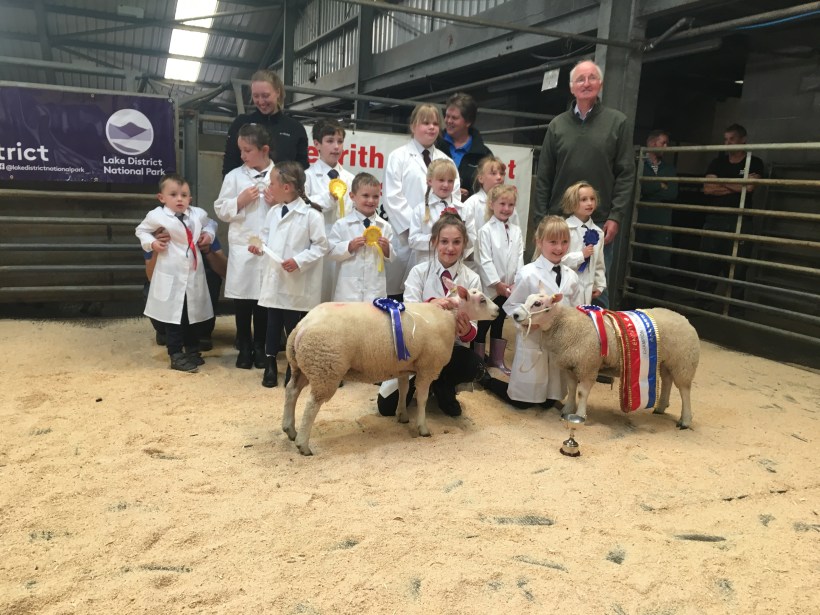
College life for todays “Aggies” is more important than ever. They are the generation that will have to work within a rapidly changing industry. It is so important that we prepare them with the necessary skills both to farm smarter and manage the landscapes in evolving ways. In our industry we start them young, encouraging a strong worth ethic and great pride in the job. In the mart, young handlers sale days are just one of the learning experiences offered.

The future of Newton Rigg college is under threat. The parent organisation Askham Bryan which owns the Penrith campus has persuaded the further education commission that the college is not viable. They have been given permission to sell the site and if this happens the sale proceeds will taken out of the county, back to Yorkshire. Too many this a cruel and unjust end to a bastion of Cumbrian farming life.

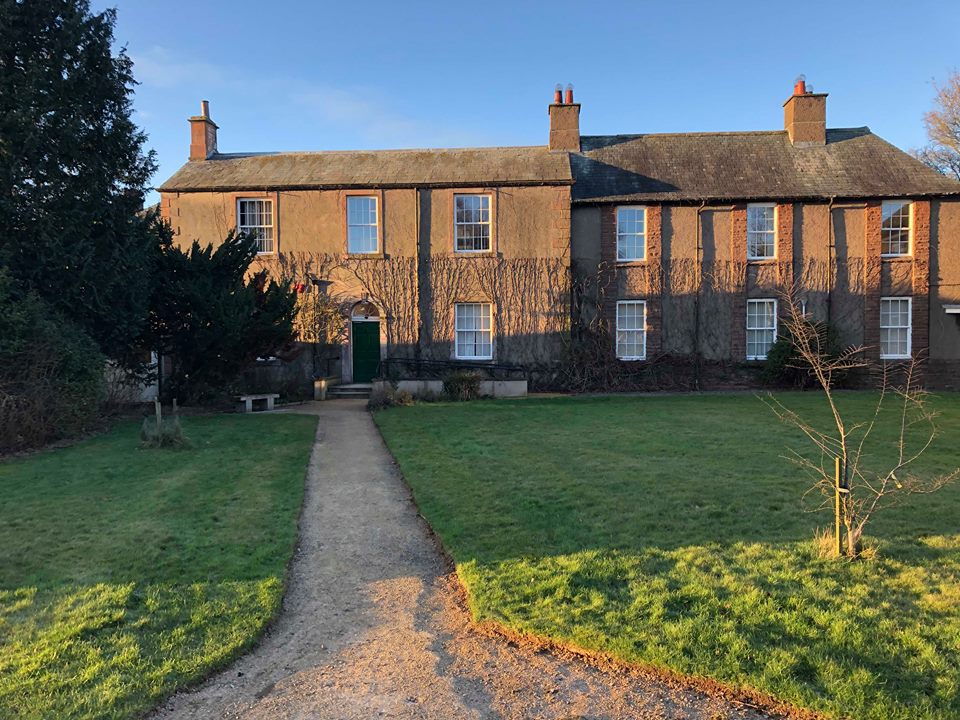
Newton Rigg Farmhouse – present home of the Farmer Network – but for how long?

Even worse is the fact that we will lose a cherished and respected seat of learning in Cumbria, the second largest red meat and dairy producing county across the country. To the farming community and indeed the wider rural community, this is an appalling state of affairs. Closure is due July 2021.

An independent Newton Rigg Land- Based Education Taskforce was formed consisting mainly of representatives from the agricultural and educational sector in Cumbria. The taskforce has been trying to formulate a plan to save Newton Rigg as a seat of learning or at least to ensure that land- based learning can continue in Cumbria in some form. I am proud to be part of the group knowing full well the importance of not only further education, but life- long learning for members of the farming community. There are currently three consortia interested in talking over the campus, and a bidding process is underway. The Land Based Education Taskforce remains in place to offer support where it can. There is still hope!

Our young people starting their careers will be brilliant farmers, food producers and conservationists, in fact the best yet, all in one package. I am convinced of this. If i have one message for them it is: – “learn and keep learning because you are never too old”.

More than 30 years have passed since the day i walked into Penrith mart with my shiny new auctioneers coat. These days my white coats are rather larger than they used to be, but i still feel the same privilege working for the farming community . Difficult though these times of change may be, i have an unwavering belief that farmers are going to become more and more important to this country. We just haven’t quite woken up to the fact yet. Time will tell!

“THERE’S A BRAVE NEW WORLD OUT THERE”

In January 1981, the House of Lords debated The Sheep Variable Premium Order. This was a deficiencies payment designed to protect and support UK prime sheep producers by giving a guarantee price for lambs sold at the right grade.

Lord Peart of Workington said, “I take the view that this is a good bargain… It will give tremendous help to the farming community, who deserve it… some of our townspeople forget that the production of food on the hills and uplands is really a very hard job”. Earl Ferrers was in complete agreement replying, “life on the hills is a very difficult life, particularly for sheep farmers”.

The Bill passed and for many years farmers could rely on a weekly “make- up” payment. On a rising market, this was a winner. In practice at grassroots level, the young auctioneer at Lazonby, diligently chalked up the guaranteed top up payments on a blackboard, each Thursday morning so that vendors could work out the bottom line.

If he was lucky the young auctioneer got a turn in the rostrum, which was actually a tiny little wooden hut adjacent to the main office. A narrow ledge separated the auctioneer from the sale ring. it was just wide enough on which to balance the auctioneer’s book, recording vendor, number, weight, price and buyer, any of which might be referred to in case of dispute.

Decades of gavel abuse had left the surface of the ledge battered and worn. If the young auctioneer was not so lucky to sell, then the morning was spent weighing sheep on the old dialled scale, then writing the weights on a chalkboard for the boss, Norman Little, to read out to buyers.

Woe- betide the young auctioneer should he not get the blackboard washed off and turned around by the time the next lot of sheep had left the weighbridge and moved in to the ring. After selling their sheep, vendors could be seen staring at the variable premium rates, working out what the sheep would come to with the make- up payment added. Sometimes a scowl, sometimes a nod, rarely a smile, for that would never do!

Mid- winter would see frozen breath and frozen fingers, but the sale could not stop. A huge gas heater stood at the side of the ring, to enable the buyers to warm their cold wet fingers in between, touching the lambs backs. The heat did not percolate to either the auctioneer or the weigher! Lazonby Auction could be a bitterly cold place in mid- winter!

At the back of the weighbridge, worked the Meat and Livestock Commission grader. Their job was to assess the condition of the lambs individually, to ensure that they were of the right quality and level of finish, not too fat and not too thin. Graded lambs received a yellow mark meaning entitled to premium payment. Reject lambs were marked differently and were not entitled to the extra payment.

The system was further complicated by the fact that the grader also had to assess the final kill out percentage of the lamb, in other words, the amount of meat as a ratio of the total carcase weight. For the purposes of premium payment the grader would instruct the person weighing sheep to deduct an amount from the full lamb weight. Best quality lambs might only have half a kilo deducted, or less on rare occasions. Plainer quality lambs although eligible for premium, might have 2kg or even more removed. This obviously affected the bottom line for the farmer

A good grader would work well with the sheep weigher and series of finger signals would indicate the amount of weight to knock off. Farmers would try all ways to influence the grader if they disagreed with the grade or the weight deduction. Graders would never ever change their mind! Some farmers shouted, others pleaded,

“Nay nay, Jacko, hev another touch, tha’s missed it”. Or;                                                  “Haway Cloggy man, yer’ve been far ower harsh wid us”

Generally the graders were known and respected by farmers but some like old Roy Cannon from Cockermouth rather enjoyed the banter with farmers who argued with him: –

“Two off these Adam Lad”                                                                                                            “Hell Roy, you’re bloody joking! my lambs aren’t that bad”                                                        “Adam, make that two and half kilo’s off”

The young auctioneer at the start of his career had a little card at his side on the rostrum, with Penrith Auction prices  written down for different breeds and weights – as a guide. Lazonby and Penrith were run by the same company; Penrith Farmers & Kidds, but there was always competition! Norman Little would always insist that Lazonby prices should at least match and probably better Penrith prices on the monday. In those days, long before mobile phones, prices rarely moved much throughout the week, never mind the day.

Just about every one of those Lazonby buyers are now retired or have passed away, to be replaced by others for that is the circle of life, and the circle of auctions. 

Now less than 40 years on from that House of Lords debate, few politicians talk of farmers in the same revered tones. Life for hill farmers has not got any easier in many respects. It can still be lonely and perhaps even more stressful than all those years ago. For many farmers, a trip to market was the only chance to get away from the farm. Nowadays few farmers have time to stop, chat, network and relax.

Also, In real terms the lambs are cheaper, the cost of production far higher and the profit, often far less. Although 98% of households still eat red meat, and 99% purchase dairy products, we’ve lost our connect with the public and dare I say with government.

In future our industry is going to change. Public goods may be the order of the day, but we must still fight to promote the value of food production. There will be challenges but also opportunities. There won’t be any “makeup” schemes, but there will be public money to spend on the farm. The trick will be to maximise payments whilst retaining the viability and profitability of the farm business. I am pleased to say that the Farmer Network is well placed to support its members during the transition.

I am also convinced that over the years the demand for home grown food will rise, as will the public’s desire for a greener world, cleaner air, water and more wildlife. On the back of that, farmers will be able to invest more in healthier soils, greenhouse gas mitigation, innovative production methods and more.

Much as the young auctioneer (now rather older!) looks back on those Lazonby sale days with fondness, we’ve moved on. At least there are still many young auctioneers now learning the ropes in the modern era and deserving support. They may still have a strong role to play in the future.

We can’t change the rules, but we can make them work for us. One day soon, our customers will wake up and realise, just how important farmers are both to food production and to the environment. There is a brave new world out there to be had. We just have to embrace it and dare i say fight our corner. Lord Peart was right. Supporting the farming community in future, will still be “a good bargain”.