“Back To Basics – Farm production, the ace you can keep”!

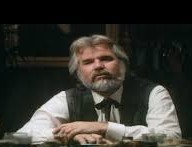
“On a warm summers evening, on a train bound for nowhere”. My young farmer pals and maybe a few older ones will immediately recognise the opening line from Kenny Rogers’ country classic, “The Gambler”. I’ve sung this song many times and it’s a magical feeling to be on stage with the audience stamping their feet in unison and singing that chorus right back at you; “When to hold ‘em”! Happy times that are becoming increasingly hard to find in the farming world.

Many within our industry might be feeling that we are currently “staring out the window at the darkness”. Much of the trust and security within farming policy has gone out of that window. A continuous flow of negative policies around land use, support schemes, taxation, and trade deals among a few, have left many farmers feeling like they are out of aces.

As far as politicians go right now, it is impossible to read their faces. The warm words towards farming and food security are not being backed up actions and clear intent. We’re waiting for believable reassurances about the future of farming in the UK, but all of a sudden, they’ve gone deathly quiet.

It is a despicable situation where some farmers, many in fact, are finding themselves in limbo and unable to trust and rely on government farming policies. That goes for farm production, environment and nature. The whole thing seems to have ground to a shuddering halt, as if someone has pulled the emergency chord on the train bound for nowhere.

Right now, the only safe approach is to go back to basics. The farm business can only survive if it is making profit. How good a handle do you have on your business? what’s making most? what’s losing least? and how do you know?  The song says it is about “knowing what to throw away and knowing what to keep”.

Farm business accounts may not be sufficiently detailed to allow you to look at the profitability of individual enterprises, but you need to be able to analyse your costs. Then there is cashflow. You never count your money when you’re sitting at the table, but how do you cope with the periods of the year when cash is tight which is a particular issue for some livestock farms.  Can a different farm enterprise, diversification, or income from off the improve cashflow? There will be time enough for counting, when the dealings done.

Every gambler knows, the secret to surviving, is to manage risks and improve the odds.  Perhaps you might focus on what you are good at, but if you only have one main enterprise then this could make you more vulnerable to market fluctuations and the impact of weather. It would seem that in this respect, every hand could be a winner, and every hand could be a loser.

Environmental payments are a way of bringing income into the farm business and reducing risk, but relying on environmental payments has suddenly become a bigger risk given the pressures on Government spending both now and into the future. What a damn mess.

So, a back-to-basics approach might actually be the least risk. You can only play the hand you’ve been dealt but a well-managed, tightly run farm production business might be the ace you can keep. Who would have thought that after all these years of ELM planning and development, we would be gambling for a future in this dire situation.
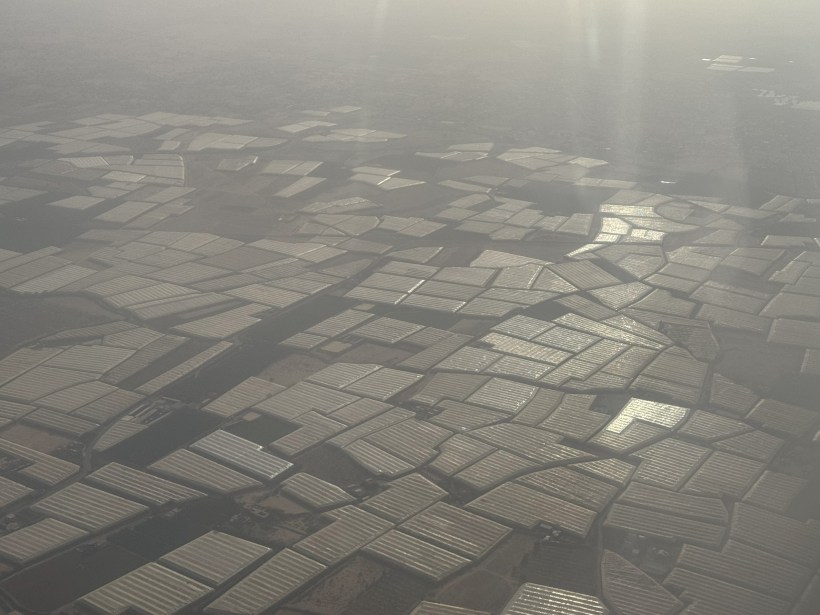
“We’re contributing to a global climate issue whilst patting ourselves on the back”.

“I’ll crack on and do it meself”.

My old farming Grandfather began his working life as a young boy running errands for the slaughterhouse located close to his family home. As a teenager he progressed onto the line, and at 15 years of age was well capable of butchering animals for local farmers and butchers.

You must remember this was an austere decade following World War 1, leading up to Wall Street crash and a great global depression. No one had it easy save perhaps the odd local Lord or those owning the iron ore mines deep below the surface of the Furness Peninsula.

On leaving school Grandfather went into farm service and quickly learned that as soon as the lunchtime bell rang, he should take his place beside the other farm workers employed on the local estate. Having tried to show dedication and commitment on his first full day of employment by finishing the task in hand, he arrived late to the lunch table to discover that all that was to be had was a salt and pepper sandwich. Everything else had gone. “And go steady on the salt young Jackson.”

Moving home to work in an expanding family coal merchanting business meant that many years down the line, he was able to achieve a dream, buying a small farm to rear beef and sheep, thus reversing an unfortunate family circumstance in the early 1800’s when our farming forefathers were driven off the land and into the iron ore mines.

Grandfather savoured his home-produced meat at the table, and nothing more so than the fattiest lamb hotpot, which in his opinion, gathered more flavour with each warming of the pot. The young grandson’s protestation that he really did not like “the fat-bits,” was met with utter scorn. Let us not even talk about salt on our porridge.

One summer when I was young teenager working on a neighbour’s farm in my home village near Cockermouth, a prime lamb caught its head in a gate and sadly broke its neck. My old grandfather was on his holidays with us. Now long retired and barely able to walk but for the aid of two stout walking sticks, he just happened to shuffle down to the farm to see what we were busy with. Spying the deceased lamb Grandfather shouted to our neighbour,

“That lamb needs hung up and bled.” Not getting much of a reaction, Grandfather decided to pursue the conversation. “I’ll crack on and do it meself.” The thought of losing several potential meals would be unbearable to a man brought up in the 1920’s.

Farmer John was to admit to me later that this was never a favourite task, but one which most farmers have had to do from time to time. However, he could not allow a 70-year-old retired and almost disabled farmer to take on the job and it was abundantly clear that he was not going to be allowed to put it off until later!

In the 1960’s grandfather bought the defunct slaughterhouse building and converted into a house for himself. Those old boys and their wives were made of stern stuff. A different era perhaps but resilience is in-bred and is what will ensure the success of future farming generations, although we may never see the return of what Grandfather called a “proper fat lamb.” Thank goodness!

Community is more powerful than beaurocracy

After a break from blogging, i’ve decided to strike up once again. I can only hope that my musings are of interest to someone….. somewhere!

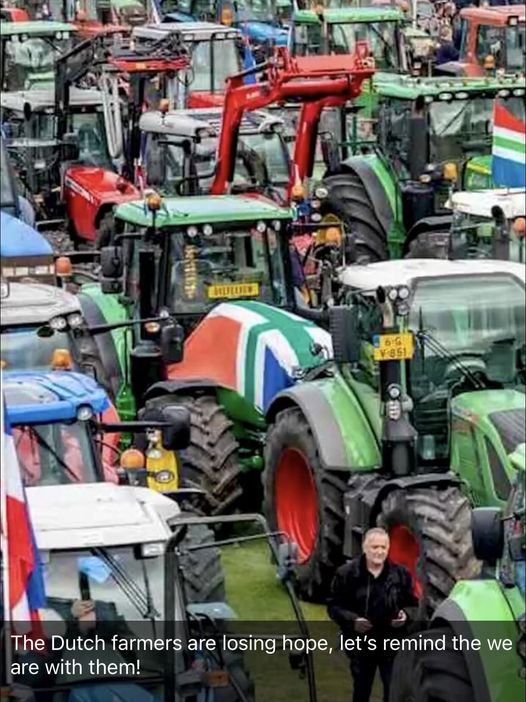
A wise fellow told me recently “Community is more powerful than beaurocracy”. After watching events unfold today in the Netherlands, i am drawn to conclude that the man was right!

https://www.bbc.co.uk/news/world-europe-64967513?fbclid=IwAR1Iu6kJ4J4OvNeexNLD6GrrpTA17OjUeGozO5djIQ0c1nzMnkltXY8RZhM

What is happening to some Dutch farmers in the name of the environment is truly shocking. The government is “offering” to buy- out thousands of farms in order to slash the use of nitrogen fertiliser and cease agricultural emmissions in the country. The livelihoods of farmers and the future of food production appears to be justifiable collateral damage as they are hung out to dry by the politicians.

If farmers don’t accept, they are being threatened with what the attached press report says is an “Expropriation Scheme”. The sensible conservation organisations are even saying “Hang on a minute! This is not entirely the farmers fault”.

There are parallels with UK farmers over the last century in that they have all been systematically supported and encouraged to produce food at all costs for several generations. The Women’s Land Army during World Wars, rationing coupons, and intervention buying are all but forgotten.

No one remembers that farmers were asked by successive governments to keep more livestock, rip out hedges, drain wetlands and farm every inch of the land that could be ploughed in order to feed a starving hungry people. Today farmers are being held accountable for those policies and blamed as the root of the evil. UK food security isn’t really on the political table.

Now the Dutch people are standing up for their farmers and rural communities. They don’t want this! They have voted in solidarity for the new Farmer- Citizen Party which last night won the country’s provisional elections. Who does want this sort of rural land- use policy? Well actually a small but very powerful group of people in the UK might. Some with vested interests, would love to see this re- enacted across Rural England. There’s money in it, in fact large amounts. Whilst there are many who see a genuine need to change the way we manage the land, and in many ways they are not wrong, there are others sniffing an opportunity.

Even now across the UK there are landed estates, some private, some corporate, getting rid of tenants as soon as they can, either to sell land to enable large- scale greenwashing investment, or to plant their own land for their own gain. All of this is generously funded by Government through new planting and environmental schemes. There’s more profit in this than can ever be made out of letting land to tenants, and there’s a perfect facade to hide behind – “we’re saving the planet”! But what of the farmers and local communities?

The average length of tenancy across the UK is now a pitiful three years. Three years does not give a tenant farmer time to settle, raise a family in the local community, invest in the land and business and build a life. It’s a far cry from the old days of the protected multi- generational tenancies that allowed sons and daughter to take over from their parents and their parents before them. Now the loss of every tenant replaced by trees, drives another nail into the heart of a community. It also prevents talented young people from committing to the industry in a tried and tested way, by taking on a tenancy.

These are disturbing times for rural folk in the UK, and especially those connected with farming and food production. Farmers are not blameless and there is an absolute duty on them to leave the natural environment in a far better shape than they found it. It is not unreasonable to think that the scenes in the Netherlands may one day be played out in the UK as thousands of acres of productive food- producing land is re- appropriated and re- purposed in the name of the nature and climate change.

The equitable solution is for government to work up a set of rural land- use policies that balance farming with nature, where both thrive, and develop in harmony. Farming has to change for sure, but with it should come opportunity, stability and trust. Right now we’ve a long way to go. Meanwhile we watch developments across the water with interest. More than 20 million people from all over the world visit Cumbria each year loving the landscapes, the Cumbrian people, the sheep on the hills and cattle grazing in the valleys. I wonder how many would join a UK Farmer- Citizen movement if they realised that the county they love to visit may be under similiar threat. Time may tell……

The demise of home- grown food and the UK food chain.

After years of neglect, the lack of investment and support for the UK food industry is coming home to roost. Of course covid and Brexit are having a major effect, but the root causes stem from much deeper.

Successive governments have allowed and supported the systematic reduction in the supply of home- grown food. We’re now little more than 50% self- sufficent relying more and more on cheap imported food from across the globe, often of dubious provenance and standards of production. As a result, our supply chains and ability to process food has also reduced. We have seen the demise of almost all small and medium sized abattoirs in the UK (gold- plated regulation) killed them.

Supermarkets have (until now) run highly efficient, trimmed down national supply systems designed to maximise profit and minimise cost. That is one of the reasons why we can’t buy much locally produced, locally processed food from the Major multiples. It has of course been very successful at delivering relatively cheap food to the masses, which government positively supports.

This is the root cause of the issues we are seeing today. Brexit has not caused the problem, it has simply brought into focus the fact that in the government’s eager pursuit of cheap food for the masses, it turned a blind eye to the practices of using the cheapest drivers that can be found for transport sector, thereby driving down the market for UK drivers. Now there is a shortage. Lamb from Cumbria goes to Wales for processing to be brought back to Cumbria to be sold. Most of Cumbria’s milk goes out of the county for processing. One of the major multiples announced in sping 2021 that it was centralising all of its bread production to one “Ambient” bakery to serve the whole of the UK. That’s a lot of haulage and driving miles for one crust.

Today some milk is being tipped down the drain by farmers because there are no collection drivers. I say again this is a result of driving down costs in every part of the food chain. Now all of a sudden supermarket shelves are emptying and there is talk that there may be christmas shortages of pigs in blankets, most of which are imported. Don’t be fobbed off. British farmers with the right backing, the right support and a decent level of profit to ensure a viable farm business, can produce more great food to feed LOCAL people and improve the natural environment at the same time. it can be done but it comes at a cost.

What we see on the horizon are more plans to downsize UK food production, import even more food and concentrate in large rural areas of the UK on looking after the natural environment. This is not joined up thinking. We need to work together to produce the best environment we’ve had in decades, cleaner air, cleaner water and produce more food to feed a rapidly growing UK population. This is the greatest challenge of all. Instead Government is set to focus on nature recovery and significant landscape change, the latter suggesting little room for farming! The writing is on the wall.

We need investment in food production across the length of the food chain from field to fork. Farming, conservation, processing, shortening the supply chain and delivery journeys, seasonality of produce, education about food production and healthy eating. We need this now! i’m afraid the excuses about covid and Brexit will wear thin in time. This issue is synonomous with a much greater problem, the demise of UK food production and who has control of the food chain.

Meanwhile we have a brilliant farming community currently under- resourced, under- utilised, under- appreciated and being taken down a path that may lead to a much worse place in future, possibly the opposite of what government hopes will happen.

I am realistic to know that farming in the UK is going to be different in future and perhaps it needs to be. We all want to see a better natural world, more birds bees, butterflies, wildlife, more trees of the right type and in the right place. We also want to see cattle in the fields, sheep on the hills and more local food to local people.

Right now as world demand for red meat grows and supply falls, UK farmers are enjoying record prices in the sheep sector. This should be another wake up call as to why sustainable red meat and dairy production is vital.

There is a balance to be achieved between farming and nature and we are a long way away from it. It sometimes feels like banging your head against a brick wall.