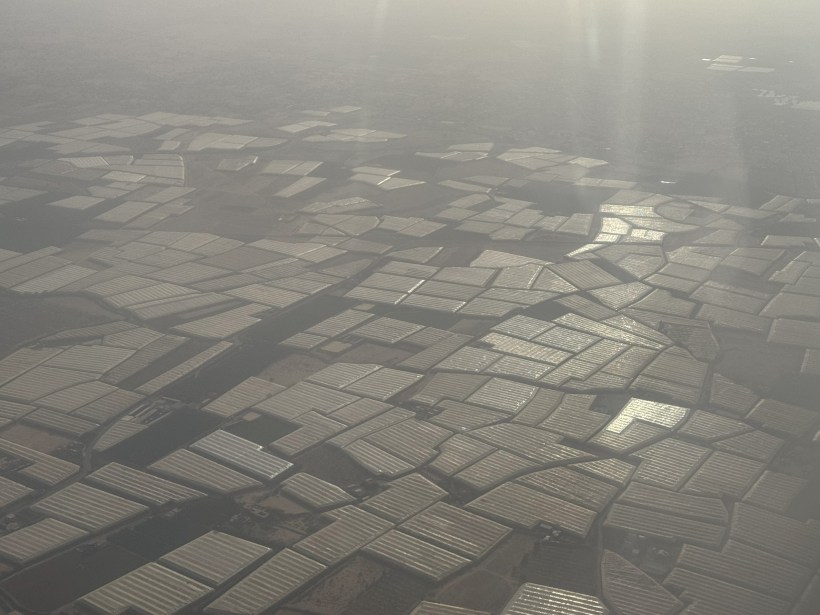
“Farming in Cumbria is being swallowed up by nature and net zero”!

“Back To Basics – Farm production, the ace you can keep”!

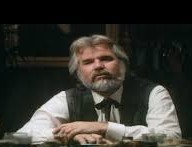
“On a warm summers evening, on a train bound for nowhere”. My young farmer pals and maybe a few older ones will immediately recognise the opening line from Kenny Rogers’ country classic, “The Gambler”. I’ve sung this song many times and it’s a magical feeling to be on stage with the audience stamping their feet in unison and singing that chorus right back at you; “When to hold ‘em”! Happy times that are becoming increasingly hard to find in the farming world.

Many within our industry might be feeling that we are currently “staring out the window at the darkness”. Much of the trust and security within farming policy has gone out of that window. A continuous flow of negative policies around land use, support schemes, taxation, and trade deals among a few, have left many farmers feeling like they are out of aces.

As far as politicians go right now, it is impossible to read their faces. The warm words towards farming and food security are not being backed up actions and clear intent. We’re waiting for believable reassurances about the future of farming in the UK, but all of a sudden, they’ve gone deathly quiet.

It is a despicable situation where some farmers, many in fact, are finding themselves in limbo and unable to trust and rely on government farming policies. That goes for farm production, environment and nature. The whole thing seems to have ground to a shuddering halt, as if someone has pulled the emergency chord on the train bound for nowhere.

Right now, the only safe approach is to go back to basics. The farm business can only survive if it is making profit. How good a handle do you have on your business? what’s making most? what’s losing least? and how do you know?  The song says it is about “knowing what to throw away and knowing what to keep”.

Farm business accounts may not be sufficiently detailed to allow you to look at the profitability of individual enterprises, but you need to be able to analyse your costs. Then there is cashflow. You never count your money when you’re sitting at the table, but how do you cope with the periods of the year when cash is tight which is a particular issue for some livestock farms.  Can a different farm enterprise, diversification, or income from off the improve cashflow? There will be time enough for counting, when the dealings done.

Every gambler knows, the secret to surviving, is to manage risks and improve the odds.  Perhaps you might focus on what you are good at, but if you only have one main enterprise then this could make you more vulnerable to market fluctuations and the impact of weather. It would seem that in this respect, every hand could be a winner, and every hand could be a loser.

Environmental payments are a way of bringing income into the farm business and reducing risk, but relying on environmental payments has suddenly become a bigger risk given the pressures on Government spending both now and into the future. What a damn mess.

So, a back-to-basics approach might actually be the least risk. You can only play the hand you’ve been dealt but a well-managed, tightly run farm production business might be the ace you can keep. Who would have thought that after all these years of ELM planning and development, we would be gambling for a future in this dire situation.

“We’re contributing to a global climate issue whilst patting ourselves on the back”.

“Let them be going Adam-Lad”

I write a monthly blog for the Cumbria Farmer magazine. I try to keep it light hearted, but sometimes you have to have a rant! Here is my piece from September 2024:-

I was a trainee auctioneer at Lazonby in the late 80’s when sheep numbers across the land were at maximum. This was of course driven by government policy with headage payments encouraging farmers to keep as many breeding sheep as they could. This fact is either not known or conveniently forgotten by those wanting to see a continued diminution in sheep numbers in the hills in order to drive a different agenda.

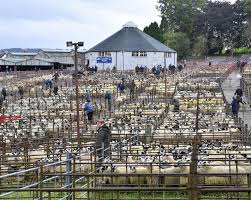
There was a huge furore in 1987 when the brand-new Penrith Mart at which I started almost as it opened in July, was not actually big enough to hold a sale in early September of 17,000 Mule Gimmer Shearlings or Thaves to our southern friends. The decision was taken to move the sale to the long-established Lazonby Mart, also run by the same auction company and located a few miles to the North West of Penrith. Lazonby was known nationally as one of the foremost sheep markets in the land with buyers flocking there from Cornwall to Caithness.

That day auctioneer Gordon Teasdale rattled through the sale, rarely travelling more than £5 to £10 on any lot and finished by early afternoon. The sheep were often going the ring through in multiples of 100 and being bought by farmers and large estates from across the UK. The headage payment was of course a major influence.

As a trainee, I was manning the gates either in or out of the ring, often to the cry of “He takes the lot, 300 to you Sir, let them be going Adam-Lad”. They were often gone before the hammer had even fallen! A constant and perpetual motion of sheep, moving from sellers pen, to sale ring, to buyers pen, and then onwards to a new farm and a new flock.

Today the sheep industry is far removed from what it was. The sheep breeds are pretty much the same. Some would debate whether they have improved or not as there are always “trends” and beauty is in the eye of the beholder. The traditional and precious skills of upland flock management and the local knowledge on common, fell and moor are still there, but many hill farmers fear the future right now. They are under attack.

Headage payments are long gone, replaced by evolving and far from complete environmental payment schemes. Now in some areas of Cumbria and Northumberland, shepherds protest that that have been left with too few sheep with which to manage the upland environment and make a living, the payments offered being too meagre.

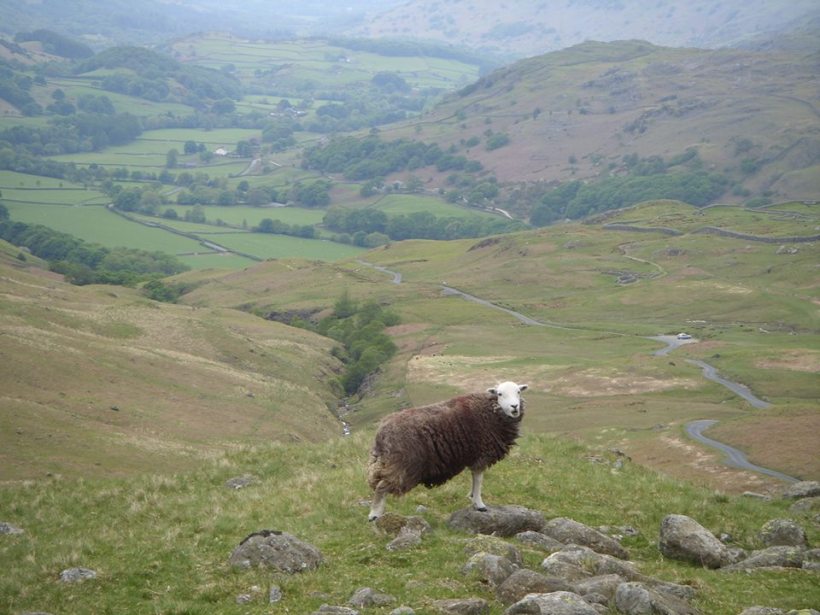
Natural England, a non-governmental organisation with seemingly governmental power has very fixed ideas on how many sheep should live on the hill wishing in some areas to introduce a blanket sheep stocking rate. In some harsher parts of Cumbria, this will be right. On many commons it will be way wrong. That is what I hear from many shepherds and conflict continues to brew. Even more conflict occurs when whole flocks are removed from the fell, never to return.

Many farmers do not want to be paid- off to remove sheep forever. The damage it is doing to remaining but reduced hefted flocks is all but crippling in some areas of Lakeland. Most want to find the right balance between farming and nature. This is new untested science, but that balance could be found between willing partners. Instead, in some cases farmers have been pressured with almost no choice and no debate, to remove the sheep from the hill.

Thousands of sheep buyers will visit Cumbria this Autumn as they have for decades, putting millions of pounds into the local economy. Behind every farmer you can count another 40 or so businesses that support the farmer to a greater or lesser extent. With the loss of the sheep and shepherds, the majority being displaced tenants, also goes the rural community and the bedrock of the rural economy. We’re in danger of losing it all as trees and environmental schemes replace livestock, and formerly tenanted farmhouses become Air B&B’s or second homes.

“Forty years gone in the blink of an eye”.

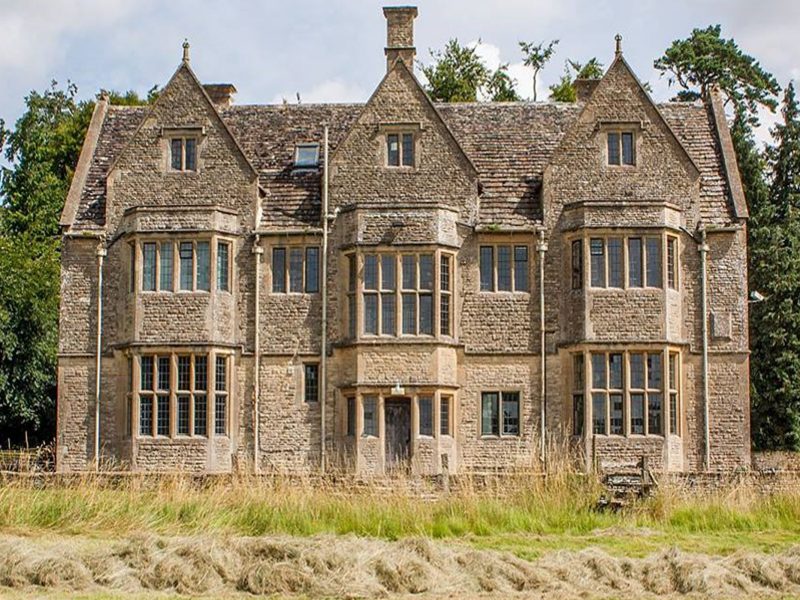
It is November 1984, 40 years ago. The young Rural Estate Management Student is halfway through his first term at the Royal Agricultural College. It is a freezing Friday night on the Cotswolds. The huge Georgian house which is now a hall of residence on the edge of the college campus, is all but empty. Most students go home at weekends. Those left in Trent Lodge are the “Northern lads” and the rugby players.

The house is absolutely freezing. They turn the heating off at 9pm and it barely raises the temperature even when it is on. The young student from the Lake District is lying in a sleeping bag in his bed under a thin duvet watching an ancient black and white TV. It is Children in Need night and there is a very grainy, picture of Terry Wogan and several celebrities of the day including Frank Bruno, Val Doonican and Orville the Duck. Home seems very far away.

Lectures during the day are very much focused on production. Increasing yield, more fertiliser, bigger tractors. Food is the focus, although milk quota’s have now been introduced. When the student gets a proper job in three years’ time, selling and leasing millions of litres of milk quota will be a big part of it. The commission earned covers the young man’s salary and he jokes with his boss that he is working in the auction for free. The boss doesn’t quite see it that way!

Then there is the new 1986 Agricultural Holdings Act which will continue to give an automatic right of tenancy succession for qualifying family members. The new legislation is there to ensure the continuity of family farms and sustainable food production.

All of this is soaked up like a sponge by the student, but those freezing winter nights are so cold. At least he has a stash of cakes, pies, biscuits and other goodies that proud farming grandmother has baked for him in case they might not feed him properly!

Forty years gone in the blink of an eye and the farming world has been propelled into a very different place. “Production, Production, Production” has been replaced by “Nature, Nature, Nature”. Policy is being driven by environmentalists and food is no longer recognised as a public good.

Protected farm tenancies have gone, and the average length of new agreements is only three years. Good agricultural land is being re-purposed into trees, solar parks or just left rank for nature. The hills are being cleansed of sheep.

A broken food chain is controlled by those higher up. The smallest slice of the profit pie (if there is any to be had) remains with the farmer, who carries all the risk and massive investment in a business where even “break even” is not guaranteed each year.

This month farmers marched on London, driven by a succession of deleterious policy challenges. They can see that the world turns in a circle. One day sooner than we think, they will be respected and valued as food producers once again. They will be doing this as well as making our landscapes and natural environment the best they have been in decades. But this will only happen if they are supported sensibly and properly. Cheap food in an improving environment comes at a price. The price must be to properly support successive generations of farmers. Right now, what is being offered is not fit for purpose on so many levels.

Young Farmers-Much to offer, given the chance!

My thoughts after a difficult debate with young farmers about their future.

Last night i was the guest speaker at a Young Farmers Club in Cumbria, a role that i very much enjoy having been one myself many years ago. The young people were a mix of seniors already of working age, many of them directly employed on the farm or in farm- related jobs. There were also several juniors who are learning the art of healthy, respectful competition, and a mix of farming and life skills. Many of them will gain confidence to judge stock, speak at meetings and perhaps engage openly with our buying public in future. All of this, as it did for me, comes from Young Farmers Clubs.

For the last part of the meeting, as i have done a few times recently, i turned my chair around and asked them how they were doing? What they were feeling at present? What future do they envisage?

The debate that ensued was outstanding. The level of knowledge and understanding at the current political situation in the agriculture industry would have taken your breath away. If only people in government or policy makers had been there to listen. They can “engage” all they want with the rest of us at stakeholder meetings, but the discussion in the room was worth so much more than all of that.

One young man asked me what i really thought the future would be for Cumbria’s upland farmers like him. What could family farms like theirs do knowing full well that ELM cannot and will never replace BPS and that ELM with what they know at present, does not appear to work for them – Wow! Answer that in a room full of young people all desperate to farm and have a future on the land.

A young lady talked about their family farm with commons grazing. The commons group had decided not to accept a new Commons stewardship agreement. Several farms would be vastly increasing the number of the sheep on the fell as the only viable way forward because the new agreement being offered was so poor. She seemed genuinely disappointed and downhearted by this. Not perhaps what might have been expected knowing the conflict on the hills of Cumbria.

Another young lady privately expressed concerns to me that at the end of her parents tenancy she would be desperate to agree a new tenancy with the landlord for herself. Her great fear is that her landlord might not even give her the chance, perhaps taking the land back in hand to plant trees or chase other environmental money. This is becoming more and more prevalent in Cumbria. Or maybe they would just go for the highest rent offered, this despite the fact that two generations of the family had farmed the land to the best of their ability and will leave the farm in a far better environmental state than they found it. She asked me if there was anything more that she could do.

So many more young people expressed fears and concern. There was not a lot of joy in the room. Indeed there was a level of stress apparent that should not be there for young people at the start of, or prior to commencing their working lives. Perhaps the level of debate around farming family kitchen tables is increasing. Perhaps our young people are listening, sensing or even engaging in difficult conversations about the future of farming, patricularly in the hills.

I believe that this is a micro-cosm of where we are in farming and rural land use today. Whilst government officials continue to publicly extoll the virtues of ELM and its progress, the reality on the ground is far from the company- line.

I tried to give them some hope. “Stick in” i said. “We’re in for a rough few years but we will come out of the other side”. Some will not…. “Things may be different, but your buying public will need you much more in future”. I hope my words were not hollow.

Against the background squelch of anti- farming rhetoric chasing around social and other media, i offered an accolade and a pat on the back. “The work you do in producing food, rearing livestock many of which will go on to be the backbone of flocks and herds across the country, and managing the landscapes that bring 20 million people to Cumbria is so important. You and your families help make our beautiful County what it is”.

I then told them that they were vitally important to the future of Cumbria as is the case in the Yorkshire Dales and Northumberland as well. Their job description will say “farmer and environmentalist”. That’s no bad thing, in fact what a huge responsibility and one which needs time, confidence and trust to learn and embrace. Far longer than the transition period of ELM.

I only hope that their role is adequately rewarded and respected over the next few years, before food production becomes a real thing again, as it surely will. If that is the case, something needs to change, and quickly. I’m afraid i don’t buy in to the government rhetoric that we’re on course and on track in farming and other rural land use. Here’s hoping, but i won’t hold my breath!

The National Federation of Young Farmers Clubs has a simple tagline, “Fun, learning achievement”. It also says that membership is for anyone who appreciates the countryside and rural life. What is clear is that their current members will have a tremendous amount to offer in future. Let us hope, especially in productive yet beautiful places like Cumbria, the Yorkshire Dales and Northumberland, that they get a fair chance. Right now, many are clearly very concerned. I wish we could do more for them.

Community is more powerful than beaurocracy

After a break from blogging, i’ve decided to strike up once again. I can only hope that my musings are of interest to someone….. somewhere!

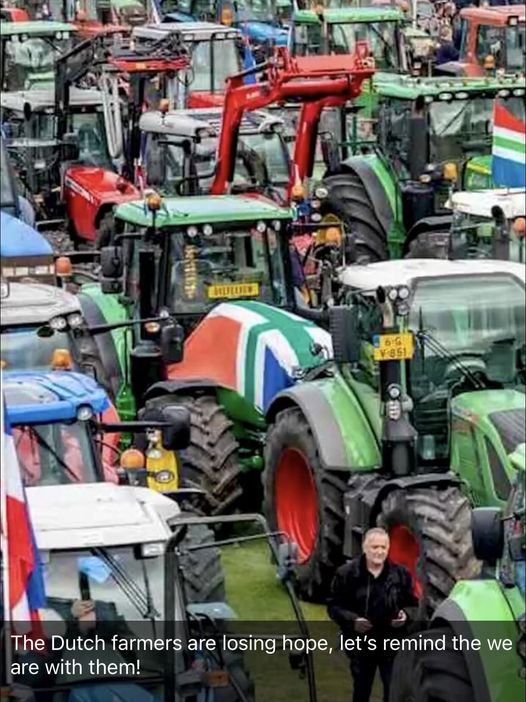
A wise fellow told me recently “Community is more powerful than beaurocracy”. After watching events unfold today in the Netherlands, i am drawn to conclude that the man was right!

https://www.bbc.co.uk/news/world-europe-64967513?fbclid=IwAR1Iu6kJ4J4OvNeexNLD6GrrpTA17OjUeGozO5djIQ0c1nzMnkltXY8RZhM

What is happening to some Dutch farmers in the name of the environment is truly shocking. The government is “offering” to buy- out thousands of farms in order to slash the use of nitrogen fertiliser and cease agricultural emmissions in the country. The livelihoods of farmers and the future of food production appears to be justifiable collateral damage as they are hung out to dry by the politicians.

If farmers don’t accept, they are being threatened with what the attached press report says is an “Expropriation Scheme”. The sensible conservation organisations are even saying “Hang on a minute! This is not entirely the farmers fault”.

There are parallels with UK farmers over the last century in that they have all been systematically supported and encouraged to produce food at all costs for several generations. The Women’s Land Army during World Wars, rationing coupons, and intervention buying are all but forgotten.

No one remembers that farmers were asked by successive governments to keep more livestock, rip out hedges, drain wetlands and farm every inch of the land that could be ploughed in order to feed a starving hungry people. Today farmers are being held accountable for those policies and blamed as the root of the evil. UK food security isn’t really on the political table.

Now the Dutch people are standing up for their farmers and rural communities. They don’t want this! They have voted in solidarity for the new Farmer- Citizen Party which last night won the country’s provisional elections. Who does want this sort of rural land- use policy? Well actually a small but very powerful group of people in the UK might. Some with vested interests, would love to see this re- enacted across Rural England. There’s money in it, in fact large amounts. Whilst there are many who see a genuine need to change the way we manage the land, and in many ways they are not wrong, there are others sniffing an opportunity.

Even now across the UK there are landed estates, some private, some corporate, getting rid of tenants as soon as they can, either to sell land to enable large- scale greenwashing investment, or to plant their own land for their own gain. All of this is generously funded by Government through new planting and environmental schemes. There’s more profit in this than can ever be made out of letting land to tenants, and there’s a perfect facade to hide behind – “we’re saving the planet”! But what of the farmers and local communities?

The average length of tenancy across the UK is now a pitiful three years. Three years does not give a tenant farmer time to settle, raise a family in the local community, invest in the land and business and build a life. It’s a far cry from the old days of the protected multi- generational tenancies that allowed sons and daughter to take over from their parents and their parents before them. Now the loss of every tenant replaced by trees, drives another nail into the heart of a community. It also prevents talented young people from committing to the industry in a tried and tested way, by taking on a tenancy.

These are disturbing times for rural folk in the UK, and especially those connected with farming and food production. Farmers are not blameless and there is an absolute duty on them to leave the natural environment in a far better shape than they found it. It is not unreasonable to think that the scenes in the Netherlands may one day be played out in the UK as thousands of acres of productive food- producing land is re- appropriated and re- purposed in the name of the nature and climate change.

The equitable solution is for government to work up a set of rural land- use policies that balance farming with nature, where both thrive, and develop in harmony. Farming has to change for sure, but with it should come opportunity, stability and trust. Right now we’ve a long way to go. Meanwhile we watch developments across the water with interest. More than 20 million people from all over the world visit Cumbria each year loving the landscapes, the Cumbrian people, the sheep on the hills and cattle grazing in the valleys. I wonder how many would join a UK Farmer- Citizen movement if they realised that the county they love to visit may be under similiar threat. Time may tell……