Community is more powerful than beaurocracy

After a break from blogging, i’ve decided to strike up once again. I can only hope that my musings are of interest to someone….. somewhere!

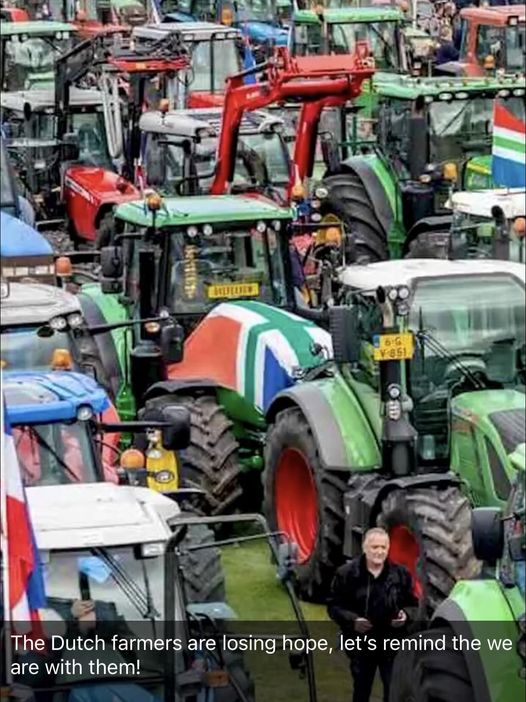
A wise fellow told me recently “Community is more powerful than beaurocracy”. After watching events unfold today in the Netherlands, i am drawn to conclude that the man was right!

https://www.bbc.co.uk/news/world-europe-64967513?fbclid=IwAR1Iu6kJ4J4OvNeexNLD6GrrpTA17OjUeGozO5djIQ0c1nzMnkltXY8RZhM

What is happening to some Dutch farmers in the name of the environment is truly shocking. The government is “offering” to buy- out thousands of farms in order to slash the use of nitrogen fertiliser and cease agricultural emmissions in the country. The livelihoods of farmers and the future of food production appears to be justifiable collateral damage as they are hung out to dry by the politicians.

If farmers don’t accept, they are being threatened with what the attached press report says is an “Expropriation Scheme”. The sensible conservation organisations are even saying “Hang on a minute! This is not entirely the farmers fault”.

There are parallels with UK farmers over the last century in that they have all been systematically supported and encouraged to produce food at all costs for several generations. The Women’s Land Army during World Wars, rationing coupons, and intervention buying are all but forgotten.

No one remembers that farmers were asked by successive governments to keep more livestock, rip out hedges, drain wetlands and farm every inch of the land that could be ploughed in order to feed a starving hungry people. Today farmers are being held accountable for those policies and blamed as the root of the evil. UK food security isn’t really on the political table.

Now the Dutch people are standing up for their farmers and rural communities. They don’t want this! They have voted in solidarity for the new Farmer- Citizen Party which last night won the country’s provisional elections. Who does want this sort of rural land- use policy? Well actually a small but very powerful group of people in the UK might. Some with vested interests, would love to see this re- enacted across Rural England. There’s money in it, in fact large amounts. Whilst there are many who see a genuine need to change the way we manage the land, and in many ways they are not wrong, there are others sniffing an opportunity.

Even now across the UK there are landed estates, some private, some corporate, getting rid of tenants as soon as they can, either to sell land to enable large- scale greenwashing investment, or to plant their own land for their own gain. All of this is generously funded by Government through new planting and environmental schemes. There’s more profit in this than can ever be made out of letting land to tenants, and there’s a perfect facade to hide behind – “we’re saving the planet”! But what of the farmers and local communities?

The average length of tenancy across the UK is now a pitiful three years. Three years does not give a tenant farmer time to settle, raise a family in the local community, invest in the land and business and build a life. It’s a far cry from the old days of the protected multi- generational tenancies that allowed sons and daughter to take over from their parents and their parents before them. Now the loss of every tenant replaced by trees, drives another nail into the heart of a community. It also prevents talented young people from committing to the industry in a tried and tested way, by taking on a tenancy.

These are disturbing times for rural folk in the UK, and especially those connected with farming and food production. Farmers are not blameless and there is an absolute duty on them to leave the natural environment in a far better shape than they found it. It is not unreasonable to think that the scenes in the Netherlands may one day be played out in the UK as thousands of acres of productive food- producing land is re- appropriated and re- purposed in the name of the nature and climate change.

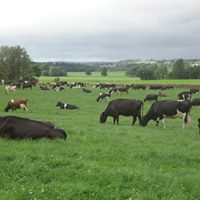
The equitable solution is for government to work up a set of rural land- use policies that balance farming with nature, where both thrive, and develop in harmony. Farming has to change for sure, but with it should come opportunity, stability and trust. Right now we’ve a long way to go. Meanwhile we watch developments across the water with interest. More than 20 million people from all over the world visit Cumbria each year loving the landscapes, the Cumbrian people, the sheep on the hills and cattle grazing in the valleys. I wonder how many would join a UK Farmer- Citizen movement if they realised that the county they love to visit may be under similiar threat. Time may tell……

The demise of home- grown food and the UK food chain.

After years of neglect, the lack of investment and support for the UK food industry is coming home to roost. Of course covid and Brexit are having a major effect, but the root causes stem from much deeper.

Successive governments have allowed and supported the systematic reduction in the supply of home- grown food. We’re now little more than 50% self- sufficent relying more and more on cheap imported food from across the globe, often of dubious provenance and standards of production. As a result, our supply chains and ability to process food has also reduced. We have seen the demise of almost all small and medium sized abattoirs in the UK (gold- plated regulation) killed them.

Supermarkets have (until now) run highly efficient, trimmed down national supply systems designed to maximise profit and minimise cost. That is one of the reasons why we can’t buy much locally produced, locally processed food from the Major multiples. It has of course been very successful at delivering relatively cheap food to the masses, which government positively supports.

This is the root cause of the issues we are seeing today. Brexit has not caused the problem, it has simply brought into focus the fact that in the government’s eager pursuit of cheap food for the masses, it turned a blind eye to the practices of using the cheapest drivers that can be found for transport sector, thereby driving down the market for UK drivers. Now there is a shortage. Lamb from Cumbria goes to Wales for processing to be brought back to Cumbria to be sold. Most of Cumbria’s milk goes out of the county for processing. One of the major multiples announced in sping 2021 that it was centralising all of its bread production to one “Ambient” bakery to serve the whole of the UK. That’s a lot of haulage and driving miles for one crust.

Today some milk is being tipped down the drain by farmers because there are no collection drivers. I say again this is a result of driving down costs in every part of the food chain. Now all of a sudden supermarket shelves are emptying and there is talk that there may be christmas shortages of pigs in blankets, most of which are imported. Don’t be fobbed off. British farmers with the right backing, the right support and a decent level of profit to ensure a viable farm business, can produce more great food to feed LOCAL people and improve the natural environment at the same time. it can be done but it comes at a cost.

What we see on the horizon are more plans to downsize UK food production, import even more food and concentrate in large rural areas of the UK on looking after the natural environment. This is not joined up thinking. We need to work together to produce the best environment we’ve had in decades, cleaner air, cleaner water and produce more food to feed a rapidly growing UK population. This is the greatest challenge of all. Instead Government is set to focus on nature recovery and significant landscape change, the latter suggesting little room for farming! The writing is on the wall.

We need investment in food production across the length of the food chain from field to fork. Farming, conservation, processing, shortening the supply chain and delivery journeys, seasonality of produce, education about food production and healthy eating. We need this now! i’m afraid the excuses about covid and Brexit will wear thin in time. This issue is synonomous with a much greater problem, the demise of UK food production and who has control of the food chain.

Meanwhile we have a brilliant farming community currently under- resourced, under- utilised, under- appreciated and being taken down a path that may lead to a much worse place in future, possibly the opposite of what government hopes will happen.

I am realistic to know that farming in the UK is going to be different in future and perhaps it needs to be. We all want to see a better natural world, more birds bees, butterflies, wildlife, more trees of the right type and in the right place. We also want to see cattle in the fields, sheep on the hills and more local food to local people.

Right now as world demand for red meat grows and supply falls, UK farmers are enjoying record prices in the sheep sector. This should be another wake up call as to why sustainable red meat and dairy production is vital.

There is a balance to be achieved between farming and nature and we are a long way away from it. It sometimes feels like banging your head against a brick wall.

“We will get there”….

Written for the Cumberland News June 2020.

“There are people on the pitch, they think it’s all over – it is now”! How I jumped up from the kitchen table and cheered as Geoff Hurst thumped the ball into the top right- hand corner of the German net. It was only a re- run of the 1966 football world cup, but I was lifted up.

Recently we haven’t had much to cheer about and not much of a feelgood factor. We’ve just gone about our lives as best we can. It pains me to say that we are not over the worst. Once the virus is beaten, it’s going to take a long time for the economy to recover. In agriculture we are in danger of being sucked into a short – term comfort zone. For most farm businesses, things ain’t so bad although there are of course a few exceptions. Constant reappraisal is going to be required. Where are we now and where do we want to be?

My feelings have not changed. Longer term, Cumbria has a bright future. The visitor economy if It can survive the current crisis, will recover to a stronger position. If we can ally farming and food production alongside the tourist sector to a much greater degree, then let us not miss the opportunity. Local food, produced, marketed, and consumed ethically and sustainably within the county is a great public good to be able to deliver.

The limitations of the grand global market have been exposed as have the mistruths about UK farming on climate change and greenhouse gases. Methane production from ruminant animals has been going on since first we crawled out of the primordial soup and “chowed” on a grassy tuft. What were the lifetime emissions of 100-ton Sauropods over the 120 million years they roamed the Earth? Annual gas losses from oil extraction emit twice as much methane to the atmosphere than the entire global bovine population?  Time for some perspective, then let’s go forward in the right way.

I know some who will accuse me of being a little Englander, but it isn’t that at all. I’m talking about best use of our local resources. We grow grass, farm livestock, and look after the landscapes. So, when we do reduce our agriculture emissions (currently 10% of total), and contribute to making Cumbria carbon neutral (or better!), I would hope to see fair reward for farmers and a little respect!

Last week I watched a documentary re-run of the 1996 European football championship. I remember my spine tingling way back then as Stuart Pearce stepped up to take a penalty in yet another shoot- out. He had missed one in the 1990 world cup and England went out.

Now here he was volunteering to go again, stepping up to be counted. He absolutely smashed it past the Spanish goalkeeper, bottom- right, to wipe away 6 years of misery and prove he had the ultimate bulldog spirit. Again, even though it is 24 years later, I was off around the kitchen table “Get in”!

We will all need some of that spirit before this crisis is finished. It might be day by day, month by month, but we will get there.

Lockdown – When Friday night was party night!

I’ve haven’t blogged for a long while. In the long months of Covid lockdown, i found myself doing new things to try and keep my head together, and to help others who needed a bit of a cheer up. In normal times apart from working for the Farmer Network and continuing to do some auctioneering, i sing in a band called the Soul Survivors. From March 2020 all our gigs disappeared. One night i did my first ever live stream on social media. i dedicated it to a young couple whose wedding had just been cancelled when lockdown kicked in.

I sat at my piano and sang a very average version of “Don’t let the sun catch you crying” by Gerry & The Pacemakers. I thought i would get laughed at but was amazed to find that some people watched it and actually seemed to enjoy it. In fact i was asked if i would do it again the following night. This i did for the next 4 months, live- streaming every night, sometimes from the house, sometimes from the garden.

I couldn’t believe it as more and more people started to join me at 8pm each evening. I watched the messages dancing up my phone screen as i sang. Friends unable to meet were having text conversations with each other and with me. We had banter and fun. It seemed we were all keeping mind and body together with each other.

One Friday night instead of the usual two or three songs i put together a longer one hour show from my office/ music studio. I set up some band lights and called it “Friday night is Party night”. Thereafter for many weeks, Friday night became party night as friends from across the world joined me live or viewed the show. We all had a drink with us, some more than one! At regular intervals after a song or two, i called out “Cheers”! and we drank in unison.

By July lockdown restrictions were being lifted. I was able to go to the local pub. That was the signal to end my live streaming. I was honoured and proud of the many comments of support and sadness from some of my friends who said they would miss the 8pm music slot. I sat on the wall outside the pub, happy in my pint but reflecting on how music had brought many of us together each night. It was never about the quality of the performance or the musical selections which were often very average, but more about the sense of community and friendship during a time of hardship for some. I never intended for this to happen, it just did!

In November 2020 more lockdown restrictions were announced. No more pub, no more socialising, not that there had been much going on. Myself and the rest of our band had remained redundant for the last 6 months. I started to get messages from people asking if i would do another “Friday night is party night” to cheer them up. I needed it too, so the office was turned into a stage again and i put together a 30 minute show. I ended up doing 75 minutes. All my old chums had returned to listen and take part. Messages and greetings were flying up the screen again, and those “likes and loves” for certain songs gladdened my heart. I actually felt like a proper musician again.

I did a Friday night 80’s night, then a swing night and then it was Christmas. My Christmas on line show had more than 5,500 views. Then all of a sudden it was New Years Eve. Few people had any desire to go out, so my 2 hour show from 8pm to 10pm attracted a lot of attention. Crazy times, lonely people, just trying to make the best of it, dancing around the kitchen table. Little people dancing with mum and dad before bed, watching me on the TV. 94 year old Gladys who loved the old swing tunes as it brought back memories of her late husband and their courting days. These nights made me feel worthwhile and alive, like i was doing something positive in my own mediocre way.

The year turned and a third lock down was introduced. Once again i was being requested to start the nightly’s again. I could not say no. So every night i did a couple of tunes saying hello to people who tuned in every night without fail including my own mother and father who never missed. Sometimes there were sad messages to purvey, friends very ill, people we knew well passing away. But always the message had to be “We will get through this”!

Friday night continued to be party night. We did an elvis night and a country music night. We carried on for another three months. It gave me something to look forward to each evening until finally lockdown restrictions started to ease. The finale show came on Friday 9th April. i knew this would be the end and we all welcomed it with open arms. Even so it seemed like the end of an era somehow. I was sure there would be lots of good stuff to look forward to as we slowly returned to normality. Through all of it i had made new friends, found old ones, lost some, and i had a huge repertoire of over 1100 songs that i had learned and performed in the grainy flashing light of my office/ stage in front of an international audience from Africa to New Zealand

Now it is August 2021. Most Covid bets are off although it is still out there. The Soul Survivors are up and running again and i’ve got quite a few gigs happening. We are in catch up mode. Once again i’m starting to think about writing as we move towards whatever the new normality will bring. So now that you know what I’ve been up to, you can expect to see more of the usual stuff about farming, rugby and lots of tales to tell from the past. I hope this is of interest. We’ll put the lockdown stuff to bed and remember it for what it was. I always said that we would get through. Most of us did but of course we spare a thought and perhaps a tear for those that we knew and loved, that did not………

YOU’RE NEVER TOO OLD TO LEARN….

I went off to the Royal Agricultural College, Cirencester in September 1984. To a boy from the hills of Cumbria, it was a world away from the sheltered life I had known. My parents were proud, my old farming grandfather even more so. In many ways it was a rude awakening to the harsh realities of life and people. I met some of the best and some of the worst. “Mountain Man” as i was christened by fellow students from the south, had an awful lot to learn about both. These experiences have continued through my whole career.

The qualification was everything. Rural Estate Management was the key to the door for a lifetime of working within the farming community.

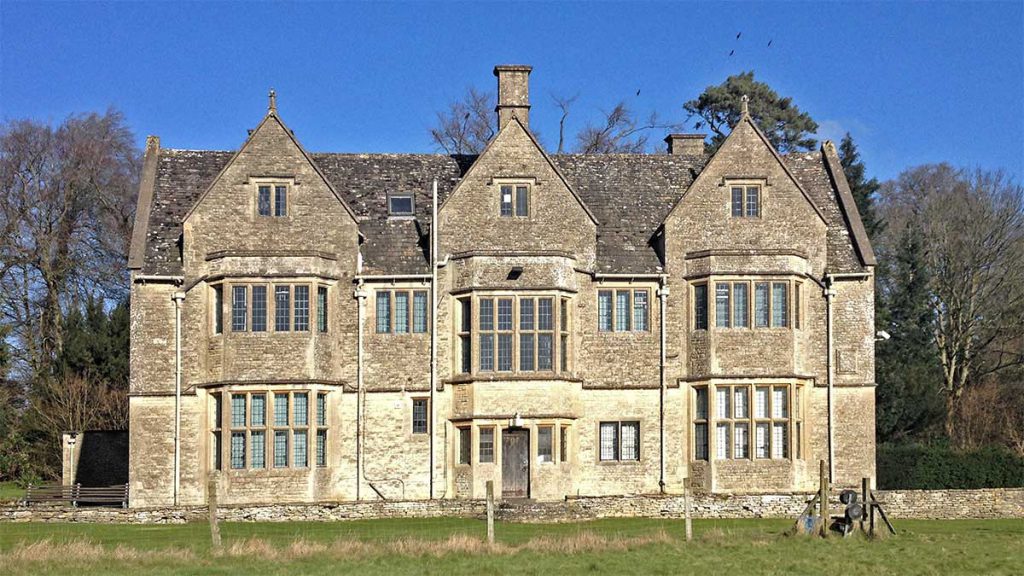
Trent Lodge Hall of Residence, Cirencester – second floor right hand window – my room!

Three years later I returned to Cumbria in my battered old Mini 1000, with rather more life experiences under my belt, and a new job as a trainee land agent and auctioneer for Penrith Farmers Kidd’s. A 20 minute interview with the Managing Director, Harry Richardson secured my dream job. It was a no- brainer for me to return to my home county.

The learning was far from over. For on my very first day and less than five minutes into the job, I ran into the first of many bollicking’s off a farmer.

The brand new Penrith market on Junction 40 of the M6 was full to overflowing with trailers backed up the A66. It was pandemonium. I donned my shiny new auctioneer’s coat and headed for the calf ring to help auctioneer and now life- long pal, David Jackson. As I rounded the corner, I bumped straight into Geoff Faulder, Ewan Close Farm. A man in his late 60’s, he was clearly disgruntled, having to queue to unload calves. He looked me up and down.

 “I don’t know who the bloody hell you are – Boy” he said, “but get out there and sort the bloody mess out”! With that he turned tail and left me standing open- mouthed. Things did settle down and in time Geoff became a good pal, as did his brother Jared, a top county buyer of sheep in local auctions, including his favourite, Lazonby.

Today my own college life seems a world away. Those three years were important not only to learn about my chosen profession, and get the certificate, but more widely to learn to communicate, deal with people and to gain some much-needed self- confidence. I made some good choices in the knowledge that I desperately wanted to return to live and work in Cumbria, but I also made some bad choices in other areas of my life. I wouldn’t change it, but oh boy, would i do it differently! Hey, hindsight is a wonderful thing and I’m still learning, for you are never too old to learn!

Today my auctioneering duties are part- time and still very enjoyable. I’m classed as an old hand now. It is good to work with a young team and where needed impart a little advice or just offer support where i can. I am perfectly at home dropping down livestock trailer doors or opening ring gates as much as i am in the rostrum, although there is nothing beats the buzz of a good trade when you’ve got hold of the gavel.

Five years ago i became the Managing Director of The Farmer Network based at Newton Rigg College near Penrith. I get much pleasure seeing the myriad of ways our non- profit company finds to support farmers and their businesses. Our goal has not changed since the Network was formed 15 years ago. It is to support a viable and sustainable farming community.

I enjoy talking to students on campus and have even tried my hand at lecturing in farm business management. Many students are the offspring of farmers that I grew up with. It is the circle of farming life. Those students are going through the same learning experiences as I did back in the 1980’s when the girls had big hair and big shoulder pads!

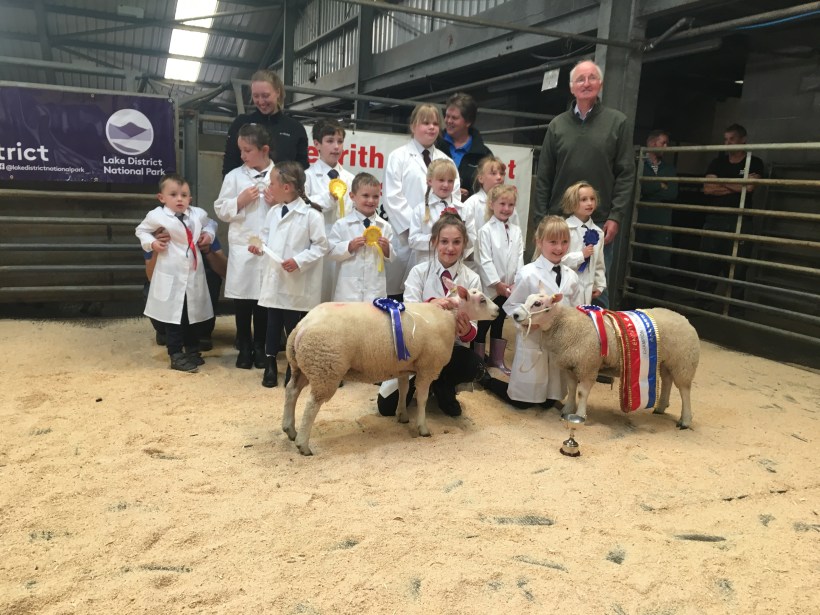
College life for todays “Aggies” is more important than ever. They are the generation that will have to work within a rapidly changing industry. It is so important that we prepare them with the necessary skills both to farm smarter and manage the landscapes in evolving ways. In our industry we start them young, encouraging a strong worth ethic and great pride in the job. In the mart, young handlers sale days are just one of the learning experiences offered.

The future of Newton Rigg college is under threat. The parent organisation Askham Bryan which owns the Penrith campus has persuaded the further education commission that the college is not viable. They have been given permission to sell the site and if this happens the sale proceeds will taken out of the county, back to Yorkshire. Too many this a cruel and unjust end to a bastion of Cumbrian farming life.

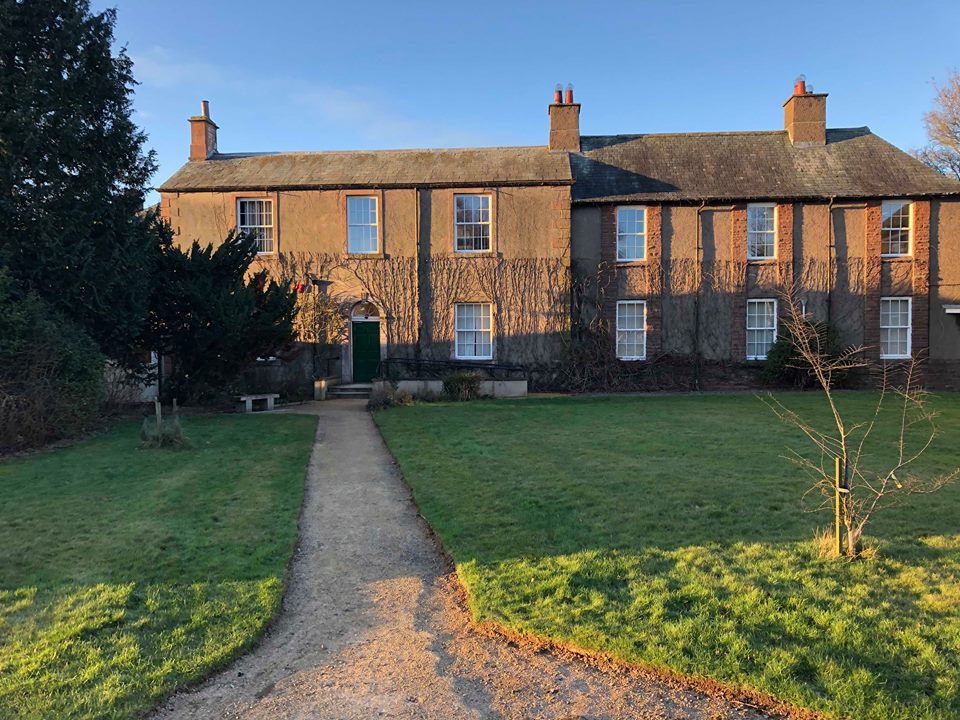
Newton Rigg Farmhouse – present home of the Farmer Network – but for how long?

Even worse is the fact that we will lose a cherished and respected seat of learning in Cumbria, the second largest red meat and dairy producing county across the country. To the farming community and indeed the wider rural community, this is an appalling state of affairs. Closure is due July 2021.

An independent Newton Rigg Land- Based Education Taskforce was formed consisting mainly of representatives from the agricultural and educational sector in Cumbria. The taskforce has been trying to formulate a plan to save Newton Rigg as a seat of learning or at least to ensure that land- based learning can continue in Cumbria in some form. I am proud to be part of the group knowing full well the importance of not only further education, but life- long learning for members of the farming community. There are currently three consortia interested in talking over the campus, and a bidding process is underway. The Land Based Education Taskforce remains in place to offer support where it can. There is still hope!

Our young people starting their careers will be brilliant farmers, food producers and conservationists, in fact the best yet, all in one package. I am convinced of this. If i have one message for them it is: – “learn and keep learning because you are never too old”.

More than 30 years have passed since the day i walked into Penrith mart with my shiny new auctioneers coat. These days my white coats are rather larger than they used to be, but i still feel the same privilege working for the farming community . Difficult though these times of change may be, i have an unwavering belief that farmers are going to become more and more important to this country. We just haven’t quite woken up to the fact yet. Time will tell!

THE DAY THEY LET LOOSE ROBBO’S COCKEREL

This tale does not actually involve me personally, but after Tommy Borthwick, my former coach at Aspatria RUFC back in the 1990’s shared it with me, it is too good to miss.

In January 1993 i had been injured with a partially dislocated elbow, sustained when playing against Sheffield in National League 3. I lifted our giant second row Fred Story as he leaped like a salmon to claim the ball, at the kick- off to start the second half. Their open side wing forward clattered into my arm and I felt my elbow pop out of its socket. I dropped Fred and then sort of wiggled my arm about, and felt my elbow slide back into place. It didn’t hurt at first but after being bollocked by Nigel Brown at the next scrum for not binding tight enough, I realised that I couldn’t grip with my left hand.

I left the field at which point the pain kicked in as my arm locked. They cut the shirt off me and I was driven to A&E in Carlisle for an X ray which confirmed the damage. I then missed 6 weeks whilst in rehab, which included a week’s skiing trip to Kitzbuhel. Well we did get reasonable expenses in those days! During this time, I missed the long trip to Exeter for a National League 3 fixture.

On Tuesday evening at training before the game, our forwards coach and Cumbrian rugby legend David Robinson, approached Tommy Borthwick and told him he had a secret plan on how to beat Exeter. Robbo said he would reveal all at Thursday night training. Tommy was intrigued. What could this plan be? A new forward move off the scrum or a set play from the backs? Perhaps he would just get one of the forwards to give the Exeter second row and captain Rob Baxter a little dig early doors, to set down a marker!

Thursday night duly arrived, and Tommy was in the changing room with some of the players when in walked Robbo carrying a hessian sack over his shoulder.

“This is it” said Robbo, “this is how we’ll beat Exeter”. Then he delved deep into the sack. There was a rustle and squawk as Robbo proudly pulled out a shiny and very much alive Black and Red Cockerel he had selected from his farm.

“Look at this” beamed Robbo. “The Aspatria Cock, just like on the club badge”. Robbo went on to reveal that he intended to let the cockerel run on to the Exeter pitch, just as the Aspatria lads ran out on to play.

“Tommy, it’ll be like the Parc des Princes” he added. “It’ll show them the real men of Cumbria, on the pitch and off it”! I don’t know if Tommy was convinced. “Hell Robbo, we can’t take that thing on the bus down to Exeter” he reasoned, “What if it wants a piss”?

“Divn’t worry Marra” replied Robbo. “It’s all tekken care of”. He tapped his nose and then with a wink he left the changing room.

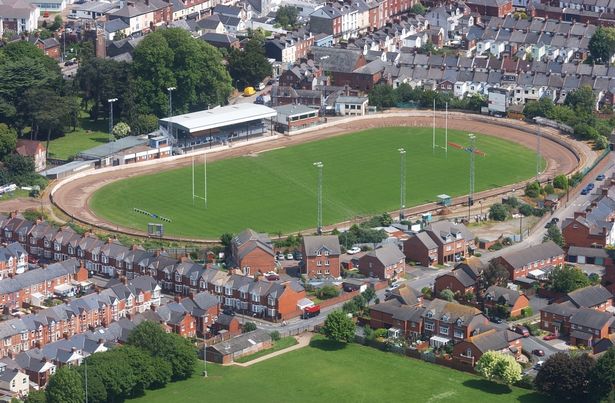
County-Ground

At 3pm on Saturday, Aspatria were preparing to take the field at the County Ground, Exeter. Out of nowhere Robbo appeared with his hessian sack, for indeed Robbo’s cockerel had made it down to Devon, somehow.

“Here Petchy” shouted Robbo. Dave Petch, reserve scrum half was duly summoned. “when the lads run out, let me cock go, but mek sure you catch it afterwards”. A minute later the Black Red rugby team ran out onto the pitch, jaws set in ready concentration.

Suddenly Petchy opened the sack and away across the pitch went Robbo’s cockerel at full pelt. The crowd roared, as did Robbo and the entire Exeter team stood their open mouthed. This seemed to lift the Aspatria team.

However, for the next 15 minutes or so, few people took much interest in the game. Instead they were fascinated by the sight of Petchy chasing Robbo’s cockerel around the running track that circled the rugby pitch. Try as he might, the young scrum half just could not catch it. Eventually the cockerel tired of the game and in a flurry of flapping wings, flew over an adjacent wall and as it happened, into St Thomas’s churchyard, never to be seen again.

This is not the end of the story. For the following Christmas, a card arrived at Bower Park addressed to the rugby club. Billy Clark opened it and read it out in the changing room at training.

“Dear Friends – Thank you so much for taking me to Exeter and finding me a new home at St Thomas’s church. The vicar has been so kind to me and looks after me so very well. I just wanted to let you know that I am very happy with my new life. Happy Christmas. The Cockerel.”

Robbo’s cockerel sent a Christmas card from Exeter for the next three years running……

“THERE’S A BRAVE NEW WORLD OUT THERE”

In January 1981, the House of Lords debated The Sheep Variable Premium Order. This was a deficiencies payment designed to protect and support UK prime sheep producers by giving a guarantee price for lambs sold at the right grade.

Lord Peart of Workington said, “I take the view that this is a good bargain… It will give tremendous help to the farming community, who deserve it… some of our townspeople forget that the production of food on the hills and uplands is really a very hard job”. Earl Ferrers was in complete agreement replying, “life on the hills is a very difficult life, particularly for sheep farmers”.

The Bill passed and for many years farmers could rely on a weekly “make- up” payment. On a rising market, this was a winner. In practice at grassroots level, the young auctioneer at Lazonby, diligently chalked up the guaranteed top up payments on a blackboard, each Thursday morning so that vendors could work out the bottom line.

If he was lucky the young auctioneer got a turn in the rostrum, which was actually a tiny little wooden hut adjacent to the main office. A narrow ledge separated the auctioneer from the sale ring. it was just wide enough on which to balance the auctioneer’s book, recording vendor, number, weight, price and buyer, any of which might be referred to in case of dispute.

Decades of gavel abuse had left the surface of the ledge battered and worn. If the young auctioneer was not so lucky to sell, then the morning was spent weighing sheep on the old dialled scale, then writing the weights on a chalkboard for the boss, Norman Little, to read out to buyers.

Woe- betide the young auctioneer should he not get the blackboard washed off and turned around by the time the next lot of sheep had left the weighbridge and moved in to the ring. After selling their sheep, vendors could be seen staring at the variable premium rates, working out what the sheep would come to with the make- up payment added. Sometimes a scowl, sometimes a nod, rarely a smile, for that would never do!

Mid- winter would see frozen breath and frozen fingers, but the sale could not stop. A huge gas heater stood at the side of the ring, to enable the buyers to warm their cold wet fingers in between, touching the lambs backs. The heat did not percolate to either the auctioneer or the weigher! Lazonby Auction could be a bitterly cold place in mid- winter!

At the back of the weighbridge, worked the Meat and Livestock Commission grader. Their job was to assess the condition of the lambs individually, to ensure that they were of the right quality and level of finish, not too fat and not too thin. Graded lambs received a yellow mark meaning entitled to premium payment. Reject lambs were marked differently and were not entitled to the extra payment.

The system was further complicated by the fact that the grader also had to assess the final kill out percentage of the lamb, in other words, the amount of meat as a ratio of the total carcase weight. For the purposes of premium payment the grader would instruct the person weighing sheep to deduct an amount from the full lamb weight. Best quality lambs might only have half a kilo deducted, or less on rare occasions. Plainer quality lambs although eligible for premium, might have 2kg or even more removed. This obviously affected the bottom line for the farmer

A good grader would work well with the sheep weigher and series of finger signals would indicate the amount of weight to knock off. Farmers would try all ways to influence the grader if they disagreed with the grade or the weight deduction. Graders would never ever change their mind! Some farmers shouted, others pleaded,

“Nay nay, Jacko, hev another touch, tha’s missed it”. Or;                                                  “Haway Cloggy man, yer’ve been far ower harsh wid us”

Generally the graders were known and respected by farmers but some like old Roy Cannon from Cockermouth rather enjoyed the banter with farmers who argued with him: –

“Two off these Adam Lad”                                                                                                            “Hell Roy, you’re bloody joking! my lambs aren’t that bad”                                                        “Adam, make that two and half kilo’s off”

The young auctioneer at the start of his career had a little card at his side on the rostrum, with Penrith Auction prices  written down for different breeds and weights – as a guide. Lazonby and Penrith were run by the same company; Penrith Farmers & Kidds, but there was always competition! Norman Little would always insist that Lazonby prices should at least match and probably better Penrith prices on the monday. In those days, long before mobile phones, prices rarely moved much throughout the week, never mind the day.

Just about every one of those Lazonby buyers are now retired or have passed away, to be replaced by others for that is the circle of life, and the circle of auctions. 

Now less than 40 years on from that House of Lords debate, few politicians talk of farmers in the same revered tones. Life for hill farmers has not got any easier in many respects. It can still be lonely and perhaps even more stressful than all those years ago. For many farmers, a trip to market was the only chance to get away from the farm. Nowadays few farmers have time to stop, chat, network and relax.

Also, In real terms the lambs are cheaper, the cost of production far higher and the profit, often far less. Although 98% of households still eat red meat, and 99% purchase dairy products, we’ve lost our connect with the public and dare I say with government.

In future our industry is going to change. Public goods may be the order of the day, but we must still fight to promote the value of food production. There will be challenges but also opportunities. There won’t be any “makeup” schemes, but there will be public money to spend on the farm. The trick will be to maximise payments whilst retaining the viability and profitability of the farm business. I am pleased to say that the Farmer Network is well placed to support its members during the transition.

I am also convinced that over the years the demand for home grown food will rise, as will the public’s desire for a greener world, cleaner air, water and more wildlife. On the back of that, farmers will be able to invest more in healthier soils, greenhouse gas mitigation, innovative production methods and more.

Much as the young auctioneer (now rather older!) looks back on those Lazonby sale days with fondness, we’ve moved on. At least there are still many young auctioneers now learning the ropes in the modern era and deserving support. They may still have a strong role to play in the future.

We can’t change the rules, but we can make them work for us. One day soon, our customers will wake up and realise, just how important farmers are both to food production and to the environment. There is a brave new world out there to be had. We just have to embrace it and dare i say fight our corner. Lord Peart was right. Supporting the farming community in future, will still be “a good bargain”.

The Landscapes of Lakeland – what value?

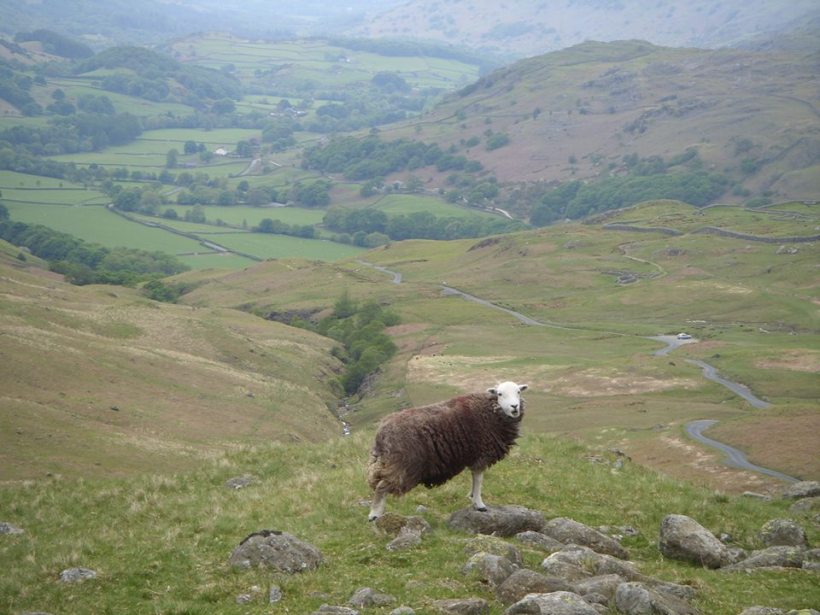
I took this photo one afternoon from the summit of Hardknott Pass in Cumbria. In my role as a livestock auctioneer and land agent, I had spent the day visiting farms in Eskdale and other western valleys of the Lake District and i was on my way over the top, heading for Wrynose and then Kirkstone before driving home along Ullswater towards Penrith. It was a great day and i was feeling fortunate to live and work within the farming communities across Cumbria. What a commute home!

I spied her whilst i was driving. A lovely young Herdwick sheep, the indigenous breed of the Lake District. She stood there with her two front legs on a small rock and she was just watching the world go by. I could not help myself. I stopped my car and doubled bac to her. She saw me and carried on watching me intently. She seemed to be saying, “this is my world” and we stared at each other for a long time before she turned tail and ambled off down hill, in an instant lost from view. She was not frightened of me. She was at ease in her surroundings. I have sold many thousands of Herdwick sheep in my lifetime. it’s part of our culture and our heritage in these remote valleys and high, challenging fellscapes.

These sheep are heafed to the fells. They are bred to live here, attached to hills, acclimatised to them and very much part of them, as are the people that shepherd the flocks.

These green hills attract 40m visitors a year who love the landscapes as they are. Trees could not grow here but grass does. The sheep produce wool and meat and the soils store carbon. But the sheep are worth far more than that. They are a linchpin to communities, vital for so much more than just meat and wool.

Last night, to see them on a Channel 4 tv programme, plucked from a model landscape with such ease, betrays an ignorance and shows a lack of understanding and knowledge or worse still, regard for rural life, and the public benefits that sheep on the hills, cattle in the valleys and people working the land actually deliver.

That is not to say that managed landscape cannot be improved. We can make our soils better, we can improve the natural environment, create more habitats and plant many more trees in the right place but these sheep and our rural communities and what they deliver, cannot be over- valued and i hope, will never be destroyed.

Your local farmer is your friend, not your problem!

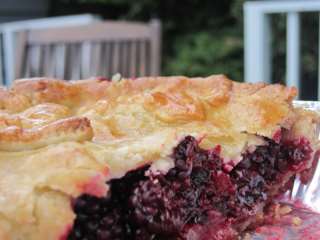
Decades ago, my Cumbrian farming grandmother would prepare for long winters by filling her ample chest freezer with home produced lamb, half a pig, and a few large beef joints. The freezer was like the Tardis in that it seemed much bigger on the inside! It also contained racks of frozen vegetables from the allotment and pies with fruit picked from the hedgerows. The blackberry pies were the best, especially on Easter Sunday! Anything bought fresh from the shops was only what was in season at the time. 
In the modern world, we now expect by right to have cheap food delivered fresh from across the world. We care little about the people producing the food and even less about the provenance, the traceability and true cost of production.
We don’t actually perceive food to be cheap, because we know nothing else. We have forgotten the true age of austerity, ration books and queuing for food, in an age when no food could be wasted. Grandmother would have baulked at the idea of throwing out perfectly good consumables. Sell by dates meant nothing to our forefathers.
Today 4 pints of whole milk can be bought in most supermarkets today for about 1.10p. Many dairy farmers will be paid less than  half of that. The product is sold for a pittance and farmers are paid a pittance. Bottles of water are sold at higher prices! How can this be? And how would we manage today if more than 30% of our weekly wage had to be spent on basic food items? This is how it was in the 1950’s.
Because food is so cheap today,  very few people outside the agriculture industry have any inkling of the systems, processes, regulations and hard work that goes into producing a pint of milk or a prime lamb. As a population, we have lost knowledge and respect for the farming industry. We don’t understand and we don’t appreciate where our food comes from, and how it is produced. The constant supply of globally  produced cheap food means that UK farmers are any easy target on climate change issues, pollution, animal welfare and just about the ills of the world. This is a  seriously misguided blame game.
In the 1950’s UK farmers were truly the housewives friend. Government policies encouraged production at all costs. The nation was hungry and in post- war crisis. These days the government will not support home food production. In fact they barely recognise it. It’s a curious thing but many members of the public believe farmers get free handouts in the form of production subsidies. The reality is that those days are long gone.  Current support payments are based on environment and conservation outputs only. The UK farmer is always at the mercy of a painfully thin market. There are no fall back measures. If the beef price drops even lower, the beef farmer has to take it on the chin. It’s the same in every sector.
So where will the food to feed the British people come from in future? The answer if we continue as we are, is an even greater reliance on imports. Frankly it is the road to disaster. Worse still it is morally and ethically challengeable. 
My heartfelt belief is that we need to grow our own food and look after our environment at the same time. These are not separate portfolio’s. This work goes together. Too many people with vested interests seek to promulgate the polarisation of farming, food production and conservation. As a nation we are now less than 60% self sufficient in food and it continues to fall by more than 1% per annum. This troubles me greatly. Sure, we are ok now. Lots of food to bring in from all over the world! But where will we be in 20 years time if this trend continues? only 40% self sufficient? desperate to secure even more food from around the world for a growing population? it is madness. We have a 25 year environment plan, but no food and farming plan. This should be one and the same.
Instead we shove it under the carpet as we focus on “saving the planet”. Of course we need to do this urgently but we also need to focus on sustainable food production to feed the human race. We cannot continue a growing trend of importing out of season, cheap food products. If we do and this is more important than supporting UK food production, then we are simply exporting our problem, sweeping it under the carpet in the name of environment and conservation. Many of us will have seen the BBC programme on global meat production this week. I believe many of the findings in that programme actually back up much of what i have discussed earlier. This is a global issue but cannot be blamed on the UK farming community. We’ve been hung out to dry by those who support and promote cheap imported food and we know fine well who they are!
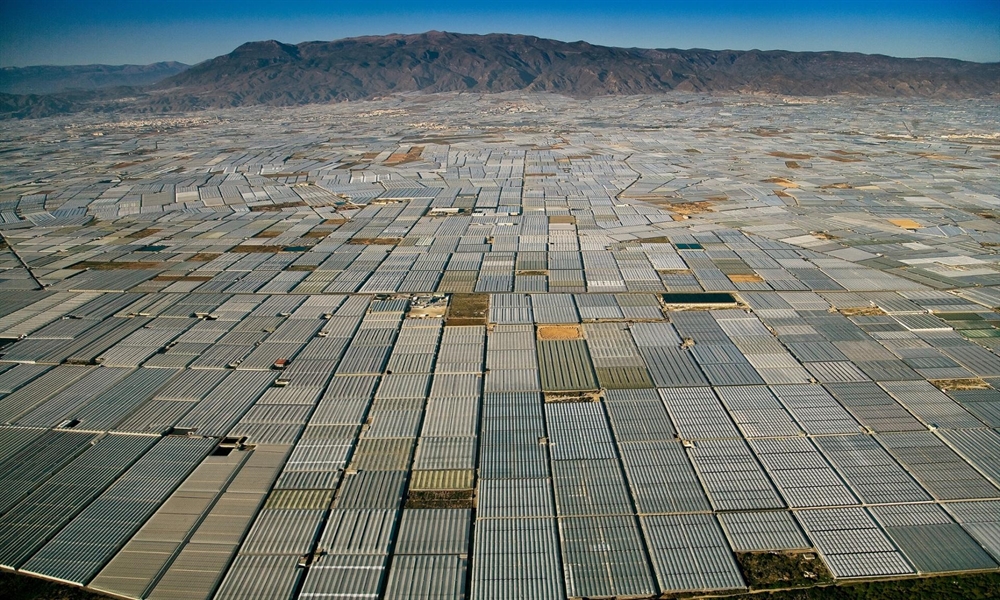
Take a look at the photo above. This is how fruit and vegetables are grown in parts of Spain, much of it destined for the UK market. It is grown this way using the cheapest labour that can be found, people often working in shocking conditions. There have been tv programmes about this recently. Think of the carbon footprint and the use of plastics yet we choose to ignore it. Sweep it under the carpet- again. Cheap food for the masses, stocking the supermarket shelves! “cheap food is our right. We are entitled to it”!
Cheap food is ours by right! That’s one hell of statement, but it must be true because clearly supermarkets support this policy (just as long as their margins are maintained). Clearly the UK government supports this policy wholeheartedly. Cheap food means we have more disposable income to spend on other consumer goods and this keeps the public happy. It’s a measure of economic success to have a tv in every room and be able to eat out several times a week in fast food restaurants or via the take- away. The grim reality is that food is too cheap and we don’t deserve it by right. The grim reality is that global food systems are ensuring the planet is paying a high price, to keep food prices low. The system is broken and most of us don’t even know it. Or if we do, we lift that carpet yet again. We readily accept these global food systems whilst ignoring our own UK sustainable farming systems. We’re even allowing some sections of society to blame UK farmers for the global food production mess!
I steadfastly believe that we have to change our ways. We desperately need to invest more in home- grown food production. As a result and as a condition of this, we need to achieve better environmental goals in offering the public benefits in clean air, clean water and conservation in the natural environment. To do this our farm businesses need to viable and sustainable. The farm business is the key to all this. The government does not recognise food as a public good. Absolute madness and they are missing a huge trick.
Our mentality has to change. Food needs to be priced fairly to respect the producer and the way in which in which our food is grown. We need to return to seasonal purchasing instead of importing goods from across the world. What is the true cost of this in terms of food miles and carbon footprint? no one is saying and we’re sweeping under the carpet yet again in order to protect a 52 week food supply season. It’s easier to criticise our own farmers rather than admit the true cost of food importation.
We must invest in local markets, in other words locally produced food purchased by local people. We must reduce food waste, Millions of tonnes of the stuff, binned each year. Why does this happen? Again because its cheap and not respected and therefore neither is the producer. In fact almost 2 million tonnes of food is wasted in the UK annually of which 240,000 tonnes is binned by supermarkets alone. Ask yourself why this is allowed to happen?
With education and investment we can do much better. Feed our nation more sensibly than we do now. Make the best of our natural assets to grow more food, not less! and at the same time be proud to improve our natural environment.
it’s time to big up the UK farmer, one of the best assets we have. Once again in the future the farmer will become our best friend. Start the planning now and let’s do this on our terms rather than in desperation some years down the line when we run out food and run out of ideas.
This will mean huge changes to the farming industry, new skills to learn, new technology to embrace as we seek to grow more food using less inputs. Our future farmers will be skilled food producers but they will also be upskilled conservationists. And if they are, then they must be rewarded for it. Farmers already offer a huge range of benefits to their communities and the wider public, but we’ve lost the knowledge and understanding of this, again through cheap food and a lack of education about food and farming.
We can get it back but we have to act now to protect our home- production and in doing so our natural environment. Food, farming and conservation go together side by side and it is so easy. We need a Rural Grand Plan to encompass all of this.
But don’t just take my word for it. In 2017 the U.N. Food and Agriculture Organisation (FAO) issued a stark warning in a report entitled “The Future of Food and Agriculture: Trends and Challenges.” The message was this: –
Because of a growing global population (7.3b today rising to 10b by 2050), agricultural output will need to increase by 50 percent. This needs to happen alongside the necessary steps to mitigate climate change.
This is perhaps more evidence that farming, food and conservation go together. People are now understanding the significance of climate change. Why the hell aren’t we talking about sustainable food production? All of the good conservation work will be destroyed if we start to go hungry. The bad conservation work needs to be called out for what it is. Time to end the polarisation! Bring it together….. “A Rural Grand Plan”.
1920033_272913222864143_1230401726_n
Grandmothers roast lamb dinners followed by homemade blackberry pie will never be surpassed. it’s time to re-discover her old fashioned values from a time when food was so much more important than it is now. My grandparents in their own little way were proud farmers, feeding the nation. That pride remains today within the farming industry especially among young people who are desperately keen to farm. We’re in danger of losing this in the next generation unless we start respecting, appreciating and supporting them. We’re in danger of losing far more if we continue to import cheap food from abroad, without any consideration of those production systems. You have been warned!
f27cb11c-074d-4f14-b9a3-39f3ec880396

Tackling flooding in Cumbria – Have we found the right solution?

It is ten years ago today since my hometown Cockermouth in Cumbria flooded to a depth of over 10 feet in areas closest to the River Derwent. As its name suggests Cockermouth lies at the confluence of the Rivers Derwent and Cocker, in an area known to be inhabited long before the Romans arrived to set up the fortified town of Derventio.

Cockermouth town centre has flooded many times in the last millennia and at least three times in the last 100 years so it is not a new phenomenon. Nevertheless, when the water strikes it is devastating, financially for the community and personally for many people in the lower lying areas. In 2009, unprecedented levels of  rainfall (since surpassed in 2015), had fallen over the high fells of Cumbria, cascading down the rivers, carving a trail of destruction, wiping away roads and bridges, eventually to flood the market towns of Keswick and Cockermouth. More than 900 properties and over 1400 people were affected in Cockermouth alone, as the rivers burst their banks and a creeping tide of floodwater seeped towards Main Street. Across Cumbria £276m damage occurred as a result of this event

By mid- afternoon, Thursday 19th November 2009, in continuing torrential rain, I left my place of work, Cockermouth auction mart to try and get home along the A66 towards Penrith. It was clear that this was turning into major incident. I just needed to get home knowing there were pinch points along the A66 towards Keswick where the Lake could over top the road.

As I got to Bassenthwaite Lake, the water had risen and the A66 was impassable. I did a u- turn and scooted back through Dubwath and Bassenthwaite village heading over the fell road to Caldbeck and Hesket New Market before eventually making it home an hour later. I was lucky.

In Cockermouth, Keswick and along the banks of several rivers there were scenes of devastation. A network of support groups sprang into action. Emergency services began to rescue people trapped in their homes, checking properties to ensure no one was left in danger. Drop- in centres were set up to help those whose homes were under water. Also, food banks and even clothing banks for those who left home with nothing.

It would take many months to recover and yet the local community stoically made a point of turning on some Christmas lights once the waters had receded, even though the shops were wrecked and empty. Sadly, a policeman lost his life in Workington when a major bridge collapsed. Many families were unable to return home for months, living in rented accommodation or hotels.

Research would suggest that the county lost more than £2.5m in tourist trade with nearly all businesses being affected across the county and sadly 6% of whom ceased trading. It prompted the development of a new state of the art £4.4m flood barrier system that could never be over topped. Only six years later the barrier was over topped during Storm Desmond, as new record levels of rainfall flooded Cockermouth. Many properties and much land was once again under water.

Floods in Cumbria will continue to happen. It is inevitable. But if we continue to build houses on flood plains and the government fails to invest adequately in the right flood management solutions in the right place, then we will keep letting communities down.

Currently there is a lot of talk in the media about Natural Flood Management (NFM), mainly due to the dreadful flooding in Lincolnshire and South Yorkshire. After Storm Desmond many hailed NFM as the next big thing. That is slowing the flow of water higher up the catchment, reducing the pressure of flood water lower down the rivers, where bigger towns, villages and even cities tend to be situated. Some thought that this would negate the need for riverbed management or “dredging” as it is colloquially known.

Local communities were aghast. Common practice for generations had dictated that river beds close to communities would be cleaned out on a regular basis to ensure deeper river channels were not clogged up with stone, gravel and silt washed down from the upper valleys. In the river Cocker sink- holes more than 25 feet deep were routinely dug out on a 5- or 10-year cycle to act as gravel traps, slowly but surely filling up again and preventing further depositions downstream. This practice had been outlawed several years before the 2009 storm. All the bridges on the river Cocker above Cockermouth had  gradually clogged up with gravel and slate as the river ran shallower and shallower. During the 2009 storm and again in 2015, many bridges were washed away, unable to cope with the volume of water and the shallow draft of the river.

But here is the good news, “slow the flow” interventions further upstream really do work. The Farmer Network is one organisation involved in several Natural Flood Management projects in Cumbria and the Yorkshire Dales. In the right setting, leaky dams, grass bunds, tree planting and a range of other solutions all work. In some areas it is appropriate to re- wet the land, in order to hold water. In other areas it would be best to keep soils better drained, aerated and dry to act as a sponge to soak up heavy rain and flood water. Some of these interventions can hold back water and are small in scale, but add together several thousand of them across a long Cumbrian catchment, and the sum of all small parts really does add up.

Inevitably the responsibility for this work falls on farmers and other land managers. It is their land that is affected and used for temporary flood water storage. This is where it gets difficult. Flood water, when it recedes, always leaves a dreadful mess, including sand, silt, gravel and all manner of detritus for the farmer to clean up. There is also the issue of crop losses and damage to the soil. This is a fantastic public service if indeed the flood measures are designed specifically to flood the land, to save more damage further downstream. Is the farmer or landowner recompensed for this? Inevitably the answer is not well enough.

There have also been serious difficulties for farmers in getting permission to clear the damage and try to reinstate then land to full production. Frankly there have been too many organisations with interests in catchment management all with an opinion, when clearly the right solution would be to have one managing organisation effectively bring catchment management together and able support those affected by the floods. The situation as seen in 2009 when a landowner had several different organisations telling him what he could not do, and not a single body able to make a decision as to what he could do, to repair his land, must never be allowed to happen again. Repair and recovery needs to be managed swiftly with decision making at a local rather than national level and in a spirit of cooperation.

Let’s get back to dredging ( i do detest that word). There are many locations where engineered solutions and riverbed management can be vital and this work is being done in Cumbria to a limited but effective degree especially since Storm Desmond in 2015. It creates much angst for environmentalists who hate the thought of the riverbed environment and habitats being disturbed. It is also undoubtedly costly to perform. In the past it has been allowed only under licence, which is prohibitively expensive, and certainly not encouraged by government. Yet under pressure from flood affected communities and farmers, it has been allowed and it has been effective in Cumbria.

The unequivocal message is that any flood management solution is only effective if installed and performed in the right place. After the flurry of publicity regarding NFM following Storm Desmond, we are now beginning to see a more balanced view, although others may argue differently.

A one size flood management system does not fit all, and anyone suggesting this is sadly misguided or pursuing their own agenda. This includes those who talk of widespread afforestation, re- wilding and getting rid of Cumbria’s hill sheep as a flood management solution. Absolute rubbish.There are numerous options to combat floodwater all with merit, but only in the right location.

Following Storm Desmond Cumbria Strategic Flood Partnership was created to bring together all groups with an interest or indeed an interest in combating flooding in Cumbria. It has designed a flood hub, including a website to detail schemes, surveys and policies that are being developed within the county. However, to give CSFP a fighting chance, in future there needs to be a change in mindset at Government level, much more investment and more community engagement, the full length of Cumbria’s catchments. The key in all of this is to ensure that whatever the planned solution, it must be joined up with others and not created in isolation. There is a lot of work still do with limited resources. 

Underpinning all of this is the need to ensure that we have healthy, well- managed rivers, productive catchment areas, and the right flood management solutions, in the right places, all working together. It can be done but is only achievable with the benefit of investment, knowledge, education and cooperation.

Failing that, our future choices may be limited to living higher up the hill and away from the flood plain. Having a home full of dirty water is a nightmare. Having it happen on a regular basis or simply waiting for the next time, must be an unimaginable stress. There are communities in Cumbria constantly living with this pressure. Storm Desmond in 2015 repeated the devastation to an even greater degree. It is clear that we need to do much more.