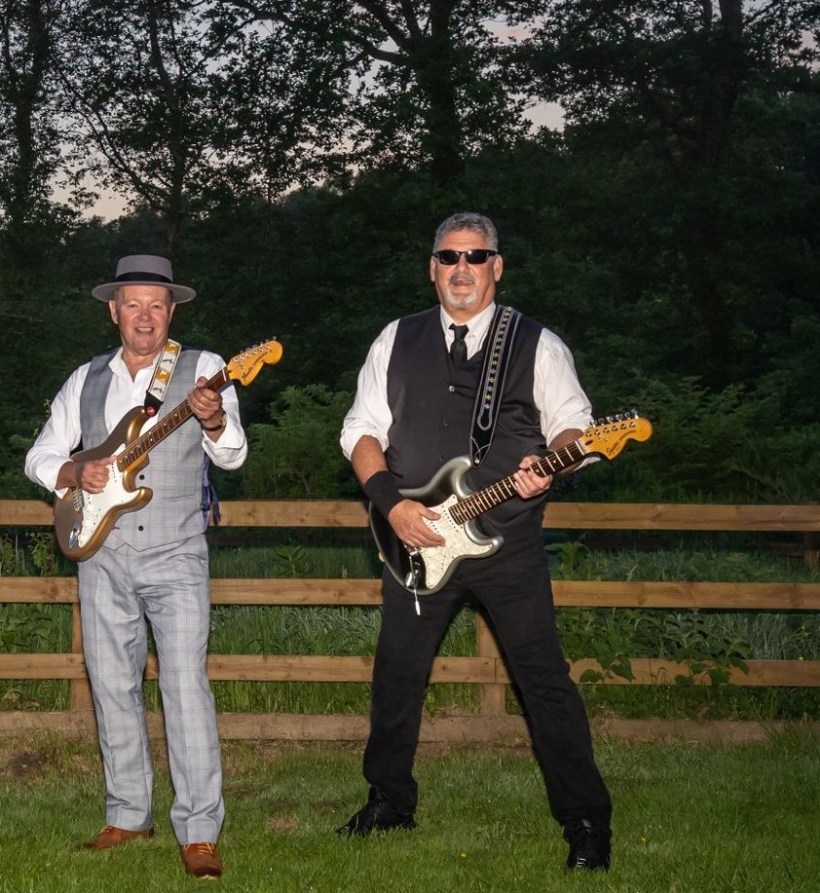
I do a bit if singing at weekends, sometimes in our band The Soul Survivors, sometimes as dynamic duo Only Smith and Day, and sometimes solo. Music replaced rugby many years ago when my body was starting to break, and it amazes me that a rotund old lad with a goatee beard gets bookings, but it happens!
Two weeks ago, OSD, me and guitar player Rob, played Egremont Young Farmers Christmas Social in the Market Hall. It took me back to the early 80’s when I was a member of Greysouthen YFC
Our Christmas Social was a bring and share supper in the village hall which was very handy for the Punchbowl pub on the other side of the road. My mate Bill would only eat the food his mother sent with him. The rest of us scoffed a vast array of farmhouse kitchen prepared sandwiches, pies and amazing puddings whilst Noddy Holder blasted out his trademark “It’s Christmaaaaaaas”! in the background.
As was evident at the Egremont do, my generation are now club leaders and Presidents. Indeed, Jimmy Crichton did a sterling job handing out the club prizes and trophies before a large crowd of young farmers from many other clubs, who had come to support.
A while later as me and Rob worked through our first set, an eclectic mix of genres including a few Irish and country tunes so beloved of young farmers there came an unexpected request. Could we possibly do some reels and country dances like the Gay Gordon’s and a Strip the Willow? It took me back to my Greysouthen days when we too learned traditional dancing.
Luckily, we can play this music and as the first tones of the accordion tunes rang out, amazingly the young farmers took their places. Where else could you go from The Killers to a Canadian Two Step?
What a community. Teaching old fashioned values in the modern world. Prizes for stock judging, valuation and field day competitions. A floor full of people young and old engaged in a St Bernards Waltz and of course the consumption of a Christmas drink or two. Twas ever thus!
Right now, those young people entering the farming industry in whatever role they are taking, must be wondering what the future holds. DEFRA set off with every good intention, having a New Entrants partnership and working group. It was challenging and frustrating and despite sound advice from many in the industry, it went wrong and then seemed to disappear altogether.
I hope it returns in future, because we will need these enthusiastic young people to be our food producers and custodians of the land. They are so keen and committed to the industry and they need to be supported and encouraged at every turn. These guys are our future and if the Young Farmers movement has anything to do with it, they will be well prepared in many ways to approach their role with confidence, knowledge and respect.
As Rob and me packed our gear away at the end of the night, many of the young farmers were getting ready to head off to town, just as I would have done all those years ago. I was ready to get home to bed.
Happy Christmas to you all. Let’s see what the New Year brings. We must approach it with the same enthusiasm as our young people. Work hard and play hard, as long as you are able.
 The Lakeland Auctioneer