“I’ll crack on and do it meself”.

My old farming Grandfather began his working life as a young boy running errands for the slaughterhouse located close to his family home. As a teenager he progressed onto the line, and at 15 years of age was well capable of butchering animals for local farmers and butchers.

You must remember this was an austere decade following World War 1, leading up to Wall Street crash and a great global depression. No one had it easy save perhaps the odd local Lord or those owning the iron ore mines deep below the surface of the Furness Peninsula.

On leaving school Grandfather went into farm service and quickly learned that as soon as the lunchtime bell rang, he should take his place beside the other farm workers employed on the local estate. Having tried to show dedication and commitment on his first full day of employment by finishing the task in hand, he arrived late to the lunch table to discover that all that was to be had was a salt and pepper sandwich. Everything else had gone. “And go steady on the salt young Jackson.”

Moving home to work in an expanding family coal merchanting business meant that many years down the line, he was able to achieve a dream, buying a small farm to rear beef and sheep, thus reversing an unfortunate family circumstance in the early 1800’s when our farming forefathers were driven off the land and into the iron ore mines.

Grandfather savoured his home-produced meat at the table, and nothing more so than the fattiest lamb hotpot, which in his opinion, gathered more flavour with each warming of the pot. The young grandson’s protestation that he really did not like “the fat-bits,” was met with utter scorn. Let us not even talk about salt on our porridge.

One summer when I was young teenager working on a neighbour’s farm in my home village near Cockermouth, a prime lamb caught its head in a gate and sadly broke its neck. My old grandfather was on his holidays with us. Now long retired and barely able to walk but for the aid of two stout walking sticks, he just happened to shuffle down to the farm to see what we were busy with. Spying the deceased lamb Grandfather shouted to our neighbour,

“That lamb needs hung up and bled.” Not getting much of a reaction, Grandfather decided to pursue the conversation. “I’ll crack on and do it meself.” The thought of losing several potential meals would be unbearable to a man brought up in the 1920’s.

Farmer John was to admit to me later that this was never a favourite task, but one which most farmers have had to do from time to time. However, he could not allow a 70-year-old retired and almost disabled farmer to take on the job and it was abundantly clear that he was not going to be allowed to put it off until later!

In the 1960’s grandfather bought the defunct slaughterhouse building and converted into a house for himself. Those old boys and their wives were made of stern stuff. A different era perhaps but resilience is in-bred and is what will ensure the success of future farming generations, although we may never see the return of what Grandfather called a “proper fat lamb.” Thank goodness!
“Forty years gone in the blink of an eye”.

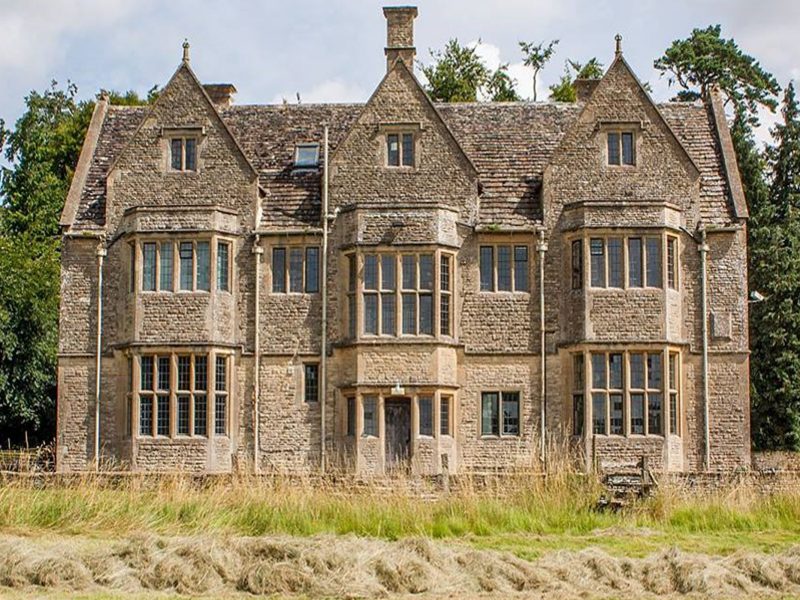
It is November 1984, 40 years ago. The young Rural Estate Management Student is halfway through his first term at the Royal Agricultural College. It is a freezing Friday night on the Cotswolds. The huge Georgian house which is now a hall of residence on the edge of the college campus, is all but empty. Most students go home at weekends. Those left in Trent Lodge are the “Northern lads” and the rugby players.

The house is absolutely freezing. They turn the heating off at 9pm and it barely raises the temperature even when it is on. The young student from the Lake District is lying in a sleeping bag in his bed under a thin duvet watching an ancient black and white TV. It is Children in Need night and there is a very grainy, picture of Terry Wogan and several celebrities of the day including Frank Bruno, Val Doonican and Orville the Duck. Home seems very far away.

Lectures during the day are very much focused on production. Increasing yield, more fertiliser, bigger tractors. Food is the focus, although milk quota’s have now been introduced. When the student gets a proper job in three years’ time, selling and leasing millions of litres of milk quota will be a big part of it. The commission earned covers the young man’s salary and he jokes with his boss that he is working in the auction for free. The boss doesn’t quite see it that way!

Then there is the new 1986 Agricultural Holdings Act which will continue to give an automatic right of tenancy succession for qualifying family members. The new legislation is there to ensure the continuity of family farms and sustainable food production.

All of this is soaked up like a sponge by the student, but those freezing winter nights are so cold. At least he has a stash of cakes, pies, biscuits and other goodies that proud farming grandmother has baked for him in case they might not feed him properly!

Forty years gone in the blink of an eye and the farming world has been propelled into a very different place. “Production, Production, Production” has been replaced by “Nature, Nature, Nature”. Policy is being driven by environmentalists and food is no longer recognised as a public good.

Protected farm tenancies have gone, and the average length of new agreements is only three years. Good agricultural land is being re-purposed into trees, solar parks or just left rank for nature. The hills are being cleansed of sheep.

A broken food chain is controlled by those higher up. The smallest slice of the profit pie (if there is any to be had) remains with the farmer, who carries all the risk and massive investment in a business where even “break even” is not guaranteed each year.

This month farmers marched on London, driven by a succession of deleterious policy challenges. They can see that the world turns in a circle. One day sooner than we think, they will be respected and valued as food producers once again. They will be doing this as well as making our landscapes and natural environment the best they have been in decades. But this will only happen if they are supported sensibly and properly. Cheap food in an improving environment comes at a price. The price must be to properly support successive generations of farmers. Right now, what is being offered is not fit for purpose on so many levels.